Allantoin: The Quiet Achiever Behind Calm, Comfortable Skin
Some skincare ingredients become famous. Others quietly earn their place through decades of reliable performance. Allantoin belongs firmly in the second group.
Found naturally in several plants and widely used in modern skincare, allantoin is valued because it helps comfort the skin, supports the skin barrier and leaves the complexion feeling smoother and softer. It is gentle enough for almost every skin type, making it one of the most versatile ingredients in skincare. Whether your skin feels dry, reactive, recovering from exfoliation or simply needs everyday support, allantoin is often working behind the scenes to keep skin feeling healthy and comfortable.

What Is Allantoin?
Allantoin is a skin-conditioning ingredient best known for its soothing properties.
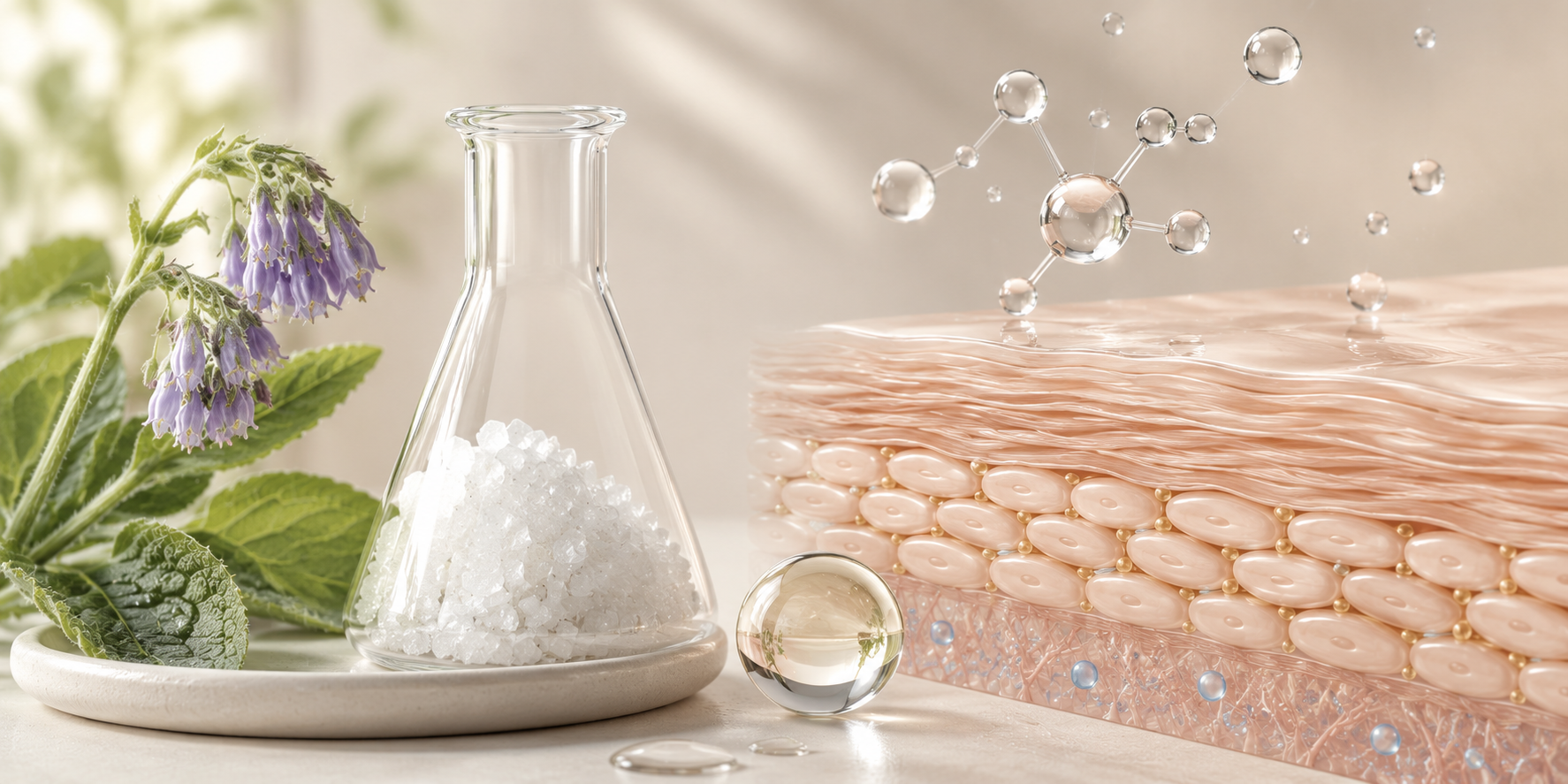
Although it naturally occurs in plants such as comfrey, most cosmetic allantoin today is produced synthetically. This allows manufacturers to create a highly pure, stable ingredient while protecting natural plant resources.
Despite its scientific name, allantoin is remarkably gentle.
Rather than dramatically changing how skin behaves, it helps create an environment where the skin barrier can function more comfortably and effectively.
Today, you'll find allantoin in products designed for:
- Sensitive skin
- Dry skin
- Post-exfoliation care
- Barrier support
- After-sun products
- Moisturisers
- Serums
- Cleansers
- Spot treatments
Its versatility explains why formulators have trusted it for decades.
💡 Joanne's Insight
One of the first things I look for when someone tells me their skin "reacts to everything" is whether their routine includes calming support—not just active ingredients. Allantoin is one of those dependable ingredients that rarely seeks attention but often helps the skin feel noticeably more comfortable over time.
How Does Allantoin Work?
Unlike exfoliating acids or vitamin A, allantoin doesn't stimulate rapid skin renewal or dramatically alter skin biology.
Instead, it supports the skin in several gentle ways.
It Helps Calm the Skin
Every day, your skin is exposed to environmental stress.
Cold weather, dry air, pollution, UV exposure and even active skincare ingredients can leave the skin feeling uncomfortable.
Allantoin helps reduce this feeling of irritation while improving overall skin comfort.
This makes it especially valuable alongside stronger ingredients such as retinoids, vitamin C or exfoliating acids.
It Supports the Skin Barrier
The skin barrier acts like a protective wall, helping keep moisture in while limiting irritation from the outside world.
When this barrier becomes disrupted, skin often feels:
- Tight
- Dry
- Sensitive
- Rough
- Easily irritated
Allantoin helps support barrier function by encouraging a healthier skin surface and reducing discomfort while the barrier recovers.

Why Is Allantoin Often Paired with Other Ingredients?
One reason formulators appreciate allantoin is that it works well with almost everything.
Rather than competing with active ingredients, it complements them.
For example:
- Ceramides strengthen the skin barrier.
- Hyaluronic acid attracts water.
- Panthenol supports hydration.
- Beta-glucan helps calm sensitivity.
- Niacinamide supports barrier function.
- Allantoin helps improve overall skin comfort.
Together, these ingredients create formulations that feel balanced rather than overwhelming.
This is why many barrier-focused products include several of these ingredients instead of relying on one alone.
🧠 Did You Know?
Although allantoin occurs naturally in plants such as comfrey, nearly all cosmetic-grade allantoin is produced in laboratories. This creates an ingredient that is exceptionally pure, consistent and sustainable while delivering the same skin benefits.
What Skin Types Benefit Most?
One of allantoin's greatest strengths is its versatility.
Sensitive Skin
Sensitive skin often struggles with irritation rather than a lack of active ingredients.
Allantoin helps improve comfort without adding unnecessary complexity.
Dry Skin
Dry skin usually has a weakened barrier.
Allantoin supports smoother, softer skin while working alongside moisturising ingredients.
Acne-Prone Skin
People often assume blemish-prone skin should avoid moisturising ingredients.
In reality, calming ingredients such as allantoin can help support skin comfort when using exfoliating acids or acne treatments.
Mature Skin
As skin ages, barrier function naturally becomes less efficient.
Gentle supportive ingredients help maintain comfort while allowing more active ingredients to be used consistently.
❌ Myth vs ✅ Reality
Myth: Allantoin is only useful for sensitive skin.
Reality: While it's excellent for sensitive skin, allantoin benefits almost every skin type by supporting comfort, hydration and a healthy skin barrier.
Why Formulators Continue to Choose Allantoin
Some ingredients become popular because they're new.
Others remain popular because they consistently perform well.
Allantoin belongs in the second category.
It is:
- Well researched
- Extremely gentle
- Compatible with most ingredients
- Suitable for daily use
- Appropriate for nearly all skin types
This makes it an excellent "supporting ingredient" within sophisticated skincare formulations.
You may not notice allantoin listed on the front of a product, but experienced formulators often consider it an essential part of creating comfortable, well-balanced skincare.

Which Shanga Products Contain Allantoin?
At Shanga, allantoin appears in products where calming, barrier support and everyday comfort are important parts of the formulation.
These include:
- Purify Cleanser
- Repair Hydromist
- B-Gentle Serum
- B-Strong Serum
- Purify Rescue Gel
- Soothing Hydrogel Mask
- Purify Clay Mask
- Purify Moisturiser
Each product pairs allantoin with complementary ingredients such as panthenol, niacinamide, ceramides, hyaluronic acid, beta-glucan or botanical extracts to support healthy-looking skin.
👩⚕️ Skin Therapist Tip
If you're introducing stronger ingredients like retinoids or exfoliating acids, look for products that also contain calming ingredients such as allantoin. Supporting the skin barrier often makes it easier to maintain a consistent routine.
✨ Why It Matters
Healthy skin isn't simply about using more active ingredients.
It's about helping your skin tolerate those ingredients comfortably over time.
Allantoin reminds us that skincare isn't always about dramatic change. Sometimes the greatest improvements come from reducing unnecessary irritation, supporting the skin barrier and allowing healthy skin to function as it was designed.
Its calming nature makes it an ideal partner for modern skincare routines, particularly those built around consistency rather than intensity.
Conclusion
Allantoin may not receive the same attention as vitamin C, niacinamide or retinoids, but it quietly plays an important role in many thoughtfully formulated skincare products.
Its ability to soothe, soften and support the skin barrier makes it one of the most dependable ingredients available today.
Whether your skin is sensitive, dry, blemish-prone or simply experiencing everyday environmental stress, allantoin helps create the conditions for skin to feel calmer, healthier and more resilient.
Key Takeaways
- Allantoin is a gentle skin-conditioning ingredient.
- It helps soothe the skin and improve overall comfort.
- It supports the skin barrier alongside ingredients such as ceramides and panthenol.
- It works well with retinoids, vitamin C, exfoliating acids and niacinamide.
- It is suitable for almost every skin type, including sensitive skin.
- Several Shanga formulations include allantoin as part of a balanced barrier-supportive approach.
Continue Your Learning
Now that you've learned how allantoin helps soothe and support the skin barrier, continue with Colloidal Oatmeal to discover how this naturally derived ingredient helps comfort dry, sensitive and compromised skin while working alongside ingredients like allantoin to support long-term skin health.