Aloe Vera for Skin: Nature's Timeless Skin Soother
Few botanical ingredients are as instantly recognisable as aloe vera. For generations it has been applied to sun-exposed skin, yet its benefits extend well beyond temporary cooling. Rich in water, natural sugars, vitamins, minerals and soothing plant compounds, aloe vera helps support skin hydration, comfort and barrier function. Today it appears in cleansers, serums, moisturisers and masks because it complements many other active ingredients while remaining gentle on most skin types. Understanding how aloe vera works can help you appreciate why this humble succulent continues to earn its place in modern skincare.

Aloe Vera
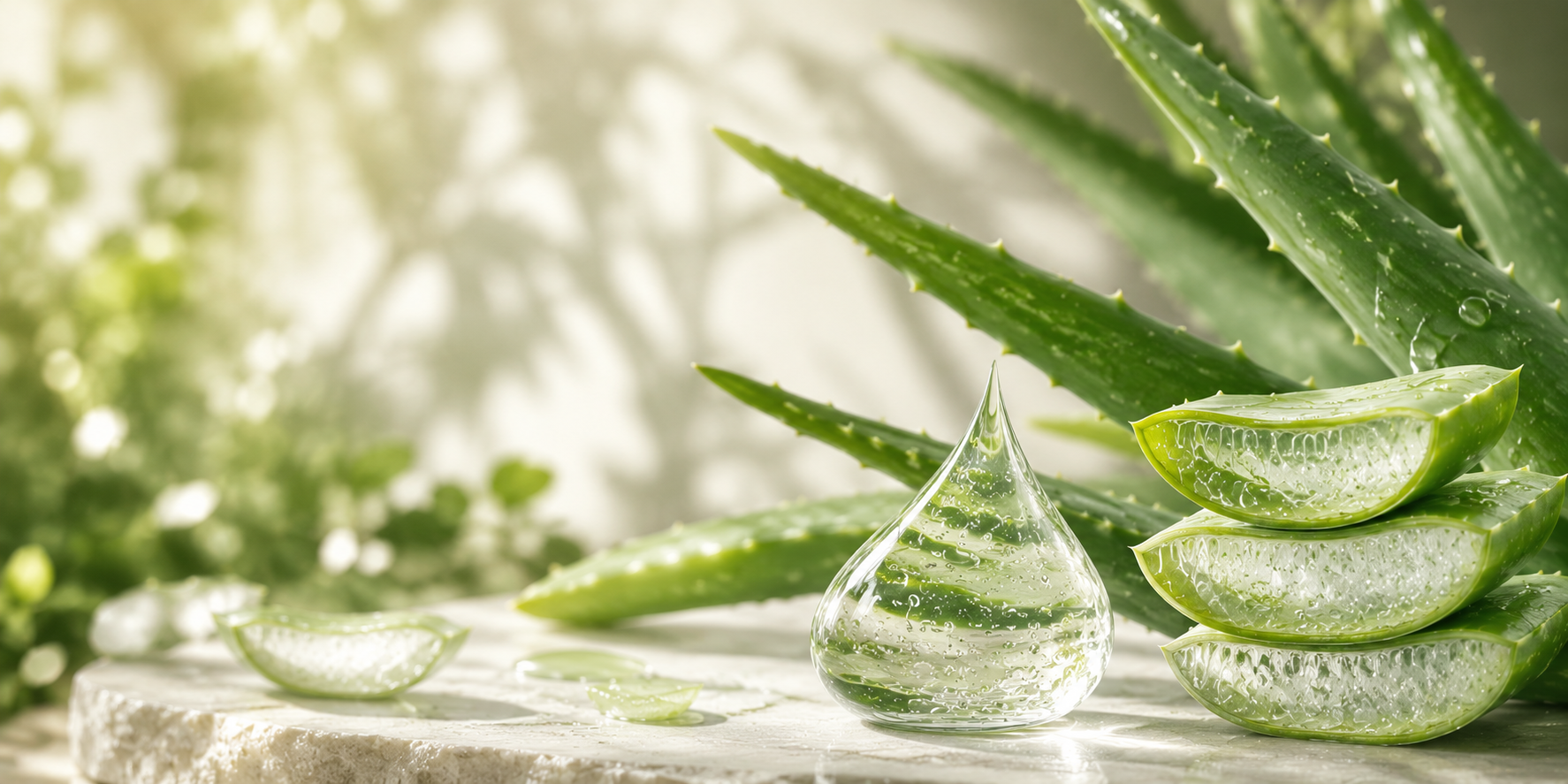
Aloe vera is one of the oldest skincare ingredients still widely used today. The thick, fleshy leaves of the aloe plant contain a clear gel that is made up of around 98–99% water, along with hundreds of naturally occurring compounds including polysaccharides (natural sugars), amino acids, minerals, vitamins and antioxidants.
While many people associate aloe vera with treating sunburn, cosmetic scientists value it for a much broader reason: it supports healthy skin without overwhelming it.
Rather than forcing dramatic change, aloe vera helps create an environment where skin feels calm, hydrated and comfortable.
That makes it suitable for many skin types, including:
- Dry skin
- Dehydrated skin
- Sensitive skin
- Combination skin
- Oily skin
- Skin recovering from environmental stress
Because it works well alongside ingredients like niacinamide, hyaluronic acid, ceramides and vitamin C, aloe vera has become a foundational ingredient in many modern skincare formulations.
Why Aloe Vera Supports Healthy Skin

Although aloe vera contains many beneficial compounds, one group receives particular attention: polysaccharides.
These long-chain natural sugars help attract and hold water on the skin's surface. While they don't replace the skin's own moisturising systems, they can help improve immediate hydration and reduce feelings of tightness.
Aloe vera also contains:
- Amino acids that contribute to healthy skin function
- Antioxidants that help defend against environmental stress
- Minerals including magnesium and zinc
- Vitamins including vitamin C and vitamin E in small naturally occurring amounts
Together these components help support skin that feels softer, smoother and more comfortable.
Importantly, aloe vera is generally lightweight.
Unlike richer plant oils, it provides hydration without leaving a heavy or greasy finish, making it suitable for both oily and dry skin.
Hydration Without Heaviness
Many people confuse hydration with moisturising.
Hydration refers to increasing the skin's water content.
Moisturising refers to reducing water loss by strengthening or supplementing the skin barrier.
Aloe vera contributes primarily to hydration.
Because it is mostly water combined with water-binding sugars, it helps replenish moisture at the skin's surface.
For long-lasting comfort, aloe vera often works best alongside barrier-supporting ingredients such as:
- Ceramides
- Squalane
- Plant oils
- Fatty acids
- Cholesterol
Together these ingredients provide both water and the lipids needed to help keep that water in the skin.
💡 Joanne's Insight
Over the years I've found aloe vera to be one of those ingredients that quietly improves almost every routine. It isn't dramatic, but when skin feels hot, tight or uncomfortable, formulas containing aloe often help restore a feeling of balance while allowing stronger active ingredients to be better tolerated.
Aloe Vera and the Skin Barrier
Healthy skin depends on a strong outer barrier.
This barrier keeps moisture inside while helping defend against everyday environmental stress.
When the barrier becomes disrupted, skin may feel:
- Tight
- Dry
- Sensitive
- Rough
- Easily irritated
Aloe vera cannot replace damaged barrier lipids on its own, but it creates a more supportive environment for barrier recovery.
Its hydrating properties help improve skin comfort while many formulations combine aloe vera with ingredients such as ceramides, panthenol, beta-glucan or allantoin to provide more comprehensive barrier support.
This combination is particularly valuable after:
- Cleansing
- Mild exfoliation
- Environmental exposure
- Dry weather
- Air conditioning
- Wind
When the skin remains comfortably hydrated, many of its natural repair processes function more effectively.

Aloe Vera for Sensitive Skin
Sensitive skin often responds better to ingredients that support rather than overwhelm.
Because aloe vera is naturally lightweight and generally well tolerated, it appears frequently in products designed for sensitive or reactive skin.
That doesn't mean every aloe product suits everyone.
The overall formulation still matters.
For example, a product containing aloe vera may also contain exfoliating acids, essential oils or other active ingredients that influence how suitable it is for individual skin types.
This is why experienced skin therapists evaluate the complete formula rather than focusing on one ingredient alone.
❌ Myth vs ✅ Reality
Myth: Aloe vera is only useful after sunburn.
Reality: While aloe vera is well known for cooling sun-exposed skin, it is equally valued in everyday skincare for supporting hydration, skin comfort and barrier function.
🧠 Did You Know?
One mature aloe vera leaf can store enormous amounts of water, allowing the plant to survive long periods in dry climates. That same ability to retain water is one reason aloe gel feels so refreshing when applied to skin.
Aloe Vera in Modern Skincare
Today's aloe vera is far more sophisticated than simply squeezing fresh gel from a leaf.
Cosmetic manufacturers use carefully processed aloe ingredients that are stabilised to preserve quality and consistency.
Depending on the formulation, you may see:
- Aloe Vera Leaf Juice
- Aloe Vera Leaf Juice Powder
- Aloe Barbadensis Leaf Extract
- Aloe Gel Concentrate
Each form serves slightly different purposes depending on the product.
Aloe vera appears in:
- Cleansers
- Hydrating mists
- Serums
- Moisturisers
- Sheet masks
- Eye creams
- Spot treatments
- Sunscreens
Because it layers well with other ingredients, it has become one of the most versatile botanical ingredients in skincare.

Aloe Vera Works Well With
Modern formulations frequently combine aloe vera with complementary ingredients.
Examples include:
Hyaluronic Acid
Helps bind water while aloe provides additional hydration.
Niacinamide
Supports barrier function while aloe helps maintain comfort.
Ceramides
Strengthen the barrier while aloe hydrates.
Panthenol
Provides soothing hydration alongside aloe.
Allantoin
Supports skin comfort and complements aloe's calming nature.
Rather than competing with these ingredients, aloe vera often enhances the overall experience of using a product.
✨ Why It Matters
Healthy skin isn't created by one "miracle" ingredient.
Instead, it results from many supportive ingredients working together.
Aloe vera plays an important role because it helps maintain skin comfort while supporting hydration and barrier function.
Whether your skin is dry, oily, sensitive or combination, comfortable skin is often better able to tolerate active ingredients and maintain its natural resilience.
That makes aloe vera less about dramatic transformation and more about creating the healthy conditions your skin needs every day.
👩⚕️ Skin Therapist Tip
If your routine includes active ingredients such as vitamin A, exfoliating acids or vitamin C, consider pairing them with hydrating products containing aloe vera. Supporting hydration can help maintain skin comfort while allowing your routine to remain balanced.
Shanga Products Featuring Aloe Vera
Within the Shanga collection, aloe vera appears in several formulations where hydration and skin comfort are priorities, including:
- Antioxidant Hydromist — Aloe Vera Leaf Juice Powder helps support hydration alongside resveratrol, green tea and multiple forms of hyaluronic acid.
- Purify Rescue Gel — Aloe Barbadensis Leaf Extract complements niacinamide and salicylic acid to help soothe blemish-prone skin.
- Soothing Hydrogel Mask — Aloe Barbadensis Leaf Juice is paired with beta-glucan, panthenol, centella asiatica and ectoin to provide intensive hydration and comfort.
- Renew Eye Cream — Aloe Vera Leaf Juice Powder works alongside retinal, peptides, ceramides and hyaluronic acid to help maintain hydration around the delicate eye area.
These products demonstrate how aloe vera is most effective when thoughtfully combined with complementary ingredients rather than used in isolation.
Conclusion
Aloe vera has remained relevant for thousands of years because it does something remarkably valuable: it supports healthy skin gently.
Its ability to provide lightweight hydration, enhance skin comfort and complement modern active ingredients makes it one of skincare's most versatile botanicals.
While it may never be the loudest ingredient on a product label, aloe vera often helps create the balanced, hydrated environment that allows skin to function at its best.
Key Takeaways
- Aloe vera is primarily a hydrating and skin-comforting botanical.
- It is naturally rich in water and beneficial plant compounds.
- Aloe vera helps support the skin barrier when used alongside barrier-strengthening ingredients.
- It suits most skin types, including sensitive and oily skin.
- Modern formulations combine aloe vera with ingredients such as niacinamide, ceramides and hyaluronic acid.
- Aloe vera supports healthy skin but works best as part of a well-formulated skincare routine.
Continue Your Learning
Hydration is only one part of maintaining healthy skin. Another gentle ingredient frequently paired with aloe vera is allantoin, which helps soothe skin while supporting barrier comfort.
Next lesson: Allantoin: The Gentle Ingredient That Helps Calm and Comfort Skin