Colloidal Oatmeal: Nature's Gentle Protector for Sensitive Skin
For centuries, oats have been used to soothe dry, uncomfortable skin. Modern skincare has taken this humble grain a step further by transforming it into colloidal oatmeal—a finely milled ingredient with remarkable skin-supporting properties. Today, colloidal oatmeal is recognised as one of the most effective ingredients for calming sensitive skin, strengthening the skin barrier and improving skin comfort. Whether your skin feels dry, reactive or simply needs extra support, understanding how colloidal oatmeal works can help you make more confident skincare choices.

What Is Colloidal Oatmeal?
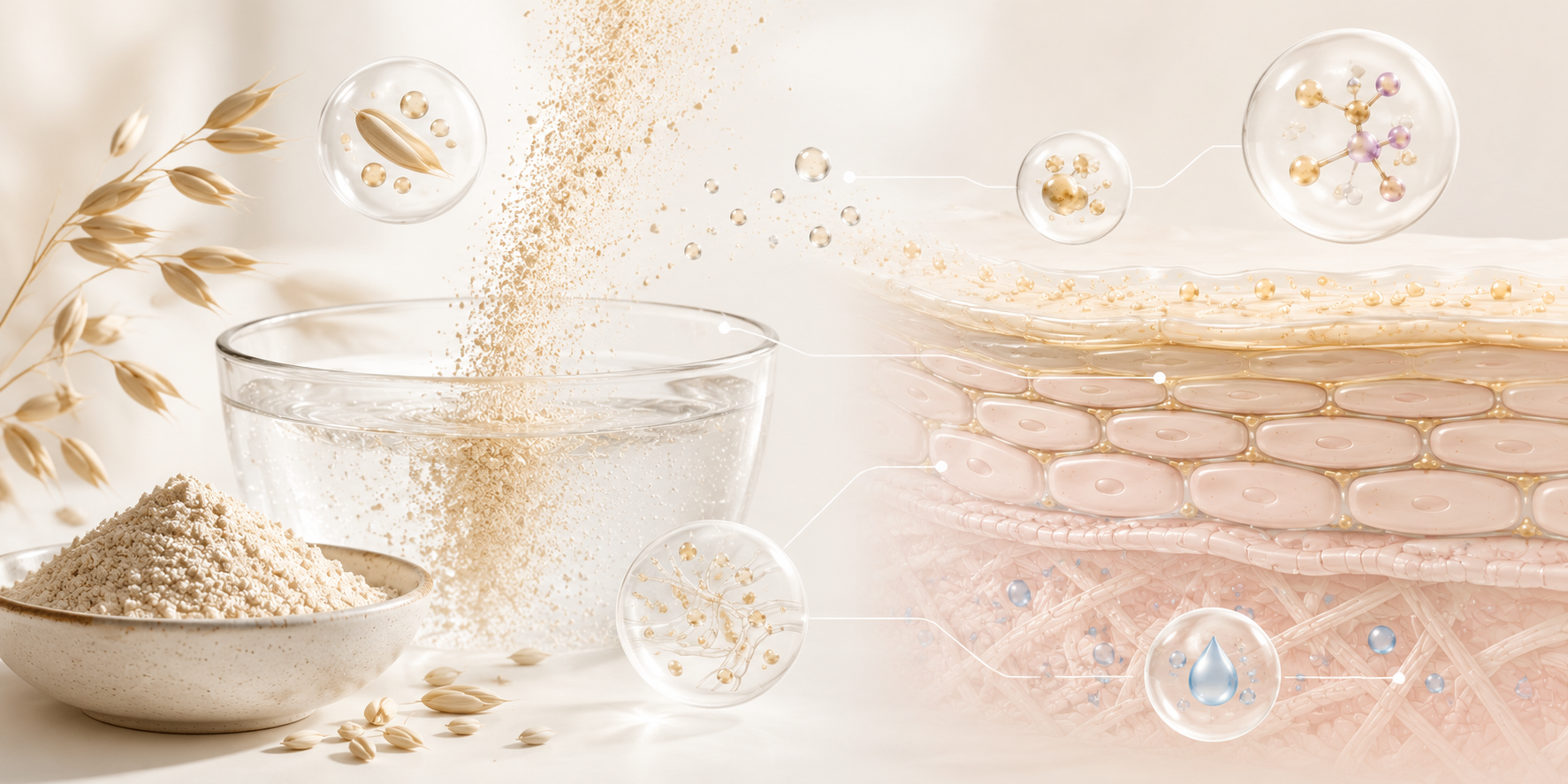
Colloidal oatmeal is made by grinding whole oat kernels into an extremely fine powder. Unlike ordinary oat flour, these tiny particles are specifically processed so they disperse evenly in water and remain suspended rather than settling to the bottom.
This allows the beneficial compounds naturally found within oats to come into close contact with the skin.
These include:
- Beta-glucans
- Oat lipids
- Proteins
- Natural sugars
- Avenanthramides (unique antioxidant compounds found almost exclusively in oats)
- Vitamin E and trace minerals
Together, these compounds help support the skin's protective barrier while reducing feelings of dryness, tightness and irritation.
Rather than dramatically changing the skin, colloidal oatmeal helps restore the environment healthy skin naturally prefers.
💡 Joanne's Insight
When clients describe their skin as feeling "angry," "tight" or "stinging," my first priority isn't stronger active ingredients—it's helping the skin feel comfortable again. Colloidal oatmeal has been one of those dependable ingredients I've reached for throughout my career because calm skin is better able to benefit from everything else you apply afterwards.

How Does Colloidal Oatmeal Work?
Healthy skin relies on an intact barrier.
Think of the skin barrier as a carefully built brick wall. The skin cells are the bricks, while natural lipids act as the mortar holding everything together.
When this barrier becomes disrupted, water escapes more easily while environmental irritants enter more readily. This often leaves skin feeling:
- Dry
- Tight
- Sensitive
- Rough
- Itchy
- Uncomfortable
Colloidal oatmeal supports several parts of this system simultaneously.
Forms a Protective Comfort Layer
Once applied, colloidal oatmeal creates an invisible protective film over the skin.
This breathable layer helps reduce transepidermal water loss (TEWL), allowing skin to retain more moisture while shielding it from everyday environmental stressors.
Importantly, this isn't a heavy coating. Instead, it works with the skin's own barrier to improve comfort.
Attracts and Holds Moisture
The beta-glucans naturally present in oats behave as humectants.
Humectants attract water into the upper layers of the skin, increasing hydration and helping skin feel softer and more supple.
This complements moisturisers that provide lipids and occlusive ingredients.
Supplies Barrier Lipids
Oats naturally contain beneficial fats that resemble some of the lipids already present within healthy skin.
These lipids help reinforce the outer barrier and improve skin softness over time.
🧠 Did You Know?
Oats are one of the few plants that naturally contain avenanthramides—unique antioxidant compounds largely found only in oats. Researchers believe these compounds play an important role in helping calm visible redness and supporting skin comfort.
Why Sensitive Skin Responds So Well
Sensitive skin isn't necessarily weak.
Often, it's simply skin whose protective barrier has become less effective.
When the barrier is compromised, everyday experiences such as cleansing, wind, heating, cold weather or active skincare ingredients may cause discomfort.
Colloidal oatmeal supports sensitive skin in several ways.
Helps Reduce Irritation
Avenanthramides help moderate some of the inflammatory processes that contribute to redness and discomfort.
While they won't stop every cause of sensitivity, they can help create an environment where skin feels calmer.
Supports Barrier Recovery
Healthy skin repairs itself continuously.
By improving hydration and reducing water loss, colloidal oatmeal provides conditions that support the skin's natural recovery processes.
Improves Skin Comfort
Many people notice that skin feels less tight, less itchy and more comfortable after using products containing colloidal oatmeal.
This improvement in comfort is one reason dermatologists frequently recommend colloidal oatmeal for dry and sensitive skin conditions.

More Than Just Dry Skin
Although colloidal oatmeal is often associated with dryness, its benefits extend further.
Because it supports the skin barrier rather than targeting one specific concern, it can be useful whenever skin feels stressed.
This may include skin that is:
- Sensitive
- Dehydrated
- Redness-prone
- Temporarily irritated
- Recovering after over-exfoliation
- Adjusting to retinoids or exfoliating acids
- Exposed to cold, dry or windy weather
Rather than replacing active ingredients, colloidal oatmeal often complements them by helping maintain a healthier barrier.
Many skincare routines become more effective when the skin barrier is functioning well.
❌ Myth vs ✅ Reality
Myth: Colloidal oatmeal is only useful for eczema.
Reality: While it is widely recommended for eczema-prone skin, colloidal oatmeal can benefit anyone experiencing dryness, sensitivity, dehydration or temporary irritation by supporting the skin barrier and improving comfort.
What Does the Research Say?
Colloidal oatmeal has been studied extensively in dermatology.
Research has shown that it can:
- Improve skin hydration
- Reduce transepidermal water loss
- Support barrier recovery
- Help calm visible redness
- Improve skin comfort
- Provide antioxidant activity through avenanthramides
These benefits explain why colloidal oatmeal appears in many products designed for sensitive skin, babies and people with compromised skin barriers.
Importantly, it works through multiple mechanisms rather than relying on a single active ingredient.
That makes it one of skincare's most versatile barrier-supporting ingredients.
✨ Why It Matters
Many skincare concerns begin with a weakened skin barrier. When your skin holds onto moisture more effectively and feels less irritated, it is often better able to tolerate active ingredients and maintain a healthier appearance. Colloidal oatmeal supports this foundation, helping your entire skincare routine work more harmoniously.

Which Skin Types Benefit Most?
Colloidal oatmeal is suitable for almost every skin type.
It is especially valuable for:
Dry Skin
Supports hydration while helping reduce moisture loss.
Sensitive Skin
Helps improve comfort and supports the skin barrier.
Mature Skin
As skin naturally produces fewer protective lipids with age, barrier-supporting ingredients become increasingly valuable.
Dehydrated Skin
Works alongside humectants and moisturisers to improve water retention.
Combination Skin
Barrier support benefits oily areas just as much as dry ones. Healthy skin isn't about removing every trace of oil—it's about maintaining balance.
👩⚕️ Skin Therapist Tip
If your skin suddenly becomes reactive after introducing a new active ingredient, don't immediately assume the ingredient is unsuitable. Sometimes the skin barrier simply needs additional support. Pairing your routine with a barrier-supporting moisturiser containing colloidal oatmeal may help improve comfort while your skin adapts.
Colloidal Oatmeal in Shanga
Within the Shanga collection, colloidal oatmeal appears in carefully selected formulations where skin comfort and barrier support are the priority.
It is found in:
- Restore Cream — where colloidal oatmeal works alongside ceramides, ectoin, panthenol, bisabolol, betaine and sodium hyaluronate to nourish and support dry or compromised skin.
- Purify Clay Mask — where colloidal oatmeal helps balance the purifying effects of kaolin and bentonite clays by calming the skin and maintaining comfort during treatment.
Rather than being included for marketing appeal, colloidal oatmeal complements other barrier-supporting ingredients to create formulations that respect the skin while delivering effective care.
Conclusion
Some skincare ingredients make bold promises.
Colloidal oatmeal takes a quieter approach.
Instead of forcing rapid change, it supports the skin's own protective systems—helping retain moisture, calm visible irritation and strengthen the barrier that healthy skin depends on every day.
Its long history of use, combined with modern scientific research, explains why it continues to earn a place in contemporary skincare.
For anyone looking to build healthier, more resilient skin, colloidal oatmeal remains one of the most reliable ingredients available.
Key Takeaways
- Colloidal oatmeal is finely milled whole oats designed specifically for skincare.
- It supports the skin barrier by improving hydration and reducing moisture loss.
- Beta-glucans attract water while oat lipids reinforce the barrier.
- Unique avenanthramides help calm visible redness and improve skin comfort.
- It is suitable for dry, sensitive, dehydrated and mature skin.
- Barrier-supporting ingredients help create healthier conditions for the skin over time.
- In the Shanga collection, colloidal oatmeal is found in Restore Cream and Purify Clay Mask.
Continue Your Learning
Colloidal oatmeal and bisabolol are often paired because they work beautifully together to support calm, comfortable skin. In the next lesson, we'll explore Bisabolol, a naturally derived ingredient renowned for helping soothe the skin while supporting barrier health and improving tolerance to everyday skincare.