Cranberry Seed Oil: A Small Berry with Remarkable Skin Benefits
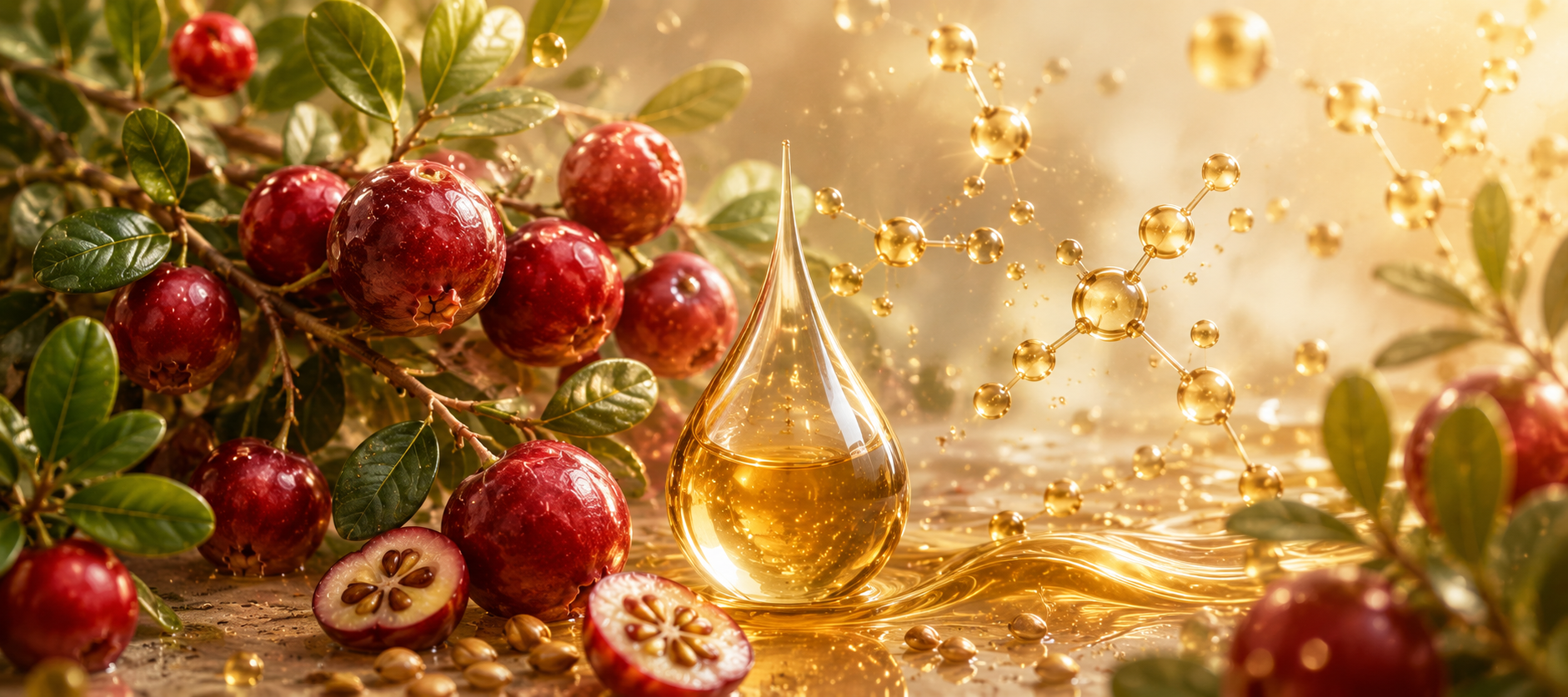
Few botanical oils are as unique as cranberry seed oil. Pressed from the tiny seeds inside cranberries, this lightweight oil contains an impressive balance of essential fatty acids alongside naturally occurring vitamin E and plant antioxidants. Rather than simply sitting on the surface of the skin, these nutrients help support the skin's protective barrier while defending against everyday environmental stress. Although less well known than oils such as argan or jojoba, cranberry seed oil has earned a place in premium skincare formulations because it combines nourishment, comfort and antioxidant protection in a beautifully elegant texture.

Full Lesson
What Is Cranberry Seed Oil?
Cranberry seed oil is extracted by cold pressing the tiny seeds of cranberries (Vaccinium macrocarpon or closely related species). While the fruit itself is widely recognised for its nutritional value, the seeds contain a concentrated source of beneficial lipids that are particularly well suited to skincare.
Unlike heavier botanical oils, cranberry seed oil feels surprisingly light on the skin. It absorbs easily, leaving the skin feeling comfortable rather than greasy.
Its popularity among formulators comes from its naturally balanced composition, including:
- Omega-3 fatty acids (alpha-linolenic acid)
- Omega-6 fatty acids (linoleic acid)
- Omega-9 fatty acids (oleic acid)
- Vitamin E (tocopherols and tocotrienols)
- Plant sterols
- Naturally occurring antioxidants
Together these compounds help maintain a healthy skin barrier while supporting the skin's natural resilience.

Why Are Fatty Acids So Important?
Although we often think of moisturising as simply adding water, healthy skin depends just as much on oils.
The outermost layer of the skin—the stratum corneum—is held together by specialised lipids that reduce water loss and help protect against external irritants.
Essential fatty acids are important building blocks for these protective lipids.
Linoleic acid (Omega-6), one of cranberry seed oil's most abundant fatty acids, is particularly valuable because it supports normal barrier function. When the barrier is healthy, the skin is generally better able to retain moisture and remain comfortable.
Omega-3 fatty acids also contribute to maintaining balanced, healthy-looking skin.
Unlike mineral oils, which primarily sit on the surface, botanical oils supply fatty acids that resemble many of the lipids naturally found within the skin barrier.
💡 Joanne's Insight
One of the most common mistakes I see is assuming richer always means better. Many people with combination or even oily skin avoid facial oils completely. A lightweight oil such as cranberry seed oil can actually leave the skin feeling balanced because it supports the barrier without feeling heavy.
Cranberry Seed Oil and Antioxidant Protection
Every day, our skin is exposed to sunlight, pollution and other environmental factors that generate unstable molecules called free radicals.
Free radicals can interact with healthy skin lipids, proteins and cell membranes through a process known as oxidative stress.
Our skin has its own antioxidant systems, but they gradually become depleted over time.
Cranberry seed oil naturally contains:
- Tocopherols (forms of vitamin E)
- Tocotrienols
- Polyphenolic compounds
- Other plant antioxidants
These antioxidants help neutralise many free radicals before they can interact with healthy skin structures.
This doesn't stop ageing, nor does it replace sunscreen, but it forms part of a broader approach to supporting long-term skin health.

❌ Myth vs ✅ Reality
Myth: Cranberry seed oil is only useful for dry skin.
Reality: Because it is naturally lightweight and rich in linoleic acid, cranberry seed oil may suit many skin types, including combination skin, when formulated appropriately.
🧠 Did You Know?
Cranberry seed oil is unusual because it naturally contains both omega-3 and omega-6 fatty acids in a relatively balanced ratio—a combination that is uncommon among botanical oils.
How Cranberry Seed Oil Supports the Skin Barrier
Think of your skin barrier as a brick wall.
The skin cells are the bricks.
The surrounding lipids are the mortar holding everything together.
When this lipid layer becomes depleted, the skin may lose water more easily and become less comfortable.
The fatty acids within cranberry seed oil help support these barrier lipids, allowing the skin to better retain hydration.
A healthy barrier often appears:
- smoother
- softer
- more comfortable
- more resilient
- naturally radiant
Importantly, cranberry seed oil does not force the skin to produce more moisture.
Instead, it supports the environment the skin needs to function well.
Why Formulators Appreciate Cranberry Seed Oil
No single botanical oil provides everything the skin needs.
Instead, experienced formulators often combine several oils with complementary fatty acid profiles.
Cranberry seed oil is frequently paired with oils such as:
- jojoba oil
- argan oil
- watermelon seed oil
- olive oil
- rosehip oil
- macadamia oil
Each contributes different fatty acids, antioxidants and plant compounds.
Cranberry seed oil is particularly valued because it provides antioxidant support while maintaining an elegant, lightweight texture.
✨ Why It Matters
Healthy-looking skin isn't created by one "miracle ingredient." It reflects thousands of tiny biological processes working together. Ingredients such as cranberry seed oil help support these natural processes by maintaining the skin barrier and contributing antioxidant protection, allowing skin to function at its best.

Cranberry Seed Oil in Shanga Products
Within the Shanga collection, cranberry seed oil is currently featured in:
- Radiance Elixir – containing Oxycoccus Palustrus (Cranberry) Seed Oil, where it contributes essential fatty acids and antioxidant support alongside watermelon seed, olive, argan, grape seed, macadamia, rosehip and sea buckthorn oils.
By combining multiple complementary botanical oils rather than relying on a single ingredient, the formulation delivers a broad spectrum of skin-supporting lipids and naturally occurring antioxidants.
👩⚕️ Skin Therapist Tip
Facial oils work best as the final step of your evening routine or mixed with your moisturiser. Applying an oil after water-based serums helps reduce moisture loss while leaving the skin feeling soft and comfortable.
Conclusion
Cranberry seed oil may not be as famous as argan or jojoba, but its unique balance of essential fatty acids, vitamin E and naturally occurring antioxidants has made it a favourite among modern skincare formulators.
Rather than acting as a heavy occlusive layer, it supports the skin's own protective barrier while helping defend against everyday environmental stress.
When included within a thoughtfully formulated skincare routine, cranberry seed oil contributes to healthy, resilient skin that feels comfortable, hydrated and naturally radiant.
Key Takeaways
- Cranberry seed oil is extracted from the tiny seeds inside cranberries.
- It naturally contains omega-3, omega-6 and omega-9 fatty acids.
- It provides vitamin E and plant antioxidants that help defend against oxidative stress.
- Its lightweight texture suits many different skin types.
- It supports the skin barrier rather than simply coating the skin.
- Healthy barrier function helps reduce moisture loss and improve skin comfort.
- Shanga Radiance Elixir includes cranberry seed oil as part of a multi-botanical oil blend.
Continue Your Learning
Cranberry seed oil is one member of a much larger family of nourishing botanical oils. Next, we'll explore Grapeseed Oil, another lightweight, antioxidant-rich oil prized for its high linoleic acid content and ability to support balanced, healthy-looking skin.