Understanding Dehydrated Skin
Dehydrated skin is one of the most common skin concerns, yet it is often misunderstood. Many people assume dehydration and dryness are the same thing, but they describe two very different conditions. Dehydrated skin lacks water, while dry skin lacks oil. Because any skin type can become dehydrated—including oily and acne-prone skin—understanding the difference is the first step towards choosing skincare that genuinely supports healthy skin. Once hydration is restored, skin often feels more comfortable, appears smoother and functions more effectively.

What Is Dehydrated Skin?
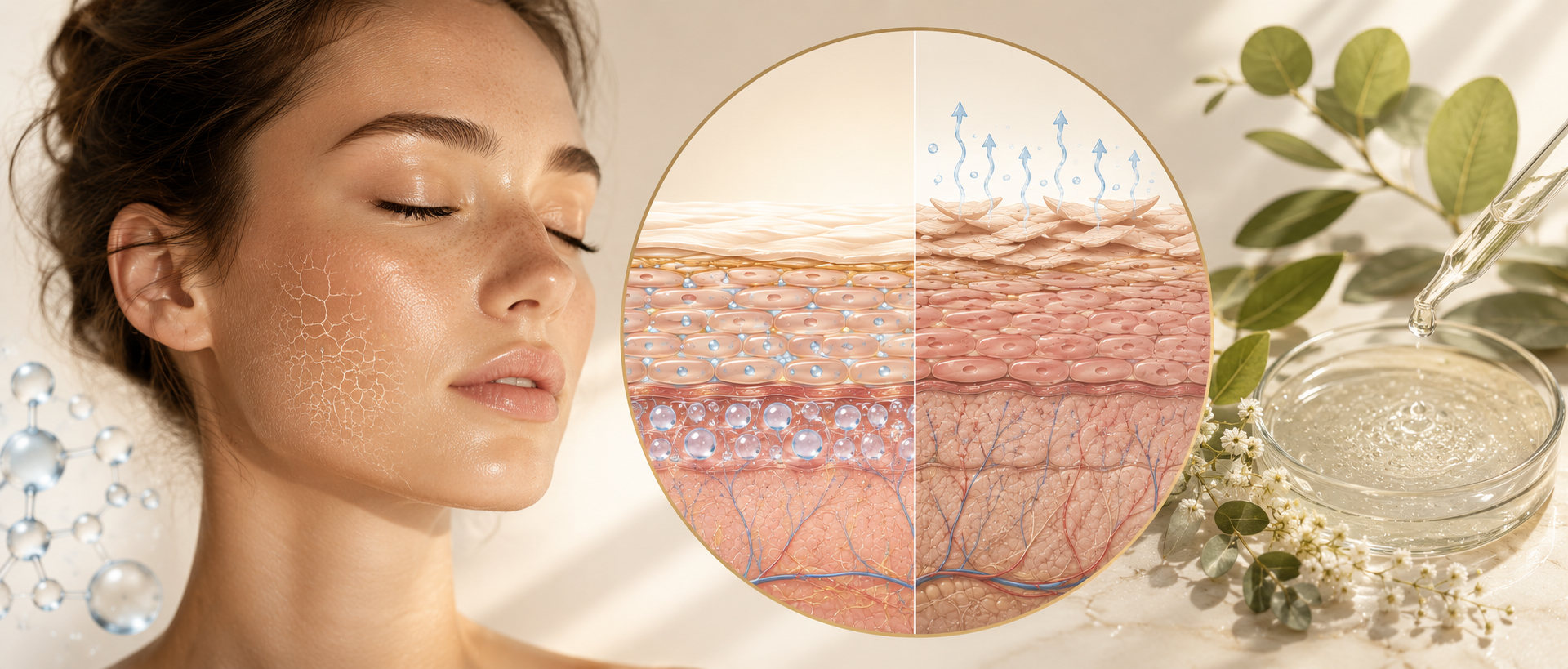
Dehydrated skin is skin that contains less water than it needs to function comfortably and efficiently.
Unlike dry skin, which is considered a skin type, dehydration is a temporary skin condition. It can affect anyone, regardless of whether their skin is oily, combination, normal or dry.
Water plays an essential role throughout the skin. It helps enzymes function properly, supports natural shedding of dead skin cells and contributes to softness, flexibility and comfort.
When water levels fall, the skin may begin to feel tight, dull or rough, even if it still produces plenty of oil.
Many people unknowingly treat dehydration by using stronger cleansers or oil-control products, which can make the problem worse.
Common signs of dehydrated skin include:
- Tightness after cleansing
- Dull or tired-looking skin
- Fine dehydration lines
- Rough texture
- Increased sensitivity
- Makeup sitting unevenly
- Skin that feels oily but tight at the same time
💡 Joanne's Insight
One of the most common things I see in clinic is people assuming their skin is oily when it's actually dehydrated. Their skin produces more oil to compensate, so they reach for stronger products, which removes even more water. Supporting hydration usually calms the skin far more effectively than trying to strip away oil.

Why Does Skin Become Dehydrated?
Your skin is constantly losing small amounts of water through a natural process called transepidermal water loss (TEWL).
This is completely normal.
Healthy skin replaces that lost water by drawing moisture upwards from deeper layers while the skin barrier slows excessive evaporation.
Problems occur when more water escapes than the skin can replace.
This imbalance may develop for many reasons.
Everyday causes include:
- Cold or windy weather
- Dry indoor heating or air conditioning
- Long hot showers
- Harsh cleansers
- Over-exfoliation
- UV exposure
- Ageing
- Low humidity
- Insufficient barrier-supporting skincare
Sometimes dehydration develops gradually, making it difficult to notice until the skin begins feeling uncomfortable.
🧠 Did You Know?
Even healthy skin naturally loses water every day. The goal of good skincare isn't to stop water loss completely—it's to help maintain the balance between water leaving the skin and water being replenished.
How Does Hydration Work Inside the Skin?
Water doesn't simply sit on the skin's surface.
Healthy hydration depends on several systems working together.
Natural Moisturising Factors (NMF)
Within the outer skin cells are naturally occurring molecules called Natural Moisturising Factors, or NMF.
These include amino acids, urea and small sugars that attract and hold water inside the skin.
Think of them as tiny water magnets.
When NMF levels decline, skin can lose its comfortable, supple feel.
The Skin Barrier
The outer skin barrier acts like a protective seal.
Lipids—including ceramides, cholesterol and fatty acids—help slow water from escaping into the environment.
If this barrier becomes disrupted, water leaves the skin more quickly.
Humectants
Many skincare ingredients work by attracting water.
These ingredients are called humectants.
Common examples include:
- Hyaluronic acid
- Glycerin
- Sodium PCA
- Panthenol
- Beta-glucan
- Saccharide isomerate
Humectants help increase hydration within the outer layers of the skin.
However, they work best when combined with ingredients that help reduce water loss.

❌ Myth vs ✅ Reality
Myth: Drinking more water alone will fix dehydrated skin.
Reality: Staying hydrated is important for overall health, but skin hydration also depends on the skin barrier, environmental factors and appropriate skincare.
Why Oily Skin Can Still Be Dehydrated
One of the biggest misconceptions in skincare is that oily skin cannot be dehydrated.
Oil and water are completely different.
Sebum is oil produced by sebaceous glands.
Hydration refers to water held within the skin.
Someone may produce plenty of oil while still lacking enough water.
In fact, dehydrated oily skin is extremely common.
When water levels fall, the skin may respond by producing more oil, creating a cycle where skin feels both greasy and tight.
This often explains why some people experience:
- Midday shine
- Tightness after cleansing
- Breakouts alongside flaky areas
- Makeup separating during the day
Rather than removing more oil, the solution is often to support hydration while protecting the skin barrier.
👩⚕️ Skin Therapist Tip
If your skin feels tight immediately after cleansing, your cleanser may be removing more than just excess oil. Choosing a gentle cleanser and applying hydrating products while the skin is still slightly damp can help improve comfort.
Supporting Dehydrated Skin
There is no single ingredient that "cures" dehydration.
Instead, healthy hydration comes from combining several approaches that work together.
1. Use Gentle Cleansers
Cleansing removes dirt, sunscreen and excess oil.
However, harsh cleansers may also remove protective surface lipids that help slow water loss.
Gentle cleansing helps maintain balance.
2. Add Water with Humectants
Hydrating serums often contain ingredients such as:
- Hyaluronic acid
- Glycerin
- Panthenol
- Beta-glucan
- Aloe vera
These ingredients attract and retain water within the upper skin layers.
3. Seal Hydration In
After hydrating, moisturisers help reduce evaporation.
Barrier-supporting ingredients include:
- Ceramides
- Cholesterol
- Fatty acids
- Squalane
- Plant oils
Together, these help maintain comfortable hydration.
4. Protect Against Daily Stressors
Daily sunscreen, avoiding excessive exfoliation and supporting the skin barrier all help reduce unnecessary dehydration.
Healthy hydration is built gradually through consistency rather than quick fixes.
[Illustration]
A premium skincare routine flow diagram showing Gentle Cleanser → Hydrating Mist → Hydrating Serum → Barrier Moisturiser → SPF (morning), and Gentle Cleanser → Hydrating Serum → Nourishing Moisturiser (evening). Small icons indicate water retention and barrier support throughout the routine.
✨ Why It Matters
Hydration influences far more than how skin feels.
Well-hydrated skin often appears smoother, reflects light more evenly and feels more comfortable throughout the day. It also supports many of the natural processes that keep the skin functioning well, including barrier performance and healthy cell turnover.
Supporting hydration isn't about chasing perfection—it's about helping your skin perform as it was designed to.
Building a Routine for Dehydrated Skin
A consistent routine is usually more effective than using multiple intensive products.
Look for products that combine hydration with barrier support.
A simple routine may include:
Morning
- Gentle cleanser
- Hydrating mist
- Hydrating serum
- Moisturiser
- Broad-spectrum SPF
Evening
- Gentle cleanser
- Hydrating serum
- Nourishing moisturiser
As hydration improves, skin often feels calmer, smoother and more resilient.
Continue Exploring Dehydrated Skin
Healthy hydration isn't supported by a single ingredient or product. It comes from understanding how your skin works and choosing a routine that supports both water balance and the skin barrier. These Academy lessons can help you explore the topic in more depth.
Related Ingredients
Discover the ingredients that help attract water, strengthen the skin barrier and maintain lasting hydration.
- Hyaluronic Acid — A powerful humectant that attracts and holds water within the skin.
- Ceramides — Essential barrier lipids that help reduce transepidermal water loss.
- Panthenol (Vitamin B5) — Helps soothe the skin while supporting hydration and barrier function.
- Niacinamide — Supports the skin barrier, improves moisture retention and enhances overall skin resilience.
- Beta-Glucan — A gentle humectant that provides hydration while helping calm the skin.
- Ectoin — Protects skin cells from environmental stress and helps maintain hydration.
- Saccharide Isomerate — A long-lasting carbohydrate complex that binds to the skin to provide ongoing hydration.
Related Skin Biology
Understanding the science behind hydration makes choosing skincare much easier.
- The Skin Barrier — Learn how the outer barrier keeps moisture in and environmental stressors out.
- Hydration vs Moisturising — Understand why water and oil play different roles in healthy skin.
- Skin pH — Discover how a healthy acid mantle supports hydration and barrier function.
- The Skin Microbiome — Explore how the skin's beneficial microorganisms contribute to barrier health.
- Cell Turnover — Learn how healthy hydration supports the skin's natural renewal process.
Recommended Shanga Rituals
Because dehydration is a skin condition, not a skin type, it can occur alongside any skincare concern. The best ritual depends on your skin's primary needs.
- Calm & Repair — Best for dehydrated skin with sensitivity, redness or a compromised barrier.
- Clarify & Balance — Ideal for oily or blemish-prone skin experiencing dehydration.
- Brighten & Glow — Supports dehydrated skin that appears dull or uneven in tone.
- Renew & Restore — Designed for dehydrated skin with visible signs of ageing and loss of firmness.
Products That Support Dehydrated Skin
Healthy hydration comes from a complete routine rather than a single product.
Look for products that work together to replenish water and support the skin barrier:
- Gentle Cleanser — Cleanses without unnecessarily disrupting the skin barrier.
- Hydrating Mist — Delivers lightweight hydration while preparing the skin for the next steps.
- Treatment Serum — Choose the serum that best matches your primary skin concern while supporting hydration.
- Barrier Moisturiser — Helps reduce water loss by reinforcing the skin's protective barrier.
- Broad-Spectrum SPF — Protects against UV exposure, one of the environmental factors that can contribute to dehydration.
Consistent, gentle skincare helps create the conditions for healthy, comfortable and well-hydrated skin over time.
Continue Your Learning
Now that you understand how dehydration affects the skin, the next step is learning why some skin becomes more easily irritated than others.
Continue to Sensitive Skin to discover how the skin barrier, nerves and immune system contribute to skin sensitivity, and how gentle skincare can help support calm, comfortable skin.