Enlarged Pores: Why They Appear Larger—and What You Can Realistically Do About Them
If you've ever looked closely in the mirror and wished your pores looked smaller, you're certainly not alone. Enlarged pores are among the most common skin concerns across all ages and skin types, particularly on the nose, cheeks and forehead.
Despite what many products claim, pores cannot be permanently opened, closed or erased. Their size is largely influenced by genetics, skin type and the health of the surrounding skin. However, understanding why pores become more visible can help you choose skincare that supports clearer follicles, healthier skin structure and a smoother overall appearance.
In this lesson, we'll explore what pores are, why they sometimes appear enlarged, and the everyday habits and ingredients that may help improve how your skin looks over time.

At a Glance
Let's begin by understanding what pores are and the important role they play in keeping your skin healthy.
What are pores?
Tiny openings on the skin's surface that allow natural skin oil (sebum) and fine hairs to reach the outside of the skin.
Where are they most noticeable?
- Nose
- Inner cheeks
- Forehead
- Chin
Why do pores appear larger?
- Genetics
- Higher sebum production
- Ageing
- Sun damage
- Loss of collagen and elastin
- Repeated congestion
Can skincare remove pores?
No. Pores are a normal part of healthy skin. While they cannot disappear, consistent skincare may help minimise their visible appearance by keeping follicles clear and supporting healthy skin.
What Are Pores?
Although many people think of pores as imperfections, they are actually an essential part of healthy skin biology.
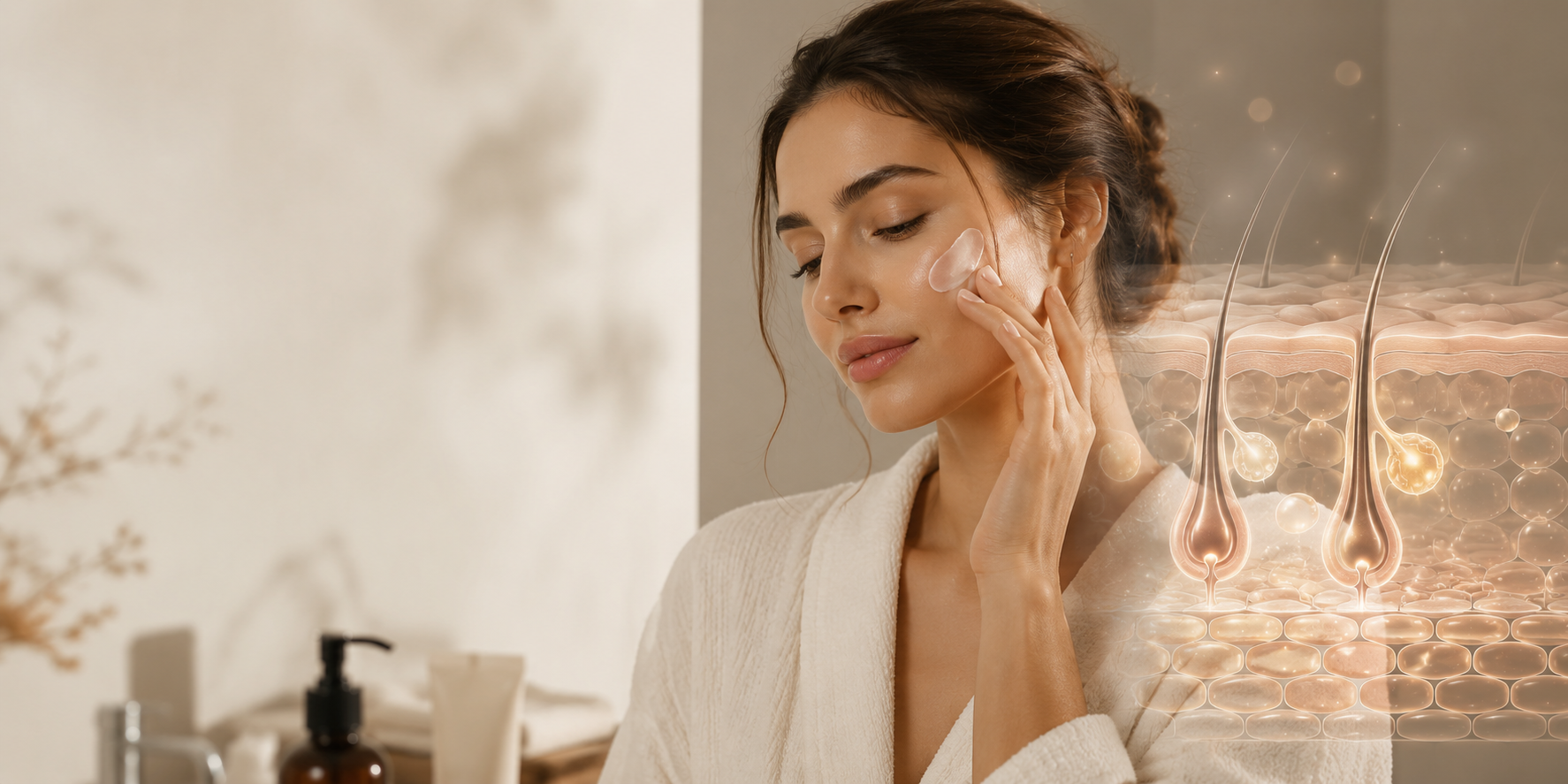
A pore is the tiny opening of a hair follicle on the skin's surface. Most pores are connected to a sebaceous gland, which produces sebum—your skin's natural oil. Sebum travels through the follicle before reaching the surface, where it helps keep the skin soft, flexible and better protected against moisture loss.
Without pores, your skin would be unable to release sebum, making it more vulnerable to dryness and disruption of its natural protective barrier.
Rather than trying to eliminate pores, the goal of good skincare is to support their normal function while reducing the factors that make them appear more noticeable.

What Determines Pore Size?
One of the biggest misconceptions in skincare is that pore size changes dramatically from day to day.
In reality, the natural size of your pores is largely determined by genetics.
Just as some people naturally have curly hair or larger eyes, some inherit larger sebaceous glands and wider follicle openings. This means two people following the same skincare routine may still have very different-looking pores.
However, while your baseline pore size is inherited, several biological changes can make pores appear more visible over time.
These include:
- Increased sebum production
- Persistent congestion
- Reduced collagen support
- Sun damage
- Natural ageing
- Changes in skin elasticity
Understanding these influences helps explain why pores often become more noticeable during adolescence, remain prominent in oily skin, and may appear larger again as collagen declines with age.

Why Are Pores More Noticeable on the Face?
Not every area of the body contains the same number of sebaceous glands.
The nose, forehead and central cheeks naturally contain a much higher concentration of oil-producing glands than areas such as the arms or legs.
Because these glands produce more sebum, the follicle openings are often naturally larger. This is why pores tend to be most visible across what dermatologists call the T-zone.
People with oilier skin usually produce greater amounts of sebum throughout the day. While this extra oil plays an important role in maintaining skin health, it can also make pores appear larger by stretching the follicle opening over time.
It's important to remember that more visible pores do not necessarily indicate unhealthy skin. In many cases, they simply reflect normal differences in skin biology.

How Sebum Influences Pore Appearance
Sebum is often blamed for enlarged pores, but the relationship is more nuanced.
Sebum is an essential oil that supports the skin barrier and helps reduce moisture loss. Problems arise when excess sebum combines with dead skin cells, allowing congestion to develop within the follicle.

Skin Therapist Tip
Many people believe that scrubbing harder will make pores disappear. In reality, overly aggressive cleansing can disrupt the skin barrier, leading to irritation and sometimes increased oil production. Gentle, consistent skincare is usually far more effective than harsh treatments.
Why Pores Become More Noticeable Over Time
Although genetics establish your natural pore size, they are only part of the picture. Throughout life, changes within the skin can influence how prominent pores appear.
These changes rarely happen overnight. Instead, they develop gradually as the skin responds to oil production, ageing, ultraviolet (UV) exposure and repeated congestion.
Rather than permanently enlarging or shrinking, pores often become more visible because the tissues surrounding the follicle change over time.
Understanding these biological processes helps explain why pore appearance can vary during adolescence, adulthood and later life.
Collagen, Elastin and Skin Support
Healthy skin is supported by a network of proteins beneath the surface.
Two of the most important are:
- Collagen, which provides strength and structure.
- Elastin, which allows skin to stretch and return to its original shape.
Together, these proteins help support the walls surrounding each hair follicle.
As we age, the body naturally produces less collagen and elastin. Existing fibres also become less organised over time.
Without the same level of structural support, the tissue surrounding a follicle may not hold its shape as firmly, allowing the pore opening to appear wider and more noticeable.
This gradual process explains why enlarged-looking pores often become more apparent from the thirties onwards, even in people who no longer experience oily skin.

The Role of Sun Damage
One of the biggest contributors to premature changes in pore appearance is long-term exposure to ultraviolet (UV) radiation.
UV radiation can gradually damage collagen and elastin within the dermis—the deeper layer of the skin responsible for its strength and resilience.
This process, often called photoageing, occurs slowly over many years and may contribute to:
- Reduced skin firmness
- Less elasticity
- More uneven skin texture
- Increased visibility of pores
Because these changes happen beneath the skin's surface, they are often not immediately noticeable. Daily sun protection is one of the most effective ways to help preserve the skin's supporting structures over time.
UV exposure also increases the production of free radicals—unstable molecules that contribute to oxidative stress. Over time, oxidative stress can accelerate collagen breakdown, reducing the structural support around hair follicles and contributing to more visible pores.

Repeated Congestion and Stretching
Another common reason pores become more noticeable is repeated congestion.
When excess sebum combines with naturally shedding skin cells, material can accumulate inside the follicle.
If this occurs frequently, the follicle opening may remain under gentle pressure for extended periods.
Over months or years, repeated cycles of blockage and clearing may contribute to pores appearing more prominent, particularly in areas prone to blackheads.
This helps explain why people with long-standing congestion often notice larger-looking pores around the nose and inner cheeks.
Supporting healthy cell turnover and keeping follicles clear may reduce this cycle and gradually improve overall skin texture.

Hormones and Sebum Production
Hormones also influence how visible pores appear because they help regulate sebum production.
During puberty, rising androgen hormones stimulate the sebaceous glands to produce more oil.
Similar hormonal fluctuations may occur during:
- The menstrual cycle
- Pregnancy
- Perimenopause
- Menopause
- Certain medical conditions
It's important to remember that hormones do not directly enlarge pores. Instead, increased sebum production can make follicles more prone to congestion, which may increase their visible appearance.
For many people, pore visibility naturally fluctuates during different stages of life as hormone levels change.

Can You Open or Close Pores?
One of the most persistent skincare myths is that hot water opens pores while cold water closes them.
In reality, pores do not contain muscles that allow them to open and shut like tiny doors.
Warm water may soften surface oil and improve the cleansing experience, while cool water can temporarily make skin feel refreshed. However, neither permanently changes pore size.
What often creates the impression of smaller pores is removing excess oil, clearing congestion and improving the smoothness of the surrounding skin.
This distinction is important because it shifts the focus from quick fixes to long-term skin health.
Myth vs Reality
|
Myth |
Reality |
|
Hot water opens pores. |
Warm water softens oil but does not change pore size. |
|
Cold water closes pores. |
Cool water may feel refreshing but does not permanently tighten pores. |
|
Pore strips shrink pores. |
They remove surface debris temporarily but do not change the follicle's size. |
|
Scrubbing harder makes pores disappear. |
Over-scrubbing can damage the skin barrier and increase irritation. |
|
Everyone should have invisible pores. |
Visible pores are a normal feature of healthy skin. |
Joanne's Insight
One of the most reassuring conversations I have with clients is explaining that visible pores are completely normal. Healthy skin isn't poreless skin. Rather than chasing unrealistic perfection, I encourage people to focus on improving overall skin health. As the skin becomes more balanced, hydrated and well supported, texture often appears smoother and pores become less noticeable naturally.
Caring for Enlarged Pores: Ingredients, Skincare and Daily Habits
By now, we've explored what pores are, why they become more noticeable and the biological factors that influence their appearance over time.
The encouraging news is that while skincare cannot permanently shrink pores, it can help improve how they look by supporting healthier follicles, reducing congestion and maintaining the skin's structural integrity.
The most effective approach is rarely about one "miracle" ingredient. Instead, it comes from combining evidence-informed ingredients with a consistent skincare routine that respects the skin barrier.
What Makes a Good Pore-Care Routine?
People often assume enlarged pores require strong or aggressive products.
In reality, healthy-looking skin usually responds better to gentle consistency than intensive treatments.
A pore-supportive routine aims to:
- remove excess oil without over-drying the skin
- encourage healthy shedding of dead skin cells
- reduce repeated congestion inside follicles
- support the skin barrier
- protect collagen from UV damage
- improve overall skin texture.
Rather than focusing on making pores disappear, the goal is to create an environment where follicles can function normally.
Salicylic Acid (BHA)
One of the most widely researched ingredients for oily and congestion-prone skin is salicylic acid, commonly known as a beta hydroxy acid (BHA).
Unlike many exfoliating acids, salicylic acid is oil soluble. This allows it to move into the oily environment inside the follicle, where excess sebum and dead skin cells can accumulate.
By helping loosen this build-up, salicylic acid may:
- support clearer follicles
- reduce blackheads
- improve skin texture
- reduce repeated congestion that contributes to more visible pores.
Because it works gradually, consistent use is generally more beneficial than occasional intensive treatments.

Niacinamide
Niacinamide (vitamin B3) has become one of the most versatile skincare ingredients for good reason.
Research suggests it may help support several processes involved in enlarged pore appearance.
These include helping to:
- regulate excess sebum production in some people
- strengthen the skin barrier
- improve skin hydration
- reduce visible redness
- refine overall skin texture.
As skin becomes more balanced, pores may appear less noticeable, even though their actual size has not changed.
Niacinamide is generally well tolerated by most skin types and can often be incorporated into both morning and evening routines.
Retinoids
Retinoids are vitamin A derivatives that support healthy skin renewal.
By encouraging more regular cell turnover, they help reduce the build-up of dead skin cells that can contribute to follicle blockage.
Over longer periods of consistent use, retinoids may also help support collagen production beneath the skin.
This dual action means they may assist by:
- encouraging clearer follicles
- improving overall skin texture
- supporting the skin's structural framework
- reducing the appearance of enlarged pores over time.
Because retinoids can initially increase dryness or irritation, they are usually introduced gradually while maintaining good moisturisation and daily sunscreen use.
Supporting the Skin Barrier
One of the most overlooked aspects of pore care is maintaining a healthy skin barrier.
When the barrier becomes disrupted through excessive cleansing, harsh exfoliation or overuse of active ingredients, the skin may become:
- irritated
- dehydrated
- more sensitive
- uncomfortable.
A compromised barrier can also make skin texture appear rougher, causing pores to seem more noticeable.
Supporting the barrier with appropriate moisturisers and barrier-supportive ingredients helps create healthier-looking skin overall.
Useful ingredients include:
- ceramides
- glycerin
- panthenol (pro-vitamin B5)
- beta-glucan
- hyaluronic acid
- squalane.
These ingredients do not reduce pore size directly, but they contribute to smoother, healthier skin that often reflects light more evenly.
Daily Sun Protection
Many people associate sunscreen with preventing sunburn.
Its role in preserving skin structure is equally important.
Long-term UV exposure contributes to the breakdown of collagen and elastin that support the walls surrounding each follicle.
Daily broad-spectrum sunscreen helps protect these structural proteins, supporting firmer skin over time and helping reduce one of the major contributors to enlarged-looking pores.
For many people, sunscreen is one of the most valuable long-term investments in skin texture.
Gentle Chemical Exfoliation
Healthy skin naturally sheds dead cells every day.
Sometimes this process slows, allowing excess cells to remain around the follicle opening.
Gentle chemical exfoliants can support this natural renewal process.
Depending on your skin type, ingredients may include:
- BHAs, which work well for oilier or congestion-prone skin.
- AHAs, which primarily improve the skin's surface texture.
- PHAs, which provide gentler exfoliation for more sensitive skin.
More exfoliation is not necessarily better.
Using exfoliating products too frequently can damage the skin barrier, leading to irritation, dryness and increased sensitivity.

Lifestyle Habits That Support Healthy Skin
Skincare products are only one part of the picture.
Daily habits also influence the overall condition of the skin.
While lifestyle changes cannot alter genetically determined pore size, they can support healthier skin function.
Healthy daily habits include:
- removing makeup each evening
- avoiding picking or squeezing blackheads
- changing pillowcases regularly
- using sunscreen consistently
- sticking with a routine rather than constantly changing products
Small daily habits often have a greater cumulative effect than occasional intensive treatments.
What Results Can You Realistically Expect?
One of the biggest misconceptions about enlarged pores is expecting rapid change.
Because pore appearance is influenced by genetics, collagen, sebum production and long-term skin health, improvements usually occur gradually.
With consistent skincare, many people notice:
- smoother skin texture
- fewer blackheads
- reduced congestion
- healthier skin barrier function
- less noticeable pores.
The objective is healthier-looking skin—not invisible pores.
Healthy skin naturally contains visible follicles, and this remains true even with excellent skincare.

Skin Therapist Tip
When clients ask me how to make their pores disappear, I explain that the goal isn't to erase them—it's to help them function well. Skin that is balanced, well hydrated and consistently cared for usually looks smoother because the follicles remain clearer and the surrounding skin is healthier. Patience and consistency almost always outperform aggressive treatments.
Why Understanding Enlarged Pores Matters
By now, you've learned that pores are an essential part of healthy skin, not a flaw to be eliminated.
They allow sebum to reach the skin's surface, helping maintain hydration, support the skin barrier and protect the skin from excessive moisture loss. Without pores, healthy skin simply wouldn't function as it should.
Understanding how pores work also helps separate skincare myths from biological reality.
Many products promise to "erase" pores or permanently tighten them. While these claims can be appealing, the science tells a different story. Genetics largely determine your natural pore size, while factors such as oil production, repeated congestion, ageing and sun exposure influence how noticeable pores become over time.
Although skincare cannot permanently shrink pores, it can support healthier skin that often appears smoother, clearer and more refined over time.
This shift in perspective is important.
Instead of chasing impossible perfection, you can focus on supporting the biological processes that contribute to healthier-looking skin.

Common Mistakes That May Make Pores Look More Noticeable
Many people unintentionally make pore concerns worse by trying to fix them too aggressively.
Common examples include:
- Over-cleansing several times each day.
- Scrubbing the skin with abrasive exfoliants.
- Using multiple strong active ingredients at once.
- Skipping moisturiser because the skin feels oily.
- Picking or squeezing blackheads.
- Forgetting daily sunscreen.
These habits can disrupt the skin barrier, increase irritation and make overall skin texture appear rougher.
A calmer, more consistent routine is usually far more effective than repeatedly changing products or using overly harsh treatments.
Healthy skin responds best to balance rather than extremes.
Skin Therapist Tip
One of the most effective changes you can make is simply becoming consistent.
Healthy skin develops through thousands of small biological processes occurring every day. Cell turnover, collagen renewal, barrier repair and normal follicle function all happen gradually, not overnight.
Rather than looking for dramatic changes after a few days, try evaluating your skin over several months.
Small improvements in hydration, texture, congestion and overall skin health often combine to produce meaningful improvements in how pores appear.
Consistency almost always delivers better long-term results than constantly changing products.
Joanne's Insight
One of the questions I hear most often in clinic is, "Can you make my pores disappear?"
My answer is always reassuring.
Healthy skin has visible pores.
Every person has them, and every skin therapist has them too.
The goal isn't to erase something that's completely normal. It's to support healthier skin so pores become less noticeable because the surrounding skin is functioning well.
When clients stop chasing perfection and begin caring for their skin consistently, something interesting often happens. They become less focused on individual pores and more appreciative of how healthy, comfortable and balanced their skin feels overall.
That shift in mindset is often just as rewarding as the improvements they see in the mirror.
Continue Your Learning
Understanding enlarged pores is only one part of understanding healthy skin.
As you continue building your skincare knowledge, you may also enjoy exploring:
- The Skin Barrier
- Sebum and Oil Production
- Cell Turnover Explained
- Blackheads and Whiteheads
- Collagen and Skin Ageing
- Salicylic Acid (BHA)
- Niacinamide
- Retinoids
- Sunscreen Explained
Each lesson builds on the science introduced here, helping you make informed skincare decisions with greater confidence.
Key Takeaways
- Pores are a normal and essential part of healthy skin.
- Genetics largely determine your natural pore size.
- Sebum, ageing, collagen loss, sun damage and repeated congestion can make pores appear more visible.
- Pores cannot be permanently opened, closed or removed.
- Ingredients such as salicylic acid, niacinamide and retinoids may help improve the appearance of pores by supporting healthier skin function.
- Protecting the skin barrier is just as important as reducing congestion.
- Daily sunscreen helps preserve collagen that supports the surrounding skin.
- Consistency produces gradual improvements that are often more meaningful than aggressive short-term treatments.
- Healthy-looking skin is the goal—not perfectly invisible pores.

Conclusion
Visible pores are not a sign of unhealthy skin—they are a natural feature of normal skin biology.
While genetics establish much of their appearance, your daily skincare habits can influence how noticeable they become over time. By supporting healthy cell turnover, maintaining the skin barrier, protecting collagen and reducing repeated congestion, you create the conditions for smoother-looking, healthier skin.
Perhaps the most valuable lesson is that good skincare is rarely about dramatic transformations.
It is about understanding your skin, making informed choices and caring for it consistently.
When you focus on understanding your skin and caring for it consistently, healthier-looking skin often follows naturally.