Glycerin: The Foundation of Healthy Hydration
Many skincare ingredients receive attention because they sound innovative or exciting. Glycerin is different. It has been trusted by dermatologists and formulators for decades because it quietly performs one of skin's most important jobs—helping maintain hydration.
Despite being one of the oldest ingredients in skincare, glycerin remains one of the most effective. It works with your skin rather than against it, supporting moisture balance, improving comfort and helping your skin function at its best.

Full Lesson
What Is Glycerin?
Glycerin (sometimes listed as glycerol or vegetable glycerine) is a naturally occurring humectant.
A humectant is an ingredient that attracts and holds water.
Our own skin naturally contains small amounts of glycerin as part of its Natural Moisturising Factor (NMF)—a collection of water-binding molecules that help keep the outer skin layers hydrated and flexible.
Modern skincare often uses plant-derived glycerin because it is gentle, highly effective and suitable for almost every skin type.
Unlike richer oils or butters that sit on the surface, glycerin works within the upper layers of the skin where hydration is needed most.
Why Healthy Skin Depends on Water
Every skin cell functions better when it contains the right amount of water.
When hydration levels are balanced:
- skin feels softer
- texture becomes smoother
- flexibility improves
- the barrier functions more effectively
- skin feels more comfortable.
When hydration drops, skin can feel rough, tight or dull—even if it still produces plenty of oil.
This is why oily skin can also be dehydrated.
Glycerin helps restore that balance.
💡 Joanne's Insight
One of the biggest misconceptions I see in clinic is that hydration only matters for dry skin. In reality, every skin type benefits from maintaining healthy water levels. Even oily or breakout-prone skin often becomes calmer once dehydration is addressed.
How Does Glycerin Work?

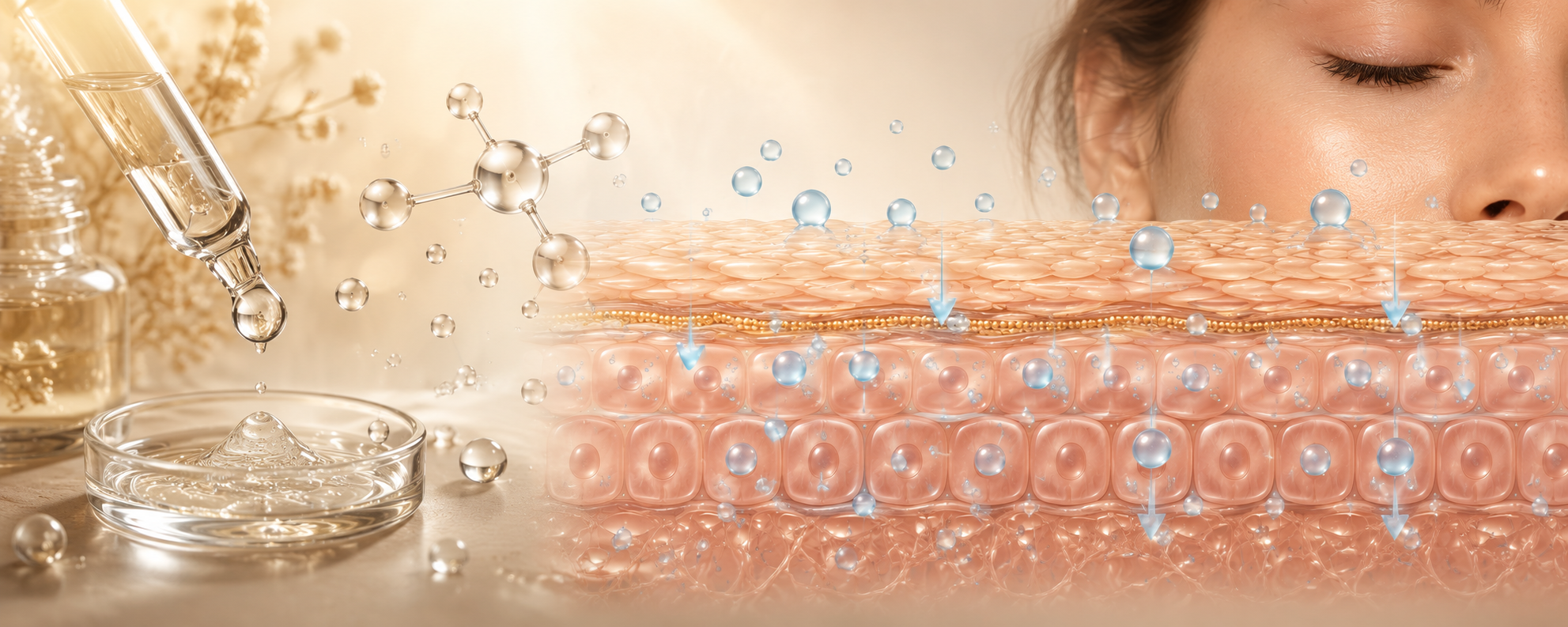
Glycerin acts like a microscopic water magnet.
Its molecular structure naturally attracts water molecules, helping move moisture into the outer layers of the epidermis where skin needs it most.
This hydration supports healthy skin cells, making them more flexible and resilient.
Importantly, glycerin doesn't simply add water once.
It continually helps maintain moisture balance throughout the day.
This ongoing hydration supports normal skin function while reducing the feeling of dryness and tightness.
Glycerin Supports More Than Hydration
Hydration is only part of the story.
Research shows glycerin also supports several important skin processes.
Supports the Skin Barrier
Healthy hydration allows skin cells to sit together more effectively.
When skin remains properly hydrated, the barrier is better able to reduce unnecessary water loss while protecting against everyday environmental stress.
Improves Skin Comfort
Well-hydrated skin generally feels:
- softer
- smoother
- less tight
- more comfortable.
This is one reason glycerin appears in so many products designed for sensitive skin.
Supports Natural Skin Renewal
Healthy hydration helps enzymes within the stratum corneum function normally.
These enzymes assist the natural shedding of older skin cells, allowing fresh cells to gradually reach the surface.
Glycerin doesn't speed this process unnaturally—it simply supports healthy skin biology.
❌ Myth vs ✅ Reality
Myth: Glycerin simply sits on top of the skin.
Reality: Glycerin works within the upper layers of the epidermis, helping skin attract and retain water while supporting normal barrier function.
Why Glycerin Works So Well With Other Ingredients
Very few ingredients work alone.
Glycerin is especially effective because it complements many other skincare actives.
For example:
- Hyaluronic Acid attracts large amounts of water.
- Saccharide Isomerate helps bind hydration for longer periods.
- Panthenol supports hydration while calming skin.
- Ceramides reduce water loss by strengthening the barrier.
- Beta-Glucan combines hydration with skin comfort.
Together, these ingredients create healthier, longer-lasting hydration than any one ingredient could achieve on its own.
🧠 Did You Know?
Glycerin has been used in skincare for well over a century and remains one of the most researched moisturising ingredients available. Despite countless new ingredient trends, it continues to appear in many of the world's most effective skincare formulations.

Which Skin Types Benefit From Glycerin?
One of glycerin's greatest strengths is its versatility.
Dry Skin
Helps replenish lost water while improving softness and comfort.
Dehydrated Skin
Supports water balance regardless of how much oil the skin produces.
Sensitive Skin
Its gentle nature makes it suitable for skin that becomes easily irritated.
Mature Skin
Maintaining hydration can improve the appearance of rough texture and support overall skin comfort.
Oily Skin
Hydration and oil production are different. Proper hydration can help skin feel healthier without making it greasy.
✨ Why It Matters
Healthy skin is not simply about adding more oils or stronger active ingredients. Water is essential for every skin cell to function normally. By helping maintain hydration every day, glycerin supports the environment your skin needs to stay comfortable, resilient and healthy.
How Is Glycerin Used in a Skincare Routine?

Because glycerin is gentle and compatible with almost every ingredient, it appears throughout many skincare routines.
You may find it in:
- cleansers
- hydrating mists
- serums
- moisturisers
- masks
- sunscreens.
Rather than choosing one product because it contains glycerin, look for routines where hydration is supported at multiple steps.
This layered approach helps maintain moisture throughout the day.
👩⚕️ Skin Therapist Tip
Apply hydrating products containing glycerin onto slightly damp skin after cleansing or misting. Following with a moisturiser helps slow water loss and keeps hydration where your skin needs it.
Glycerin in Shanga Formulations
Glycerin appears throughout the Shanga collection because it supports healthy skin regardless of skin type. It works alongside barrier-supporting ingredients such as ceramides, beta-glucan, panthenol, niacinamide and saccharide isomerate to maintain comfortable, balanced hydration.
Shanga products containing glycerin include:
- Calm Cleanser
- Purify Cleanser
- Repair Hydromist
- Antioxidant Hydromist
- Reveal Face Polish
- Dual Action Peel
- Reveal Tonic
- Clarify Tonic
- B-Gentle Serum
- B-Strong Serum
- Vibran-C Serum
- Purify Rescue Gel
- Soothing Hydrogel Mask
- Purify Clay Mask
- Purify Moisturiser
- Calm Moisturiser
- Hydrate Moisturiser
- Restore Cream
- De-Light SPF
- Renew Eye Cream.
Conclusion
Glycerin may not receive the same attention as newer skincare ingredients, but its importance cannot be overstated.
Healthy skin relies on water, and glycerin helps maintain that hydration every day.
By attracting moisture into the skin, supporting the barrier and improving overall comfort, it creates the conditions healthy skin needs to function well.
Simple, gentle and remarkably effective, glycerin remains one of the most valuable ingredients in modern skincare.
Key Takeaways
- Glycerin is one of the most effective humectants used in skincare.
- It attracts water into the upper layers of the skin.
- Healthy hydration supports a stronger skin barrier.
- Every skin type—including oily skin—benefits from balanced hydration.
- Glycerin works exceptionally well alongside ceramides, hyaluronic acid, panthenol and beta-glucan.
- It appears in cleansers, serums, moisturisers, masks and sunscreens because hydration is important at every stage of a skincare routine.
Continue Your Learning
Now that you understand how glycerin attracts and maintains water within the skin, the next lesson explores Beta-Glucan - a remarkable ingredient that not only hydrates but also helps soothe sensitive skin, support the skin barrier and promote everyday skin resilience.