Green Tea: Nature's Antioxidant Defender for Healthy Skin
Few botanical ingredients have been studied as extensively as green tea. Rich in naturally occurring antioxidants known as polyphenols, green tea helps support the skin against everyday environmental stress while complementing its own protective systems. Although it cannot prevent ageing or replace sunscreen, it can help reduce oxidative stress that contributes to visible skin changes over time. Whether your skin is sensitive, oily, ageing or simply exposed to daily pollution and sunlight, green tea is one of skincare's most versatile supporting ingredients.

Full lesson
What Is Green Tea?
Green tea comes from the leaves of Camellia sinensis, the same plant used to produce black, white and oolong teas. The difference lies in how the leaves are processed.
Unlike black tea, green tea leaves are quickly heated after harvesting to minimise oxidation. This preserves many of the naturally occurring compounds responsible for its antioxidant activity.
These include:
- Catechins
- Polyphenols
- Flavonoids
- Amino acids
- Vitamins and minerals
Among these compounds, one stands above the rest.
Epigallocatechin gallate (EGCG) is considered the primary active antioxidant in green tea and has been widely researched for its ability to help protect skin from oxidative stress.
Rather than changing the skin dramatically, green tea works quietly in the background, supporting healthy skin function every day.
💡 Joanne's Insight
Over the years, I've found that ingredients don't always need to be dramatic to be valuable. Green tea is one of those quiet achievers. It may not produce overnight changes, but when used consistently alongside sunscreen and barrier-supporting skincare, it helps skin remain calm, comfortable and resilient.
Why Does Skin Need Antioxidants?
Every day your skin encounters challenges such as:
- Ultraviolet (UV) radiation
- Air pollution
- Smoke
- Heat
- Blue light from digital devices
- Natural cellular metabolism
These processes generate unstable molecules called free radicals.
Free radicals are highly reactive molecules that seek stability by interacting with nearby cells, proteins and lipids.
When too many accumulate, they contribute to oxidative stress.
Oxidative stress is associated with:
- Reduced collagen quality
- Increased inflammation
- Uneven skin tone
- Loss of firmness
- Earlier visible signs of skin ageing
Your skin naturally produces antioxidants to manage these molecules, but daily environmental exposure can overwhelm those defences.
This is where topical antioxidants such as green tea become valuable.

How Green Tea Supports Healthy Skin
Green tea doesn't work by forcing the skin to behave differently.
Instead, it supports the skin's own protective systems.
Antioxidant Protection
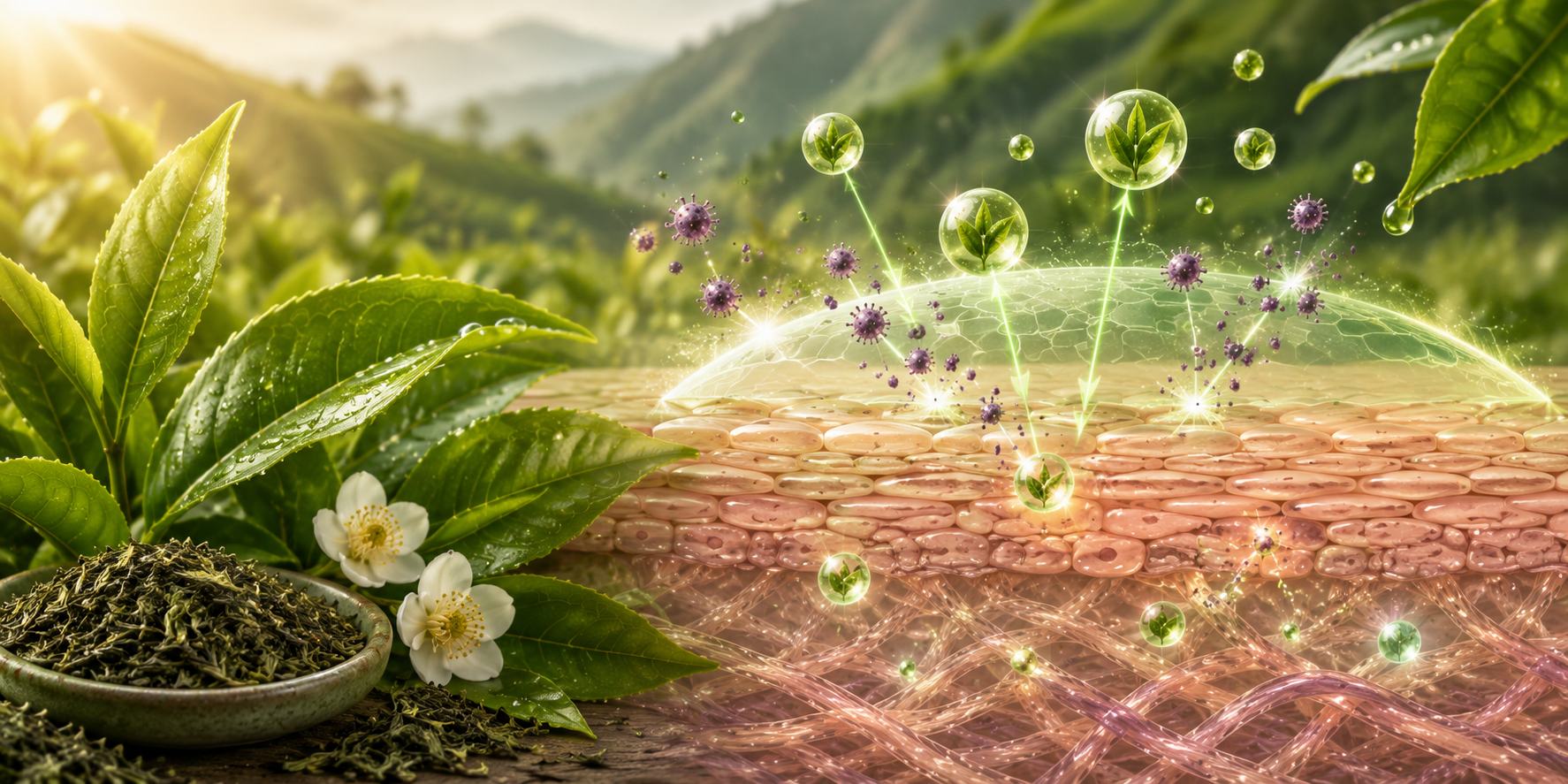
Green tea polyphenols can neutralise free radicals before they interact with healthy skin structures.
By helping reduce oxidative stress, they support long-term skin health.
Helps Calm Visible Redness
Green tea contains naturally soothing plant compounds that may help reduce the appearance of temporary redness caused by environmental stress.
This makes it popular in products designed for sensitive or reactive skin.
Supports the Skin Barrier
Healthy skin depends on an intact barrier.
When oxidative stress increases, the barrier can become less efficient.
Green tea helps support this barrier so skin is better able to retain moisture and defend itself against external irritants.
Complements Other Antioxidants
Green tea works particularly well alongside ingredients such as:
- Vitamin C
- Vitamin E
- Resveratrol
- Coenzyme Q10
- Niacinamide
Rather than replacing one another, these antioxidants work in complementary ways to provide broader protection.
🧠 Did You Know?
Green tea contains more than 8,000 naturally occurring plant compounds, many of which belong to a family of antioxidants called polyphenols that help protect the tea plant from environmental damage—and can similarly help support human skin.
Green Tea and Different Skin Types
One reason green tea appears in so many skincare products is its versatility.
Sensitive Skin
Its soothing antioxidant profile may help calm skin exposed to environmental stress.
Oily and Combination Skin
Green tea is lightweight and is commonly included in formulations designed to support balanced-looking skin.
Mature Skin
Because oxidative stress contributes to collagen breakdown over time, antioxidants like green tea help support long-term skin health.
Dry or Dehydrated Skin
Green tea is often combined with hydrating ingredients that strengthen the skin barrier while providing antioxidant protection.
❌ Myth vs ✅ Reality
Myth: Green tea can reverse skin ageing.
Reality: Green tea cannot reverse ageing or replace sunscreen. Instead, it helps protect skin from ongoing environmental stress that contributes to visible signs of ageing over time.

Green Tea in Everyday Skincare
Because green tea is gentle, it can be incorporated into many different types of skincare products.
You may find it in:
- Facial mists
- Serums
- Exfoliating tonics
- Moisturisers
- Masks
- Cleansers
It works particularly well within a consistent daily routine.
Morning:
- Cleanse
- Antioxidant serum or mist containing green tea
- Moisturiser
- Broad-spectrum SPF
Evening:
- Cleanse
- Treatment serum
- Moisturiser
Consistency matters far more than using very high concentrations occasionally.
👩⚕️ Skin Therapist Tip
Think of antioxidants like sunscreen's support team. Sunscreen remains your primary defence against UV damage, while antioxidants such as green tea help manage the oxidative stress that still occurs despite good sun protection.
Why Green Tea Works Well With Other Ingredients
Modern skincare rarely relies on a single ingredient.
Green tea pairs particularly well with:
|
Ingredient |
Why They Work Well Together |
|
Vitamin C |
Broader antioxidant protection |
|
Resveratrol |
Complementary defence against free radicals |
|
Niacinamide |
Supports barrier function while green tea reduces oxidative stress |
|
Hyaluronic Acid |
Hydrates while antioxidants defend the skin |
|
Ceramides |
Barrier support alongside environmental protection |
|
Beta-Glucan |
Combines soothing hydration with antioxidant care |
Layering complementary ingredients allows multiple pathways of healthy skin function to work together rather than relying on one ingredient alone.
✨ Why It Matters
Your skin is constantly interacting with the world around it. While you can't avoid sunlight, pollution or everyday environmental stress entirely, you can support your skin's natural defences. Green tea helps reduce the burden of oxidative stress, allowing the skin to maintain its healthy barrier, hydration and resilience over time. It isn't about dramatic transformation—it's about helping healthy skin stay healthy.

Which Shanga Products Contain Green Tea?
Green tea appears throughout the Shanga collection where antioxidant support, soothing care or barrier protection are beneficial. According to the current ingredient listings, products containing green tea include:
- Antioxidant Hydromist – Green Tea Leaf Extract
- Dual Action Peel – Green Tea Leaf Extract
- Reveal Tonic – Green Tea Leaf Extract
- B-Strong Serum – Green Tea Leaf Extract
- Clarify Tonic – White Tea Extract (from Camellia sinensis)
- Purify Rescue Gel – available with Green Tea Leaf Extract as listed
- Keep Clear Serum – Green Tea Leaf Extract (legacy product listing)
Conclusion
Green tea has earned its place as one of skincare's most respected botanical ingredients because its benefits are grounded in science rather than hype. By helping defend against oxidative stress, supporting the skin barrier and calming environmentally stressed skin, it complements a wide variety of skincare routines.
While it won't replace sunscreen or reverse ageing, green tea provides steady, everyday support that helps maintain healthy, resilient skin over time.
Key Takeaways
- Green tea is rich in antioxidant polyphenols, particularly EGCG.
- It helps neutralise free radicals generated by everyday environmental stress.
- Green tea supports healthy skin barrier function and overall skin resilience.
- It may help calm visible redness associated with environmental exposure.
- It pairs exceptionally well with Vitamin C, niacinamide, ceramides and resveratrol.
- Green tea complements sunscreen but does not replace it.
- Consistent daily use provides greater long-term benefit than occasional application.
Continue Your Learning
Green tea is only one member of the skin's antioxidant support network. Next, discover how Coenzyme Q10 helps power healthy skin cells while protecting them from oxidative stress, and why this naturally occurring molecule becomes increasingly important as we age. next lesson