Hyaluronic Acid: The Science of Skin Hydration
Hydration is one of the foundations of healthy skin, yet it involves far more than simply adding water to the surface. Every day, your skin carefully regulates how much water it holds, where that water is stored and how quickly it is lost.
At the centre of this remarkable system is hyaluronic acid—a naturally occurring molecule found throughout the skin that helps attract and retain moisture. Although it has become one of the most popular ingredients in modern skincare, hyaluronic acid is often misunderstood. Understanding how it works can help you build a routine that supports healthy, comfortable and resilient skin rather than simply chasing temporary hydration.

What Is Hyaluronic Acid?
Hyaluronic acid is a naturally occurring sugar molecule known as a glycosaminoglycan. While the scientific name sounds complex, its role is beautifully simple: it helps bind and retain water throughout the body.
Hyaluronic acid is found naturally in many tissues, including:
- the skin
- joints
- eyes
- connective tissue
In the skin, it is especially abundant within the dermis, where it forms part of the extracellular matrix—the supportive environment surrounding collagen, elastin and skin cells.
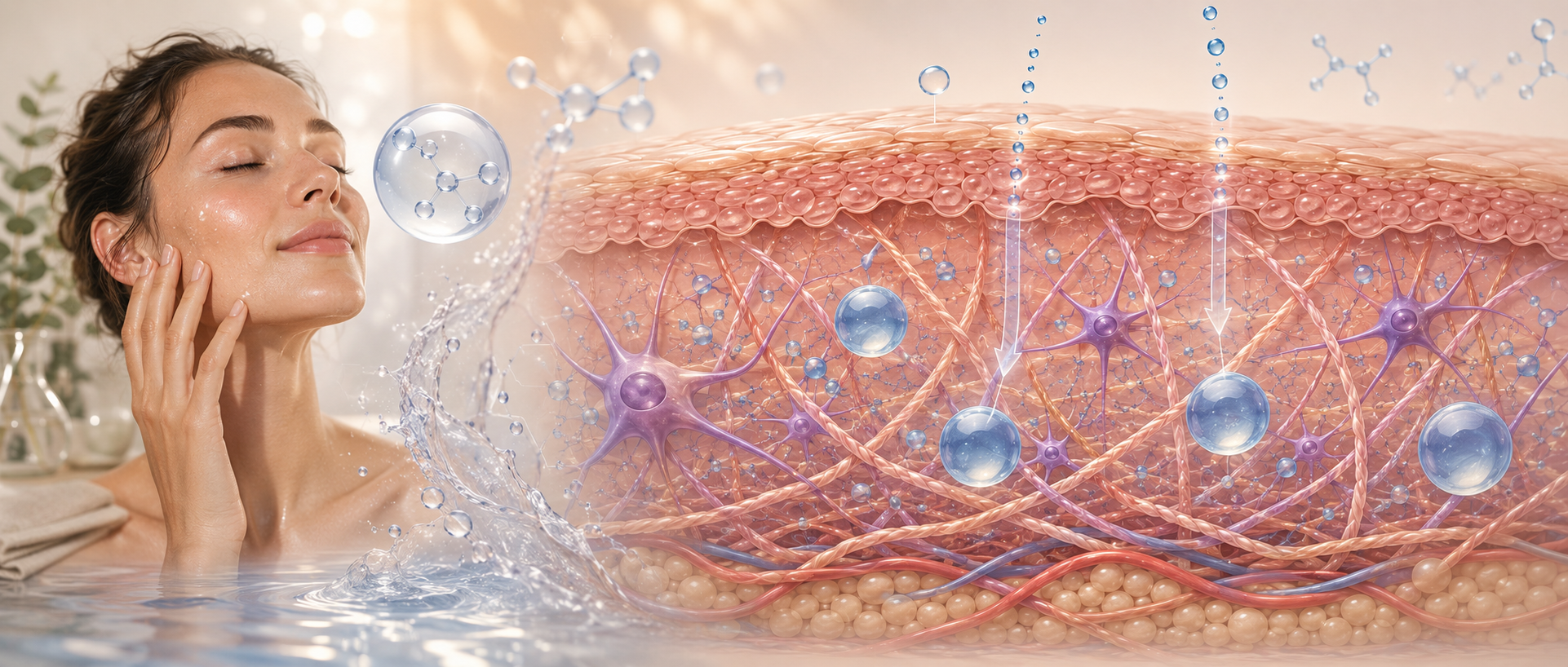
One of hyaluronic acid's most remarkable characteristics is its ability to attract and hold significant amounts of water relative to its own weight. Rather than acting like a sponge that simply absorbs moisture once, it forms a hydrated gel-like network that helps maintain the skin's natural water balance.
This is one reason healthy, youthful skin typically feels smooth, supple and comfortable.
As we age and experience ongoing environmental exposure, the amount of naturally occurring hyaluronic acid within the skin gradually declines. This contributes to reduced hydration, changes in skin texture and a less plump appearance over time.
Fortunately, topical skincare can help support hydration at the skin's surface while working alongside the skin's own natural moisture systems.
🧠 Did You Know?
Around half of the body's total hyaluronic acid is found within the skin, where it plays an important role in maintaining hydration, elasticity and overall skin comfort.

How Does Hyaluronic Acid Work?
Unlike oils that reduce water loss or occlusive ingredients that seal the skin, hyaluronic acid belongs to a group of ingredients known as humectants.
Humectants attract and bind water.
When applied to the skin, hyaluronic acid helps increase hydration within the outer layers of the epidermis by drawing water towards the stratum corneum—the skin's protective outer barrier.
It achieves this by interacting with water from several sources, including:
- water already present within the deeper layers of the skin
- moisture naturally produced by healthy skin
- humidity from the surrounding environment
- water introduced during cleansing or after applying a facial mist
Rather than permanently adding moisture to the skin, hyaluronic acid helps manage and retain existing water more effectively.
This is an important distinction.
Hydration depends not only on attracting water but also on keeping that water where it is needed.
If the skin barrier has been weakened, water can still escape through a natural process known as transepidermal water loss (TEWL). In these situations, hyaluronic acid works best when paired with barrier-supporting ingredients that help reduce unnecessary water loss.
In other words, attracting water and retaining water are two complementary processes.
Healthy hydration depends on both.
💡 Joanne's Insight
"One of the biggest misconceptions I see in clinic is people relying on a hydrating serum alone. Beautiful hydration comes from layers—adding water, attracting water and then helping the skin keep it there. When hydration and barrier support work together, skin usually feels calmer, softer and more comfortable."

Not All Hyaluronic Acid Is the Same
One of the reasons hyaluronic acid is so widely used in modern skincare is that it comes in several different molecular forms.
Although they all belong to the same family, they behave slightly differently within the skin.
Larger hyaluronic acid molecules tend to remain closer to the skin's surface, where they help form a lightweight, hydrating film that immediately improves skin comfort.
Smaller forms, often called hydrolysed hyaluronic acid or sodium hyaluronate, are able to move more easily within the upper layers of the epidermis, helping distribute hydration throughout the outer skin.
Some advanced formulations also combine multiple molecular weights to support hydration across several levels of the epidermis simultaneously.
You may also see specialised forms such as:
- Sodium Hyaluronate – a stable, commonly used form that hydrates the upper skin layers.
- Hydrolysed Sodium Hyaluronate – smaller fragments that disperse more easily through the superficial epidermis.
- Sodium Acetylated Hyaluronate – sometimes called "super hyaluronic acid", designed to adhere to the skin surface for longer-lasting hydration.
- Sodium Hyaluronate Crosspolymer – a three-dimensional network that gradually releases water over time, extending hydration.
Rather than one form being "better" than another, modern formulations often combine several types because each contributes to hydration in a slightly different way.
This layered approach mirrors the way healthy skin naturally manages water throughout the epidermis.
❌ Myth vs ✅ Reality
Myth: Hyaluronic acid exfoliates the skin because it contains the word "acid."
Reality: Hyaluronic acid is not an exfoliating acid like glycolic or lactic acid. It is a naturally occurring hydrating molecule that helps attract and retain water, supporting skin hydration rather than removing skin cells.

Which Shanga Products Contain Hyaluronic Acid?
Hyaluronic acid appears throughout the Shanga collection because hydration supports almost every aspect of healthy skin. Rather than relying on a single product, carefully selected forms are incorporated into different formulations where they can best complement the surrounding ingredients.
Products containing one or more forms of hyaluronic acid include:
- Repair Hydromist
- Antioxidant Hydromist
- B-Gentle Serum
- B-Strong Serum
- Vibran-C Serum
- A-New Serum
- Restore Cream
- Renew Eye Cream
- Dual Action Peel
- Soothing Hydrogel Mask
- De-Light SPF 50+
Each formula uses hyaluronic acid differently. In lightweight serums and facial mists, it helps deliver immediate hydration and skin comfort. In moisturisers, it works alongside ceramides, squalane and nourishing lipids to help retain moisture. In eye treatments and masks, it supports delicate skin by enhancing hydration where it is often needed most.
By incorporating multiple forms of hyaluronic acid across the range, these formulations aim to support hydration throughout the upper layers of the skin while complementing the skin's natural barrier function, rather than relying on a single type or concentration.
How Hyaluronic Acid Works with the Skin Barrier
Hydration and barrier function are closely connected. While they are often discussed as separate concepts, healthy skin depends on both working together.
Hyaluronic acid helps attract and hold water within the outer layers of the skin. The skin barrier, meanwhile, helps keep that water where it belongs.
Imagine filling a bucket with water. Hyaluronic acid helps add and retain the water, while the skin barrier ensures the bucket does not have holes that allow it to leak away.
When the skin barrier is healthy, hydration can be maintained more effectively. When the barrier is damaged, water escapes more easily, even if hydrating ingredients are used regularly.
This is why skincare professionals rarely think about hydration in isolation. Supporting the skin barrier is just as important as increasing water content.
The Skin Barrier's Protective Role
The outermost layer of the skin contains tightly packed skin cells surrounded by a mixture of specialised lipids. These lipids act like the mortar between bricks in a wall, creating a protective seal that helps reduce water loss while shielding the skin from environmental stressors.
Three key lipids make up much of this protective structure:
- Ceramides, which help form the foundation of the barrier.
- Cholesterol, which supports flexibility and stability.
- Fatty acids, which help maintain a resilient protective seal.
Together, these lipids slow the movement of water out of the skin.
Without them, hydration becomes difficult to maintain, no matter how much hyaluronic acid is applied.
Why Ingredients Work Better Together
Modern skincare often combines several ingredients because each contributes something different to healthy hydration.
For example:
- Hyaluronic acid attracts and holds water.
- Glycerin draws additional moisture into the outer skin.
- Panthenol helps soothe the skin while supporting barrier function.
- Ceramides reinforce the protective lipid barrier.
- Cholesterol improves barrier organisation.
- Fatty acids help strengthen the skin's natural protective layer.
- Squalane helps soften the skin and reduce moisture loss by supporting the skin's lipid balance.
Rather than competing with one another, these ingredients complement each other's roles.
Hydrating ingredients increase water availability, while barrier-supporting ingredients help prevent that water from escaping too quickly.
Understanding Transepidermal Water Loss (TEWL)
Throughout the day, a small amount of water naturally evaporates from the skin into the surrounding air. This completely normal process is called transepidermal water loss, often shortened to TEWL.
Healthy skin cannot stop TEWL entirely, nor should it. Instead, a well-functioning barrier helps keep water loss at an appropriate level.
When the barrier becomes disrupted by harsh cleansers, excessive exfoliation, sun exposure or environmental stress, TEWL increases. Water escapes more quickly than it can be replaced, leaving skin feeling tight, rough or dehydrated.
This is one reason why applying a hydrating serum alone may not provide lasting comfort if the barrier itself needs support.
A healthy skin barrier helps retain the hydration that humectants such as hyaluronic acid attract.
✨ Why It Matters
Many people believe their skin is dry when it actually lacks water rather than oil.
Dehydrated skin has insufficient water and can affect almost every skin type, including oily skin.
Dry skin produces less natural oil and often has a weaker lipid barrier.
Although the symptoms can appear similar—tightness, roughness or dullness—the underlying causes are different.
Healthy skincare routines often include both:
- Ingredients that attract water into the skin.
- Ingredients that strengthen the barrier to help keep that water there.
Hydration and barrier support are not competing goals. Together, they help skin remain comfortable, resilient and better able to perform its normal biological functions.

Who Can Benefit from Hyaluronic Acid?
One of hyaluronic acid's greatest strengths is its versatility.
Because every skin type requires water, almost everyone can benefit from ingredients that help support healthy hydration.
Dry Skin
Dry skin naturally produces fewer protective oils, making it easier for water to escape.
Hyaluronic acid can increase water content within the skin, while moisturisers containing ceramides, squalane and nourishing lipids help reduce moisture loss.
Dehydrated Skin
Dehydration is one of the clearest situations where hyaluronic acid may be helpful.
By attracting and retaining water, it can help improve the feeling of tightness and support a more comfortable complexion when used consistently within an appropriate routine.
Oily Skin
Oily skin is not always well hydrated.
In fact, people with oily skin frequently experience dehydration after using overly drying cleansers or acne treatments.
Lightweight hydrating serums containing hyaluronic acid can help restore water without adding heaviness.
Combination Skin
Different areas of the face often have different hydration needs.
A lightweight humectant such as hyaluronic acid provides hydration across the entire face while allowing moisturisers to be adjusted according to individual areas.
Sensitive Skin
When formulated well, hyaluronic acid is generally considered suitable for sensitive skin because it supports hydration without acting as an exfoliant or strong active ingredient.
Many sensitive skin routines combine it with soothing ingredients such as panthenol or barrier-supporting lipids.
Mature Skin
As skin ages, natural hydration levels and barrier function gradually change.
Supporting water balance with humectants alongside barrier-supportive ingredients may help the skin feel more comfortable and supple over time.
Acne-Prone Skin
Many acne treatments reduce surface oil while also increasing water loss.
Hydration remains important during these routines, helping maintain comfort without replacing treatments designed to address breakouts themselves.
Regardless of skin type, healthy hydration supports the normal functioning of the skin.
It is important to remember, however, that hyaluronic acid is not designed to solve every skin concern. Instead, it supports one essential part of healthy skin biology—maintaining appropriate water balance.
👩⚕️ Skin Therapist Tip
One of the simplest ways to improve hydration is to apply your hyaluronic acid serum immediately after cleansing, while the skin is still slightly damp, then follow with a moisturiser.
This helps maximise water availability while reducing evaporation, creating a routine that supports hydration for longer throughout the day.

Common Mistakes When Using Hyaluronic Acid
Hyaluronic acid has become one of the most widely used skincare ingredients, but it is also one of the most misunderstood.
Small adjustments in how it is used can make a meaningful difference to the overall routine.
Applying Only One Hydrating Product
A hydrating serum provides one step in supporting healthy hydration, but it is rarely the complete solution.
Combining humectants with barrier-supportive ingredients creates a more balanced approach.
Forgetting Moisturiser Afterwards
Moisturisers help reduce water evaporation from the skin.
Applying a moisturiser after a hydrating serum helps retain the water that humectants have attracted into the outer skin layers.
Ignoring Barrier Damage
If the skin barrier is compromised, hydration alone may not restore comfort.
Barrier repair and hydration usually work best together rather than separately.
Expecting Instant Long-Term Changes
Skin hydration can improve relatively quickly, but maintaining healthy hydration depends on consistent daily care.
The skin is constantly losing water and continuously renewing itself.
Supporting this natural process requires ongoing care rather than one application.
Using Hydration Instead of Treating the Underlying Concern
Hydration supports healthy skin, but it is not a replacement for ingredients that specifically target concerns such as pigmentation, acne or photoageing.
Instead, hydration creates a healthier environment in which the skin can function more effectively alongside other appropriate skincare ingredients.
💡 Joanne's Insight
After many years of treating skin, one of the most common patterns I've seen is people continually adding stronger active ingredients when their skin is actually asking for more hydration and better barrier support.
Once the skin feels comfortable again, many other products are often easier to tolerate and routines become much simpler to maintain.
❌ Myth vs ✅ Reality
Myth:
"Hyaluronic acid puts water into your skin."
Reality:
Hyaluronic acid does not create water. Instead, it attracts and helps retain water that is already available within the skin or supplied through your skincare routine, supporting healthy hydration while the skin barrier helps keep that moisture in place.

Why Healthy Hydration Matters
Throughout this lesson, one idea has appeared again and again: healthy hydration is about much more than simply making skin feel softer.
Water supports countless biological processes occurring within the skin every day.
Healthy hydration contributes to:
- Comfortable-feeling skin.
- A stronger, more resilient skin barrier.
- Normal enzyme activity within the outer skin.
- Healthy skin cell turnover.
- Flexible skin that moves comfortably with facial expression.
- A smoother, fresher-looking complexion.
These processes work together continuously.
Rather than producing dramatic overnight changes, healthy hydration helps create the conditions that allow the skin to perform its natural functions more effectively over time.
Conclusion
Hyaluronic acid has earned its place as one of skincare's most respected ingredients because it works with the skin's natural biology rather than against it.
By attracting and holding water, it helps support one of the skin's most fundamental needs—healthy hydration.
Yet hydration is only part of the picture.
A resilient skin barrier, thoughtful product selection and consistent daily care all contribute to maintaining comfortable, healthy skin over time.
Understanding how these systems work together allows skincare to become less about chasing quick fixes and more about supporting the remarkable biology that already exists within your skin.
Key Takeaways
- Hyaluronic acid is a humectant that attracts and helps retain water.
- Healthy hydration depends on both water content and a strong skin barrier.
- Ceramides, cholesterol, fatty acids, panthenol, glycerin and squalane each support hydration in different ways.
- Transepidermal water loss (TEWL) is a normal process that increases when the barrier is impaired.
- Every skin type benefits from appropriate hydration, including oily and acne-prone skin.
- Hydrating serums are most effective when followed by a moisturiser.
- Hydration supports healthy skin function but does not replace treatments for specific skin concerns.
- Consistent daily care supports long-term hydration better than occasional intensive treatments.
Continue Your Learning
Healthy hydration begins with attracting and retaining water—but keeping skin comfortable also depends on ingredients that help calm and support the skin itself.

In the next Shanga Academy lesson, Panthenol: The Skin-Soothing Moisture Supporter, you'll discover how panthenol helps soothe the skin, supports barrier recovery and works alongside humectants such as hyaluronic acid to maintain healthy hydration. Together, these ingredients demonstrate how effective skincare is often built through complementary biological pathways rather than a single ingredient alone.