Niacinamide for Skin: Benefits, Barrier Support and How Vitamin B3 Works
Few skincare ingredients are as versatile as niacinamide. Also known as Vitamin B3, it has earned a reputation as one of the most widely researched ingredients in modern skincare because it supports many different aspects of healthy skin at the same time.
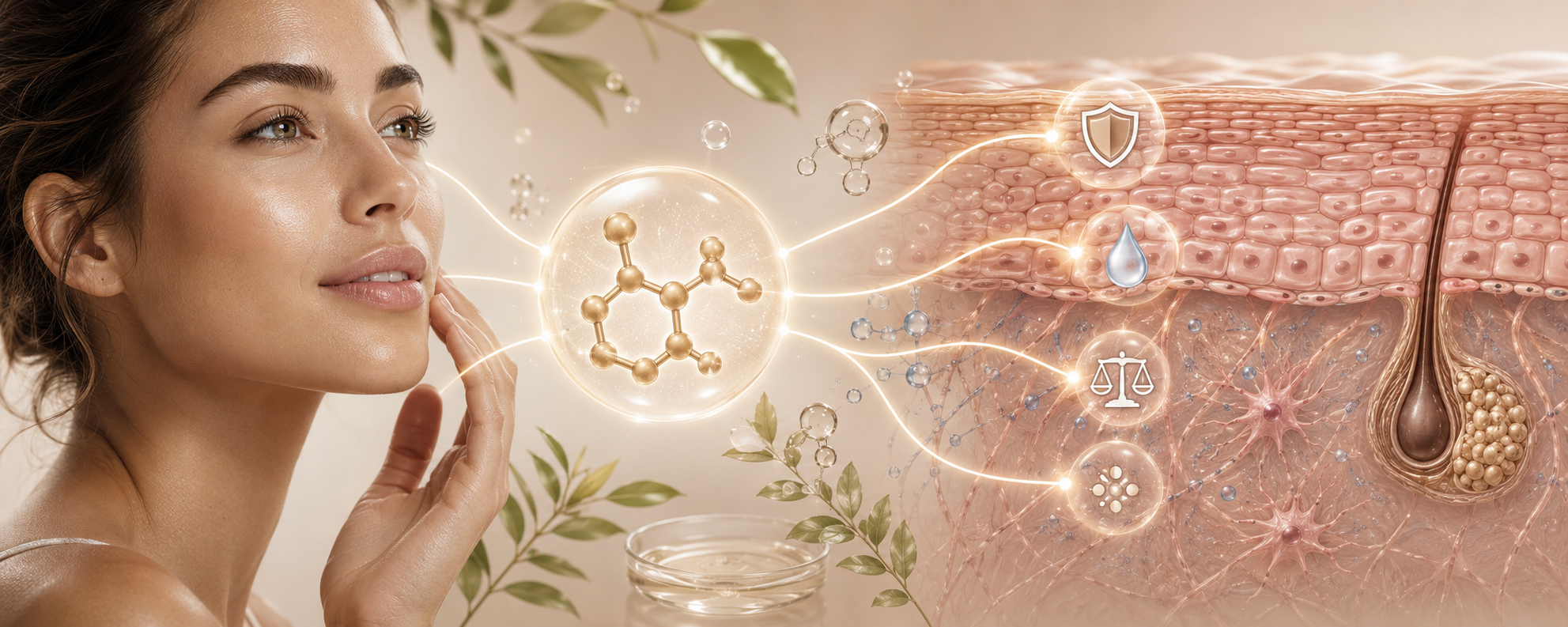
Rather than targeting a single concern, niacinamide helps strengthen the skin barrier, supports hydration, assists with oil regulation, calms visible redness and promotes a brighter, more even-looking complexion. That broad range of benefits makes it suitable for almost every skin type, from dry and sensitive skin to oily and blemish-prone complexions.

Full Lesson
What Is Niacinamide?
Niacinamide is a form of Vitamin B3, an essential nutrient that every cell in the body requires.
While we obtain Vitamin B3 through food, applying niacinamide directly to the skin allows it to support the cells within the epidermis, where many everyday skin processes occur.
Unlike ingredients that exfoliate or dramatically increase cell activity, niacinamide works by helping skin perform its natural functions more efficiently.
It doesn't force the skin to behave differently.
Instead, it supports healthy biology.
That is one reason it is so well tolerated by most people.

How Does Niacinamide Work?
Healthy skin depends on thousands of cells communicating with one another.
Every day those cells are producing barrier lipids, responding to environmental stress, regulating oil production and replacing older skin cells.
Niacinamide helps support several of these natural processes simultaneously.
It supports the skin barrier
One of niacinamide's most recognised benefits is helping the skin produce more of its own protective lipids, including ceramides.
These lipids form part of the "brick and mortar" barrier that slows water loss and protects against everyday environmental stress.
A stronger barrier generally means skin feels more comfortable, stays hydrated more easily and becomes less reactive over time.
It supports hydration
Because the skin barrier becomes more effective, moisture is retained more efficiently.
This doesn't mean niacinamide replaces moisturisers.
Instead, it helps skin hold onto the hydration that moisturisers and humectants provide.
It helps regulate excess oil
Research suggests niacinamide may help normalise sebum production in oily skin.
Rather than drying the skin, it encourages a healthier balance.
For many people this means skin feels less shiny while remaining comfortable.
💡 Joanne's Insight
After treating skin for many years, niacinamide has become one of the ingredients I recommend most often.
Not because it's trendy, but because it works with the skin rather than against it. Whether someone's concern is sensitivity, dehydration, redness or excess oil, supporting the skin barrier almost always becomes part of the solution.
Beyond the Skin Barrier
Niacinamide's benefits extend well beyond hydration.
Supporting an even-looking complexion
Our skin naturally produces melanin, the pigment responsible for skin colour.
Sometimes pigment becomes uneven following sun exposure or inflammation.
Niacinamide helps reduce the transfer of pigment to surrounding skin cells, which can contribute to a brighter, more even-looking complexion over time.
Importantly, it doesn't bleach the skin or stop melanin production.
Instead, it supports more balanced pigment distribution.
Supporting healthy ageing
Healthy ageing is about maintaining resilient skin rather than chasing perfection.
Niacinamide supports proteins involved in healthy skin function and helps reduce the impact of environmental stressors that gradually affect skin over time.
This makes it a valuable ingredient alongside sunscreen, antioxidants and retinoids.

❌ Myth vs ✅ Reality
Myth: Niacinamide is only for oily or acne-prone skin.
Reality: While it can help regulate excess oil, niacinamide also supports dry, sensitive, ageing and combination skin because its primary role is strengthening healthy skin function.
🧠 Did You Know?
Our skin naturally contains Vitamin B3 as part of its normal metabolism. Topical niacinamide simply provides additional support where the skin needs it most.
Who Can Benefit from Niacinamide?
One reason niacinamide has become so popular is its versatility.
It may be suitable for people experiencing:
- Dry or dehydrated skin
- A weakened skin barrier
- Visible redness
- Oily or combination skin
- Enlarged-looking pores
- Uneven skin tone
- Dullness
- Early visible signs of skin ageing
Because it is generally well tolerated, niacinamide is often recommended for people beginning active skincare for the first time.
How to Use Niacinamide
Niacinamide fits easily into most skincare routines.
It layers well with many commonly used ingredients, including:
- Hyaluronic acid
- Ceramides
- Peptides
- Vitamin C
- Retinoids
- Sunscreen
Consistency is more important than using multiple products containing high concentrations.
Many people unknowingly use niacinamide in their serum, moisturiser, sunscreen and eye cream on the same day.
👩⚕️ Skin Therapist Tip
If you're introducing a new skincare routine, choose one niacinamide product first and use it consistently for several weeks before adding additional active ingredients. This makes it easier to understand how your skin responds.

Where You May Find Niacinamide
Niacinamide appears in many different types of skincare products because it supports so many aspects of healthy skin.
Within the Shanga collection, it is included in:
- B-Gentle Serum
- B-Strong Serum
- Purify Rescue Gel
- Soothing Hydrogel Mask
- De-Light SPF
- Renew Eye Cream
This reflects how versatile the ingredient is—it can support healthy skin whether it's delivered in a treatment serum, moisturiser, sunscreen, mask or targeted treatment.
✨ Why It Matters
Healthy skin isn't built by one "miracle" ingredient.
It's the result of many biological systems working together.
Niacinamide supports several of those systems at once—from the skin barrier and hydration to oil balance and pigmentation—making it one of the most adaptable ingredients in modern skincare.
Rather than dramatically changing the skin, it helps healthy skin function at its best.
Conclusion
Few ingredients combine versatility, excellent research and broad skin compatibility as successfully as niacinamide.
Whether your goal is stronger barrier function, better hydration, improved balance or a brighter complexion, niacinamide supports the skin's own natural biology rather than trying to override it.
That makes it an excellent long-term ingredient for almost every skincare routine.
Key Takeaways
- Niacinamide is a form of Vitamin B3.
- It helps strengthen the skin barrier.
- It supports hydration by improving moisture retention.
- It may help regulate excess oil without over-drying the skin.
- It supports a brighter, more even-looking complexion.
- It works well alongside many other skincare ingredients.
- Consistency is more important than using very high concentrations.
- It is suitable for most skin types.
Continue Your Learning
Niacinamide helps support healthy skin function across multiple pathways, but another ingredient works in a very different way by encouraging skin renewal itself.

In the next lesson, Vitamin A (Retinoids), you'll discover how retinoids influence cell turnover, collagen production and healthy skin ageing—and why they remain one of the most extensively studied ingredients in skincare. Go to next lesson