Understanding Rosacea
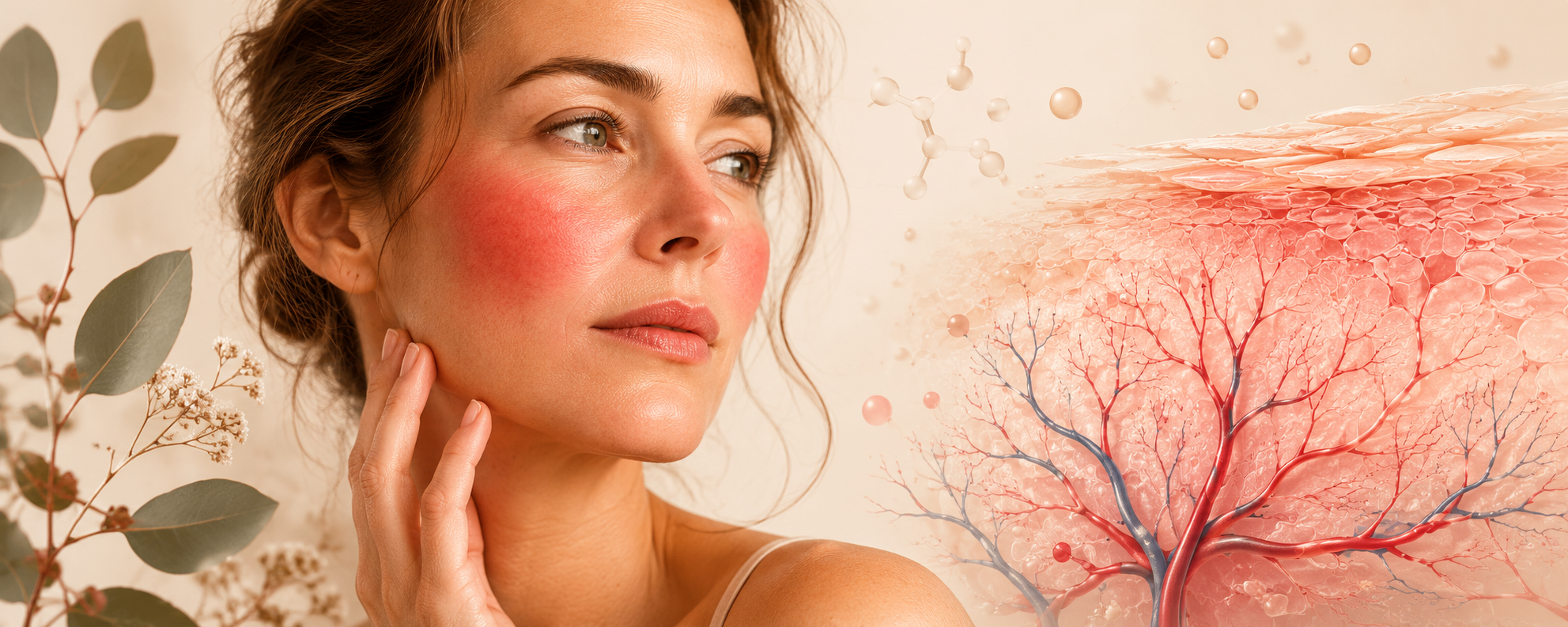
Rosacea is a long-term inflammatory skin condition that most commonly affects the face, causing persistent redness, flushing and increased skin sensitivity. For some people it also leads to visible blood vessels, bumps or occasional breakouts that resemble acne.
Although rosacea cannot currently be cured, understanding how it works can make it much easier to manage. With gentle skincare, daily sun protection and an awareness of personal triggers, many people are able to reduce irritation and maintain skin that feels calmer, healthier and more comfortable.

What Is Rosacea?
Rosacea is a chronic inflammatory skin condition that primarily affects the central face, including the cheeks, nose, forehead and chin.
Unlike temporary blushing, rosacea causes persistent redness that tends to return repeatedly over time. As the condition progresses, the redness may become more permanent.
Researchers still don't know the exact cause of rosacea, but it appears to develop through a combination of:
- Genetics
- An overactive immune response
- Changes to the skin barrier
- Increased sensitivity of facial blood vessels
- Environmental triggers
- Changes in the skin microbiome
Rather than being caused by poor skincare or hygiene, rosacea reflects skin that has become unusually reactive to both internal and external influences.
Many people first notice rosacea between the ages of 30 and 50, although it can develop earlier or later in life.
The Different Types of Rosacea
Rosacea isn't the same for everyone.
Healthcare professionals generally describe four common patterns.
Persistent Redness
The skin remains flushed across the cheeks and nose.
Episodes of flushing gradually become longer lasting until the redness becomes more constant.
Visible Blood Vessels
Tiny surface blood vessels (called telangiectasia) become enlarged and easier to see through the skin.
Papules and Pustules
Some people develop small red bumps and pus-filled spots.
Although these resemble acne, rosacea behaves differently and requires different treatment.
Thickened Skin
In a small percentage of people—most commonly men—the skin around the nose may gradually become thicker and more textured.
This usually develops only after many years of untreated rosacea.

Why Does Rosacea Develop?
Scientists now believe rosacea develops when several biological systems become more sensitive than normal.
An Overreactive Immune System
People with rosacea appear to produce higher levels of inflammatory molecules within the skin.
These chemicals help protect us from infection but may become overactive, leading to ongoing inflammation and redness.
Overactive Blood Vessels
The tiny blood vessels in the face become unusually responsive.
Heat, exercise, spicy food or emotional stress can cause them to widen rapidly, producing flushing.
Over time, repeated dilation may contribute to more permanent redness.
A Weakened Skin Barrier
The outer skin barrier helps keep moisture in while keeping irritants out.
When this barrier becomes compromised:
- Water escapes more easily.
- Irritants penetrate more readily.
- Nerve endings become more exposed.
- Skin feels stinging, burning or itchy.
Many people with rosacea have higher transepidermal water loss (TEWL), meaning their skin loses water more quickly than healthy skin.
Increased Nerve Sensitivity
The nerves within rosacea-prone skin often become more reactive.
This helps explain why even products that seem gentle can sometimes produce burning or tingling sensations.
💡 Joanne's Insight
One of the biggest mistakes I see is treating rosacea as though it's simply "red skin." In reality, rosacea skin is often highly sensitive because the barrier has become compromised. Before worrying about active ingredients, focus on restoring comfort. When the skin feels calm, it usually tolerates everything else much better.
What Triggers Rosacea?
Unlike allergies, triggers don't cause rosacea—but they can provoke flare-ups.
Each person's triggers are different.
Common examples include:
- Sun exposure
- Hot weather
- Cold wind
- Rapid temperature changes
- Hot showers
- Saunas
- Vigorous exercise
- Emotional stress
- Alcohol
- Spicy foods
- Very hot drinks
- Harsh skincare
- Over-exfoliation
- Strong fragrances
- Some medications
One trigger may cause little reaction while another causes significant flushing.
Keeping a simple diary during flare-ups can help identify personal patterns.

The Importance of Protecting the Skin Barrier
For rosacea-prone skin, barrier care becomes one of the most important parts of skincare.
A healthy barrier:
- Holds moisture inside the skin.
- Reduces irritation.
- Improves comfort.
- Helps reduce stinging sensations.
- Supports healthier skin function.
This is why many dermatologists recommend gentle routines rather than aggressive treatments.
Helpful ingredients often include:
- Ceramides
- Panthenol (Vitamin B5)
- Beta-glucan
- Colloidal oatmeal
- Centella asiatica
- Allantoin
- Glycerin
- Saccharide isomerate
- Niacinamide (where well tolerated)
These ingredients don't "cure" rosacea, but they help support the skin's natural protective barrier.
❌ Myth vs ✅ Reality
Myth: Rosacea is simply adult acne.
Reality: Although bumps can occur, rosacea is a different inflammatory condition involving blood vessels, nerves and the skin barrier. Treatments for acne may actually worsen rosacea if they're too harsh.
Choosing Skincare for Rosacea
Simple routines usually work best.
Many people benefit from focusing on comfort rather than using multiple active products.
A gentle routine might include:
Morning
- Gentle cleanser
- Hydrating mist
- Barrier-supporting serum
- Nourishing moisturiser
- Broad-spectrum SPF 50+
Evening
- Gentle cleanser
- Barrier serum
- Moisturiser
Avoid introducing several new products at once.
Adding one product every few weeks makes it much easier to identify whether your skin tolerates it well.

Why Sun Protection Is Essential
Sunlight is one of the most common rosacea triggers.
Even short periods outdoors can provoke flushing in some people.
Daily sunscreen helps by:
- Reducing UV-triggered inflammation.
- Protecting the skin barrier.
- Supporting long-term skin health.
- Limiting cumulative sun damage.
Choose a sunscreen designed for sensitive skin and apply it every morning, even on cloudy days.
🧠 Did You Know?
Rosacea-prone skin often loses more water than healthy skin. Scientists measure this using transepidermal water loss (TEWL)—one reason barrier-supporting moisturisers are so valuable for keeping skin comfortable.
Can Rosacea Be Cured?
At present, rosacea cannot be permanently cured.
However, it can often be managed very successfully.
Management usually combines:
- Gentle skincare
- Daily sunscreen
- Trigger awareness
- Prescription treatments when appropriate
- Consistent routines
Many people notice that flare-ups become less frequent once they stop over-treating their skin and instead focus on supporting the barrier.
When Should You See a Doctor?
If facial redness is persistent or worsening, it's important to seek medical advice.
A healthcare professional can confirm whether rosacea is present and recommend appropriate treatment.
You should also seek assessment if you experience:
- Eye irritation or redness (ocular rosacea)
- Painful flare-ups
- Significant swelling
- Thickening of the skin
- Symptoms that don't improve with gentle skincare
Early diagnosis often leads to better long-term management.
✨ Why It Matters
Rosacea isn't simply about appearance. Because the skin becomes more reactive, everyday activities—from enjoying the sun to trying a new moisturiser—can feel unpredictable. Understanding the biology behind rosacea helps you make calmer, more informed skincare choices that prioritise comfort, barrier health and consistency over harsh treatments.
👩⚕️ Skin Therapist Tip
If your skin feels hot, tight or stingy after cleansing, your cleanser may be too strong. After washing, your skin should feel clean and comfortable—not squeaky, dry or irritated. A gentle cleanser is often one of the most valuable changes you can make.
Conclusion
Rosacea is a complex condition involving inflammation, blood vessels, nerve sensitivity and the skin barrier. While there is no permanent cure, understanding how rosacea behaves allows you to care for your skin more effectively.
Gentle cleansing, barrier support, daily sun protection and recognising your own triggers form the foundation of long-term management. Rather than trying to eliminate every flare-up, the goal is to create an environment where your skin feels consistently calmer, stronger and more comfortable.
Key Takeaways
- Rosacea is a chronic inflammatory skin condition, not simply facial redness.
- Flare-ups are often triggered by heat, sunlight, stress, alcohol and harsh skincare.
- A weakened skin barrier contributes to increased sensitivity and discomfort.
- Gentle, barrier-supporting skincare is usually more beneficial than aggressive treatments.
- Daily broad-spectrum SPF is one of the most important steps in managing rosacea.
- Keeping track of personal triggers can help reduce future flare-ups.
- If redness is persistent or worsening, seek advice from a healthcare professional.
🧪 Relevant Ingredients
Ingredients that are commonly chosen to help support rosacea-prone skin include:
- Ceramides
- Niacinamide
- Centella Asiatica
- Panthenol (Vitamin B5)
- Beta-Glucan
- Colloidal Oatmeal
- Allantoin
- Saccharide Isomerate
- Glycerin
- Ectoin
- Green Tea Extract
🔬 Relevant Skin Biology
To understand rosacea more deeply, explore:
- The Skin Barrier
- Inflammation
- The Skin Microbiome
- Skin Healing
- Hydration vs Moisturising
- Natural Moisturising Factors (NMF)
- Transepidermal Water Loss (TEWL)
- Skin pH
🌿 Relevant Skin Rituals
People with rosacea-prone skin generally benefit from routines that prioritise barrier support and minimise irritation.
The most relevant ritual is:
- Calm & Repair Ritual
As the skin becomes healthier and more resilient, some people may later introduce gentle brightening or age-supporting products under professional guidance.
✨ Relevant Products
Products commonly suited to rosacea-prone skin include:
- Calm Cleanser
- Repair Hydromist
- B-Gentle Serum
- Calm Moisturiser
- Restore Cream
- Soothing Hydrogel Mask
- De-Light SPF 50+
- Mineral Foundation
Continue Your Learning
Rosacea and sensitive skin often overlap because both involve a weakened skin barrier and increased skin reactivity. Continue with Sensitive Skin Explained to learn why some skin becomes more easily irritated, how the skin barrier influences sensitivity, and the ingredients that can help support calmer, healthier skin.