Sunflower Seed Oil for Skin
Sunflower seed oil has quietly earned a place among the most respected ingredients in modern skincare. While it may seem simple, this lightweight botanical oil is naturally rich in essential fatty acids and vitamin E, making it an excellent supporter of healthy skin. Rather than dramatically changing the skin, sunflower seed oil works by reinforcing what your skin already does best—protecting itself, retaining moisture and maintaining a resilient barrier. Whether your skin is dry, sensitive, mature or simply in need of everyday nourishment, this versatile botanical offers gentle support that complements many different skincare routines.

What Is Sunflower Seed Oil?
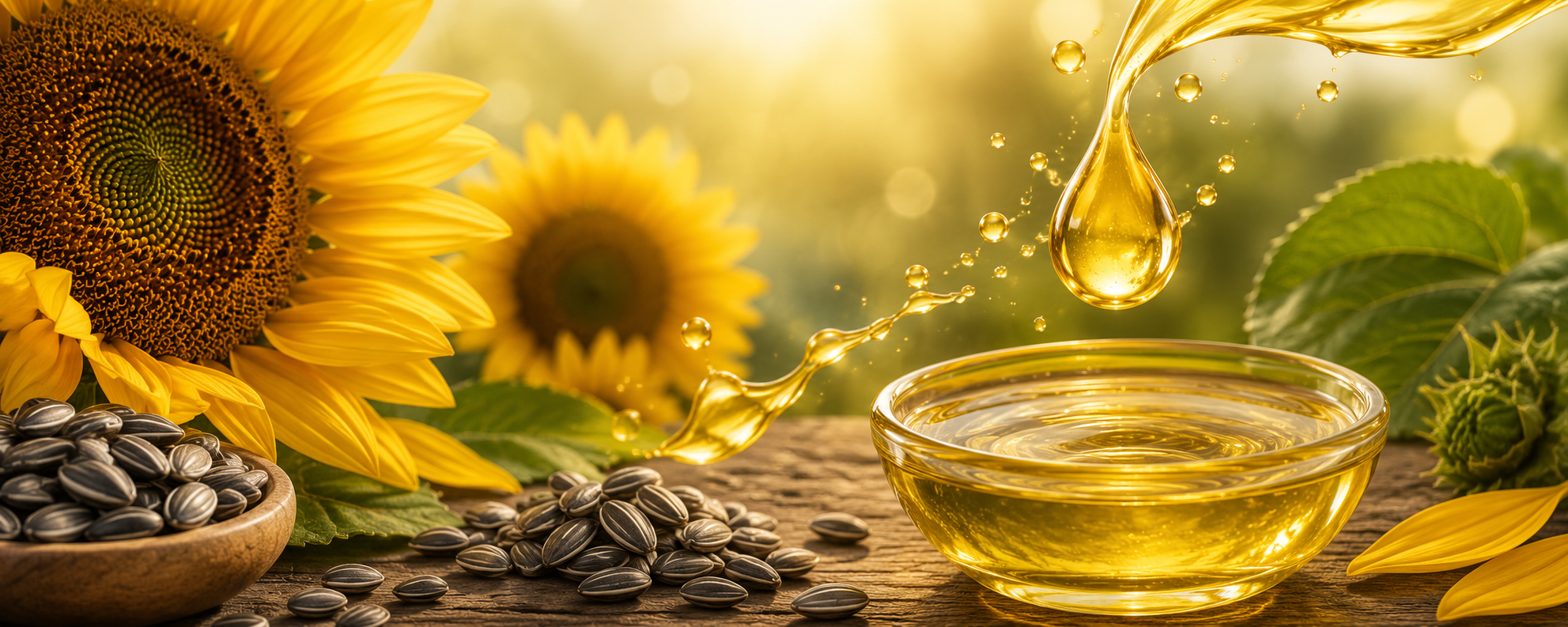
Sunflower seed oil is a plant oil extracted from the seeds of the sunflower (Helianthus annuus). Although best known as a food oil, carefully refined cosmetic-grade sunflower seed oil has become one of the most widely used botanical oils in premium skincare.
Its popularity comes from its naturally balanced composition.
Sunflower seed oil contains:
- Linoleic acid (an essential omega-6 fatty acid)
- Oleic acid (varies depending on the variety)
- Vitamin E (tocopherol)
- Plant sterols
- Natural antioxidants
Together, these components help support the skin's outer protective barrier while providing lightweight moisturisation.
Unlike heavier botanical oils, sunflower seed oil absorbs comfortably into most skin types without leaving an overly greasy finish.

Why Is the Skin Barrier So Important?
Before understanding sunflower seed oil, it helps to understand the skin barrier.
The outermost layer of the skin, called the stratum corneum, is often compared to a brick wall.
- Skin cells act as the bricks.
- Natural lipids act as the mortar holding everything together.
When this barrier is functioning well, it helps:
- Reduce water loss
- Keep skin feeling comfortable
- Defend against environmental stress
- Maintain softness and flexibility
When the barrier becomes depleted, skin may begin to feel:
- Tight
- Dry
- Rough
- More easily irritated
One reason sunflower seed oil is so highly regarded is that its fatty acid profile closely supports these protective surface lipids.
💡 Joanne's Insight
After many years of treating different skin types, one lesson has remained consistent: healthy skin begins with a healthy barrier. Ingredients don't always need to be complex to be effective. Some of the most reliable improvements I've seen come from consistently supporting the skin with gentle, well-balanced botanical oils like sunflower seed oil.
How Sunflower Seed Oil Supports Healthy Skin
Sunflower seed oil doesn't work by forcing the skin to change.
Instead, it helps create the conditions that allow skin to function more comfortably.
Rich in Linoleic Acid
One of sunflower oil's greatest strengths is its naturally high concentration of linoleic acid.
Linoleic acid is an essential fatty acid that forms part of the skin's natural lipid barrier.
When applied topically, it helps replenish surface lipids that gradually become depleted through:
- Ageing
- Dry environments
- Cleansing
- Environmental exposure
Supporting these lipids may help reduce transepidermal water loss (TEWL), allowing skin to retain moisture more effectively.
Naturally High in Vitamin E
Sunflower seed oil also contains naturally occurring vitamin E.
Vitamin E is a fat-soluble antioxidant that helps protect the skin's own lipids from oxidative stress caused by environmental factors such as UV exposure and pollution.
While antioxidants cannot stop skin ageing, they help support healthy skin by reducing some of the everyday oxidative stress the skin experiences.

Which Skin Types Benefit Most?
One reason sunflower seed oil appears in so many skincare products is its versatility.
Dry Skin
Dry skin often lacks both water and protective lipids.
Sunflower seed oil helps reinforce the skin barrier while reducing moisture loss.
Sensitive Skin
Its gentle nature makes it suitable for many people with delicate or easily irritated skin.
A stronger barrier often means skin feels calmer and more comfortable.
Combination Skin
Despite being an oil, sunflower seed oil feels surprisingly lightweight.
Many combination skin types tolerate it well because it absorbs without feeling excessively heavy.
Mature Skin
As skin ages, natural lipid production gradually declines.
Sunflower seed oil helps replenish some of these protective surface lipids while providing antioxidant support through vitamin E.
🧠 Did You Know?
Your body cannot produce linoleic acid on its own. It is considered an essential fatty acid, meaning it must come from your diet or topical sources such as botanical oils.
Sunflower Seed Oil Compared with Other Botanical Oils
Every botanical oil has its own unique fatty acid profile.
For example:
- Jojoba oil closely resembles human sebum.
- Argan oil contains a balance of oleic and linoleic acids with vitamin E.
- Rosehip oil is valued for its essential fatty acids and naturally occurring antioxidants.
- Sunflower seed oil is especially appreciated for its high linoleic acid content and lightweight feel.
Rather than asking which oil is "best", it's more helpful to understand which oil suits your skin's needs.
Many premium formulations combine several botanical oils so their strengths complement one another.
❌ Myth vs ✅ Reality
Myth: Oils always make skin greasy and clog pores.
Reality: Different botanical oils behave differently. Lightweight oils such as sunflower seed oil are often well tolerated because of their fatty acid composition and elegant skin feel.

Why This Matters
Healthy skin depends on balance.
The goal isn't to coat the skin with heavy oils or dramatically change how it behaves.
Instead, skincare works best when it supports the skin's natural biology.
Sunflower seed oil contributes to that balance by helping maintain:
- Comfortable hydration
- Flexible skin
- A resilient barrier
- Lightweight nourishment
- Antioxidant support
For many people, these simple benefits form the foundation of a healthy skincare routine.
✨ Why It Matters
Many skincare concerns—including dryness, sensitivity and rough texture—become more noticeable when the skin barrier is weakened. Supporting that barrier with well-formulated botanical oils helps the skin perform its natural protective role more effectively.
👩⚕️ Skin Therapist Tip
If your skin often feels tight after cleansing, apply your moisturiser while the skin is still slightly damp. Ingredients like sunflower seed oil help lock in that surface hydration and support the barrier throughout the day.
Which Shanga Products Contain Sunflower Seed Oil?
Sunflower seed oil appears throughout the Shanga collection where lightweight nourishment and barrier support are beneficial. According to the current ingredient listings, it is included in:
- B-Strong Serum (Helianthus Annuus Seed Oil)
- Purify Moisturiser
- Calm Moisturiser
- Hydrate Moisturiser
- Restore Cream
- Radiance Elixir
Each formulation combines sunflower seed oil with other complementary ingredients such as botanical oils, humectants, antioxidants and barrier-supporting actives to suit different skin needs.
Conclusion
Sunflower seed oil demonstrates that effective skincare doesn't always rely on complex ingredients.
Its naturally balanced combination of essential fatty acids, vitamin E and lightweight emollients helps support one of the skin's most important structures—the protective barrier.
Rather than promising dramatic transformation, sunflower seed oil quietly reinforces healthy skin function. Over time, that consistent support can help skin feel softer, more comfortable and better equipped to retain its natural hydration.
Key Takeaways
- Sunflower seed oil is naturally rich in linoleic acid and vitamin E.
- It helps support the skin's protective lipid barrier.
- A healthy barrier reduces moisture loss and improves skin comfort.
- Its lightweight texture suits many skin types, including combination skin.
- Vitamin E provides antioxidant support against everyday environmental stress.
- Sunflower seed oil works well alongside many other botanical oils.
- Several Shanga formulations include sunflower seed oil for barrier support and nourishment.
Continue Your Learning
Sunflower seed oil is only one example of how botanical oils can support healthy skin. Next, discover Sweet Almond Oil for Skin, where you'll learn how this vitamin-rich botanical helps soften, nourish and comfort dry skin while complementing the skin's natural barrier.