Understanding Acne: What Causes Breakouts and How to Support Healthier Skin
Acne is one of the most common skin concerns, affecting teenagers and adults alike. While it often appears as blackheads, whiteheads or inflamed pimples, acne actually begins beneath the skin long before anything becomes visible on the surface.
For many years, acne was blamed on poor hygiene or eating the wrong foods. Today, we know it is a complex biological process influenced by hormones, excess sebum (the skin's natural oil), dead skin cells, bacteria and inflammation. Understanding how these factors work together makes it easier to choose skincare that supports your skin rather than working against it.
In this lesson, we'll explore how acne develops, the different types of blemishes, the factors that can influence breakouts, and the ingredients and daily rituals that may help support clearer, healthier-looking skin over time.

At a Glance
What is acne?
A common inflammatory skin condition that develops when hair follicles become blocked with excess sebum (skin oil), dead skin cells and other debris.Who can experience it?
- Teenagers
- Adults
- Men and women
- People with oily, combination or even dry skin
Common signs
- Blackheads
- Whiteheads
- Inflamed pimples
- Tender red bumps
- Deeper cyst-like lesions in some people
What contributes to acne?
- Increased sebum production
- Sticky dead skin cells
- Inflammation
- Changes in the skin microbiome
- Hormonal influences
- Genetics
- Lifestyle and environmental factors
Can acne be managed?
Yes. While there is no single solution for everyone, understanding how acne develops allows you to choose skincare that supports the skin barrier, helps keep pores clear and reduces unnecessary irritation.
Acne develops through several biological systems working together, including hormone signalling, skin cell turnover, sebaceous gland activity, the skin microbiome, immune regulation and inflammation. Because multiple pathways are involved, successful treatment usually combines several approaches rather than relying on a single ingredient.
Every visible breakout begins long before it appears on the skin's surface. Changes inside the hair follicle gradually create the conditions that allow congestion and inflammation to develop. Understanding these early stages helps explain why acne treatments often take time to work and why gentle, consistent skincare usually produces better long-term results than harsh products.
Learning how your skin functions is one of the most valuable steps you can take. Rather than trying to "fight" your skin, understanding the biology behind acne allows you to make informed choices that support healthier skin over time.
If you're new to skincare, you may also find it helpful to explore Understanding Your Skin, Skin Layers Explained, The Skin Barrier, Inflammation, and How to Build a Skincare Routine, as these lessons explain many of the biological processes discussed throughout this guide.

How Acne Develops: Understanding the Biology
Acne rarely appears because of a single cause. Instead, it develops when several biological processes occur at the same time inside the hair follicle. Understanding these changes helps explain why some products work well, while others may not.
Although acne appears on the surface of the skin, its earliest stages begin much deeper within the pore.
The Hair Follicle: Where Acne Begins
Every hair follicle contains a sebaceous gland, which produces sebum. Sebum is a natural oil that helps maintain a soft, flexible skin barrier and reduces water loss from the skin.
Under normal conditions:
- Sebum travels smoothly through the follicle.
- Dead skin cells shed naturally.
- The pore remains open.
- Skin appears clear and healthy.
Acne develops when this balanced process changes.
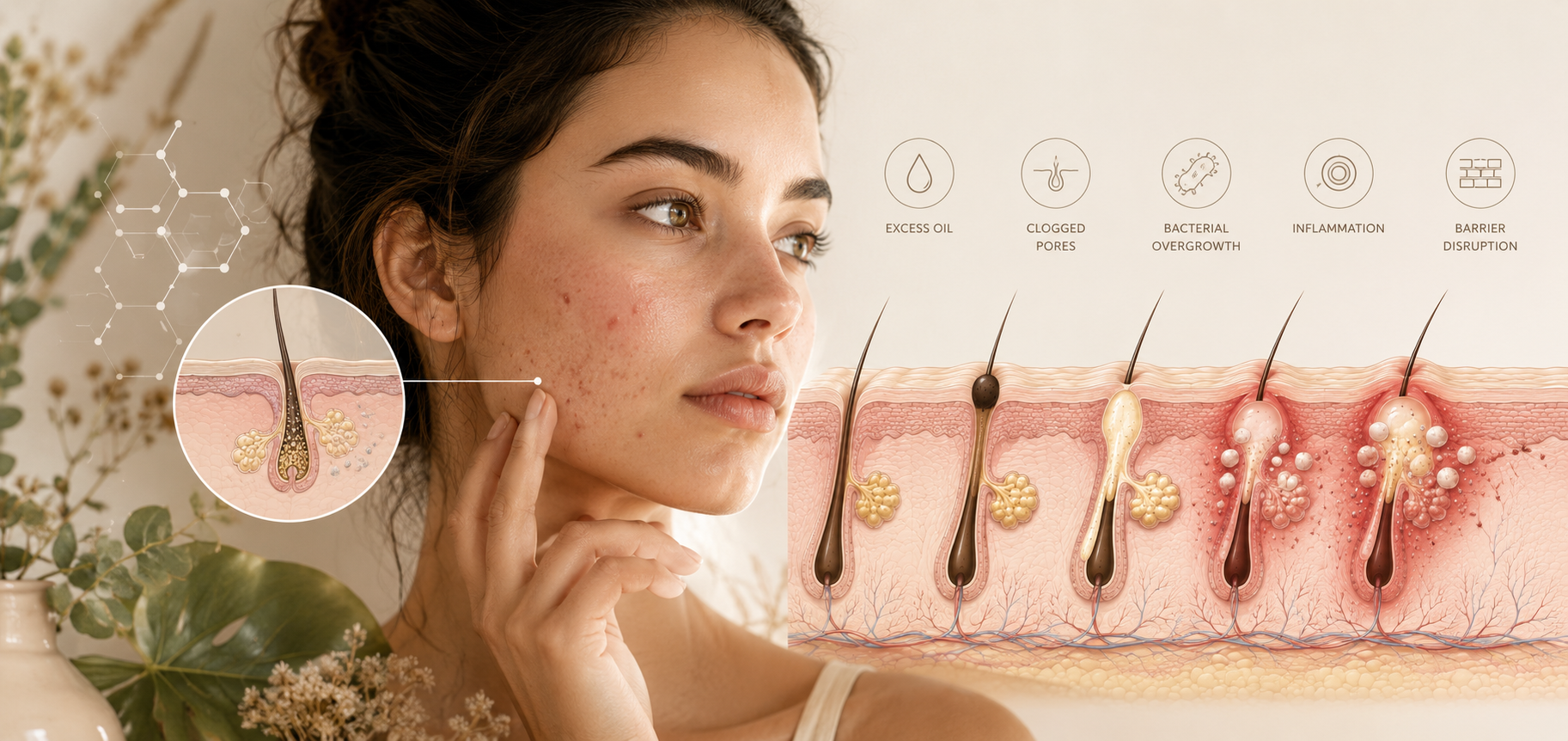
The earliest stage usually begins with hyperkeratinisation—a term that simply means the skin cells lining the follicle become stickier than usual. Instead of shedding individually, they begin clumping together.
At the same time, the sebaceous gland often produces increased amounts of sebum.
These two factors combine to create a small blockage inside the follicle.
Dermatologists refer to this earliest invisible blockage as a microcomedone.
Although you cannot see a microcomedone from the surface, it is considered the starting point of almost every acne lesion.
Step One: Increased Sebum Production
Sebum itself is not harmful.
In fact, healthy skin depends on it.
However, during puberty—and sometimes later in adulthood—hormones known as androgens stimulate the sebaceous glands to produce more oil.
Higher sebum production means:
- more oil enters the follicle
- pores fill more quickly
- blockages become more likely
- bacteria have a richer environment in which to grow.
Some people naturally produce more sebum due to genetics, while others notice temporary increases during hormonal changes, stress or certain stages of the menstrual cycle.
This is why acne often fluctuates rather than remaining constant.
Step Two: Sticky Skin Cells
The inside of each pore is lined with skin cells that are constantly renewing.
Normally these cells detach individually and are carried out of the follicle by flowing sebum.
In acne-prone skin, this shedding process becomes less efficient.
Instead of separating cleanly, the cells stick together.
Over time they mix with sebum to form a plug.
This creates the ideal conditions for the pore to become partially or completely blocked.
At this stage there may still be no redness or soreness.
The process is happening quietly beneath the skin.
Step Three: Changes in the Follicle Microbiome
Every person's skin naturally contains billions of microorganisms.
One of these is Cutibacterium acnes (formerly called Propionibacterium acnes).
Despite its name, this bacterium is a normal resident of healthy skin.
Most people have it—even those who never develop acne.
Problems arise when blocked follicles create an environment where the bacteria can multiply more rapidly.
Within the blocked pore:
- oxygen levels decrease
- sebum accumulates
- bacteria multiply
- bacterial enzymes begin breaking down oils into irritating by-products.
Importantly, modern research shows acne is not caused simply by having too many bacteria.
Instead, acne appears to result from a complex interaction between:
- the amount and composition of sebum
- follicle blockage
- changes in the skin microbiome
- the immune system's inflammatory response.
This is one reason why modern acne management focuses on balancing the skin rather than trying to sterilise it.
Step Four: Inflammation Develops
As the immune system detects changes within the blocked follicle, it responds with inflammation.
Inflammation is part of the body's natural defence system.
Immune cells travel to the area to contain what they perceive as a problem.
This causes familiar symptoms including:
- redness
- swelling
- tenderness
- warmth
- visible pimples.
If the follicle wall eventually ruptures beneath the skin, its contents spread into surrounding tissue.
The immune response becomes stronger, producing larger inflamed papules, pustules or deeper nodules.
This explains why some pimples feel sore before they even become visible.
Understanding Different Types of Acne Lesions
Not every blemish develops in the same way.
Some remain non-inflammatory, while others trigger a much stronger immune response.
|
Lesion |
What Happens |
Appearance |
|
Microcomedone |
Earliest invisible blockage inside the follicle |
Not visible |
|
Closed comedone (whitehead) |
Pore remains closed with trapped oil and skin cells |
Small white bump |
|
Open comedone (blackhead) |
Pore opens and trapped material oxidises at the surface |
Dark plug |
|
Papule |
Early inflammation develops |
Small red bump |
|
Pustule |
Inflammation with visible pus |
Red pimple with white centre |
|
Nodule or cyst |
Deep inflammation extends beneath the skin |
Large, painful lump |
Understanding these stages helps explain why early treatment often produces better outcomes than waiting until larger inflamed lesions appear.
Why Acne Treatments Need Time
One reason acne treatments require patience is that they work on different stages of the acne cycle.
Some ingredients help reduce excess oil.
Others improve skin cell turnover.
Some help calm inflammation, while others support the skin barrier or maintain a balanced microbiome.
Even when treatment begins immediately, existing microcomedones may continue developing for several weeks before improvements become noticeable.
This is why consistency matters far more than aggressively changing products every few days.
Healthy skin responds best to steady, supportive care.

Why Inflammation Matters
Not every blocked follicle becomes an inflamed pimple. Inflammation is the process that transforms an invisible microcomedone into a red papule, pustule or deeper lesion. The strength of the inflammatory response varies from person to person, which is one reason acne can look so different between individuals.
Why Doesn't Everyone Get Acne?
Almost everyone has Cutibacterium acnes on their skin.
The difference is that people prone to acne often have a combination of:
- increased sebum production
- stickier skin cell shedding
- hormonal influences
- a stronger inflammatory response
- genetic predisposition.
This explains why two people using exactly the same skincare products can have very different skin.
Acne is rarely caused by one single factor.
❌ Myth vs ✅ Reality
|
Myth |
Reality |
|
Acne is caused by dirty skin. |
Acne develops inside the follicle, not from surface dirt. |
|
Scrubbing removes acne. |
Over-scrubbing often increases irritation and inflammation. |
|
Only teenagers get acne. |
Adult acne is increasingly common, particularly in women. |
|
Pimples should be squeezed. |
Picking increases inflammation and raises the risk of scarring. |
|
Sunlight clears acne permanently. |
Temporary drying may be followed by increased oil production and skin damage. |
🧠 Did You Know?
Inflammation often begins before you can see a pimple.
Researchers have found that microscopic inflammatory changes may already be occurring inside the follicle while the skin still appears completely normal.
This is one reason acne treatments often take several weeks to show visible improvement—they are helping reduce the formation of new lesions beneath the surface before they become noticeable.

Supporting Acne Without Damaging the Skin
Modern acne management has shifted away from trying to eliminate every trace of oil.
Healthy skin naturally produces sebum for an important reason. Sebum helps lubricate the skin, supports the skin barrier and contributes to a balanced microbiome.
The goal is not to strip oil away completely.
Instead, effective acne care aims to support healthy skin function while reducing the conditions that encourage blocked follicles and excessive inflammation.
Gentle Skin Care Often Works Better
When the skin barrier becomes damaged through harsh cleansing or excessive exfoliation, irritation increases.
A weakened barrier may lead to:
- increased redness
- greater sensitivity
- more water loss
- slower skin recovery
- ongoing inflammation.
Many people mistake this irritation for acne worsening and respond by using even stronger products, creating a cycle that becomes increasingly difficult to break.
Supporting the skin barrier often allows acne treatments to work more effectively while reducing unnecessary irritation.
Ingredients That Can Support Acne-Prone Skin
Different ingredients work in different ways.
Some help reduce congestion.
Others help calm inflammation or support the skin barrier.
|
Ingredient |
Supports |
|
Niacinamide |
Oil balance, barrier support and visible redness |
|
Salicylic Acid (BHA) |
Helps unclog pores and reduce congestion |
|
Retinoids |
Support healthy cell turnover and help prevent new blockages |
|
Azelaic Acid |
Helps reduce inflammation and uneven skin tone |
|
Benzoyl Peroxide |
Reduces acne-causing bacteria on the skin |
|
Ceramides |
Support barrier repair during acne treatment |
No single ingredient suits everyone.
Choosing the right combination depends on your skin type, barrier health and the severity of acne.
Consistency Matters More Than Speed
Acne develops over weeks rather than overnight.
Likewise, healthy improvement usually occurs gradually.
Most evidence-based skincare ingredients require consistent use for several skin renewal cycles before meaningful changes become visible.
Trying multiple new products at once often makes it difficult to identify what is helping—or irritating—the skin.
Building a simple routine and allowing time for the skin to respond is usually the most effective approach.
✨ Why It Matters
Understanding acne changes the way many people approach skincare.
Instead of trying to fight every breakout aggressively, you begin supporting the biological processes that keep follicles functioning normally.
When excess oil, abnormal cell shedding, bacterial overgrowth and inflammation are addressed together, skin often becomes calmer, healthier and more resilient over time.
Healthy skin isn't completely free of oil—it is balanced.
👩⚕️ Skin Therapist Tip
When introducing acne treatments, start slowly.
Adding several active ingredients at once can overwhelm the skin barrier and increase irritation.
Begin with a gentle cleanser, barrier-supportive moisturiser and one targeted treatment. Once your skin has adapted, additional products can be introduced gradually if needed.
Patience is often one of the most effective acne treatments.


Continue Your Learning
To better understand the biology behind acne, these Academy lessons provide valuable background:
- Understanding Your Skin — explores the structure and function of healthy skin.
- Cell Turnover — explains how skin renews itself and why sticky skin cells contribute to congestion.
- The Skin Microbiome — examines the beneficial microorganisms that help maintain healthy skin.
- Inflammation — explains why the immune system creates redness and swelling during breakouts.
- Niacinamide — explores how this versatile ingredient can support barrier function, help regulate excess oil and reduce visible inflammation.
- Salicylic Acid (BHA) — explains how oil-soluble exfoliants work within the pore to help reduce congestion.
- Inflammation
- The Skin Barrier
- Retinoids (Vitamin A)
Building a Skincare Routine That Supports Acne-Prone Skin
By now, we've explored how acne develops beneath the skin's surface, why inflammation plays such an important role, and how evidence-based ingredients can help interrupt the acne cycle. The next step is bringing that science together into a simple, consistent skincare routine.
There is no single routine that works for everyone. Skin is influenced by genetics, hormones, environment and lifestyle, which means every person's needs are slightly different. The most effective routine is one that supports the skin barrier while addressing the biological processes that contribute to acne.
Rather than trying to "strip away" oil or aggressively dry out blemishes, a well-designed routine aims to:
- support a healthy skin barrier
- help prevent blocked pores
- balance excess sebum without over-drying
- reduce unnecessary inflammation
- encourage healthy skin renewal
- fit comfortably into everyday life.
Above all, consistency is far more important than having a complicated collection of products. Small daily habits, maintained over weeks and months, generally produce better results than constantly changing routines or using multiple active ingredients at once.
A Simple Morning Routine
1. Gentle Cleanser
During the night, your skin continues producing sebum while repairing itself. A gentle cleanser removes overnight oil, sweat and impurities without disturbing the protective skin barrier.
Avoid cleansers that leave the skin feeling tight or squeaky clean. That sensation often indicates that important barrier lipids have also been removed.
2. Antioxidant HydroMist
Hydration isn't just important for dry skin. Even oily, acne-prone skin benefits from lightweight hydration.
A hydrating mist can:
- replenish water within the outer skin layers
- support the skin barrier
- improve comfort
- prepare the skin for treatment products.
Antioxidant ingredients may also help protect the skin from everyday environmental stress that contributes to inflammation.
3. Treatment Serum
Treatment serums deliver concentrated active ingredients that target specific concerns.
Depending on your skin, ingredients may include:
- Niacinamide, which helps regulate excess oil, supports the skin barrier and may calm visible redness.
- Vitamin C, which supports antioxidant protection and may gradually improve the appearance of post-inflammatory pigmentation left behind after breakouts.
Choosing ingredients that match your skin's needs is often more effective than applying several strong actives together.
4. Lightweight Moisturiser
Many people with acne believe moisturiser should be avoided because their skin already feels oily.
In reality, maintaining hydration and supporting the skin barrier often helps skin function more normally. When the barrier becomes irritated or dehydrated, the skin may become more reactive and less tolerant of acne treatments.
Look for lightweight, non-comedogenic moisturisers that provide hydration without feeling heavy.
5. Daily Sunscreen
Sun protection is one of the most valuable long-term investments you can make for your skin.
Daily SPF helps:
- reduce the risk of post-inflammatory pigmentation becoming darker
- protect skin healing after breakouts
- reduce cumulative UV damage
- support overall skin health.
For most Australians, a broad-spectrum SPF 50 sunscreen provides appropriate daily protection when applied generously and reapplied as required.
A Simple Evening Routine
Evening is when many treatment ingredients are introduced because the skin is no longer exposed to sunlight.
A simple evening routine may include:
- gentle cleansing
- a treatment serum suited to your skin
- a barrier-supportive moisturiser.
For suitable users, vitamin A derivatives (retinoids) are among the most thoroughly researched acne ingredients.
Retinoids help by:
- encouraging healthy cell turnover
- reducing the formation of new microcomedones
- supporting clearer follicles over time.
Because retinoids increase skin activity, they should be introduced gradually. Temporary dryness or mild irritation can occur during the adjustment period, making moisturising especially important.
Not everyone is suitable for vitamin A products, including during pregnancy and breastfeeding. If you're unsure whether retinoids are appropriate for you, seek personalised professional advice.
Weekly Care
Daily care forms the foundation of acne management, but weekly treatments can provide additional support when used thoughtfully.
Gentle chemical exfoliation helps remove excess surface cells before they accumulate inside follicles. This supports healthy skin renewal without the friction created by harsh scrubs.
Avoid aggressive physical exfoliation, which may increase irritation and inflammation rather than improve congestion.
Depending on your skin's needs, weekly care may also include:
- clay masks to absorb excess surface oil
- hydrating masks that replenish moisture after active treatments
- barrier-supportive products that help maintain skin comfort while using exfoliating ingredients.
More treatment is not always better. Allowing the skin time to recover between active products often leads to healthier long-term outcomes.

Lifestyle Factors That May Influence Acne
Acne is also highly individual. Two people with similar-looking breakouts may have very different contributing factors, including hormone fluctuations, genetics, skin barrier health and lifestyle influences. This is why there is rarely a one-size-fits-all solution.
Skincare is only one part of the picture. While it cannot control every cause of acne, healthy lifestyle habits may influence how the skin functions.
These include:
Sleep
During sleep, the body performs many repair processes that support overall skin health.
Stress
Stress does not directly cause acne, but it may influence hormone signalling and inflammatory pathways that contribute to breakouts in some individuals.
Exercise
Regular exercise supports overall wellbeing. Cleansing the skin soon after heavy sweating may help minimise prolonged exposure to sweat, sunscreen and environmental debris.
Hair Products
Heavy styling products or oils that regularly come into contact with the forehead or hairline may contribute to congestion in susceptible people.
Makeup Removal
Removing makeup thoroughly each evening helps reduce the accumulation of cosmetic residue within follicles.
Touching the Face
Frequently resting your hands on your face or picking at blemishes may introduce additional irritation and increase inflammation.
Diet
Diet and acne remain active areas of research.
Current evidence suggests that some people may notice worsening acne when consuming diets with a high glycaemic load or large amounts of dairy products. However, these relationships are highly individual and do not affect everyone in the same way.
Rather than eliminating foods unnecessarily, aim for a balanced, nutritious eating pattern and observe whether particular foods consistently affect your own skin.

Common Acne Myths

When Should You Seek Professional Help?
Many people successfully manage mild acne with consistent skincare.
However, professional assessment may be worthwhile if acne:
- becomes painful or cystic
- leaves scars
- causes significant emotional distress
- covers large areas of the face, chest or back
- has not improved after several months of appropriate skincare.
Qualified skin therapists, general practitioners and dermatologists can assess your individual skin and recommend evidence-based treatment options appropriate for your circumstances.
Joanne's Insight
One of the biggest changes I've seen throughout my career is the way we now think about acne.
Years ago, the focus was often on attacking oil and drying the skin as much as possible. We now understand that healthy skin responds far better to balance than to aggression.
When we support the skin barrier while using proven ingredients consistently, the skin often becomes calmer, stronger and more resilient over time. Improvement rarely happens overnight, but small, consistent steps can make a remarkable difference over the months ahead.
Patience is one of the most powerful ingredients in any skincare routine.
Key Takeaways
- Acne develops through several biological processes working together.
- Microcomedones form before visible pimples appear.
- Inflammation plays a central role throughout acne development.
- Supporting the skin barrier improves tolerance to treatment.
- Gentle cleansing is usually more beneficial than over-cleansing.
- Ingredients such as niacinamide and retinoids have strong scientific support.
- Daily sunscreen helps minimise post-inflammatory pigmentation.
- Lifestyle habits may influence acne but rarely act alone.
- Picking blemishes increases inflammation and scarring risk.
- Consistency over many weeks is more important than seeking quick fixes.
Conclusion
Acne is one of the most common skin conditions, affecting people of all ages and skin types. Although it often appears as a simple pimple on the surface, it develops through a complex interaction of oil production, cell turnover, bacteria and inflammation beneath the skin.
Understanding these biological processes changes the way we care for acne. Rather than trying to fight the skin, modern skincare focuses on supporting its natural functions, maintaining a healthy barrier and using evidence-based ingredients consistently.
Progress is rarely immediate. Skin renews itself gradually, and meaningful improvements often take time. With patience, realistic expectations and a routine that works with your skin rather than against it, healthier, calmer skin becomes a far more achievable goal.
Healthy skin is built through understanding, consistency and patience. More often, it is the result of thoughtful care, gentle consistency and understanding how your skin works.