Antioxidants Explained
How your skin’s natural defenders help protect every cell.
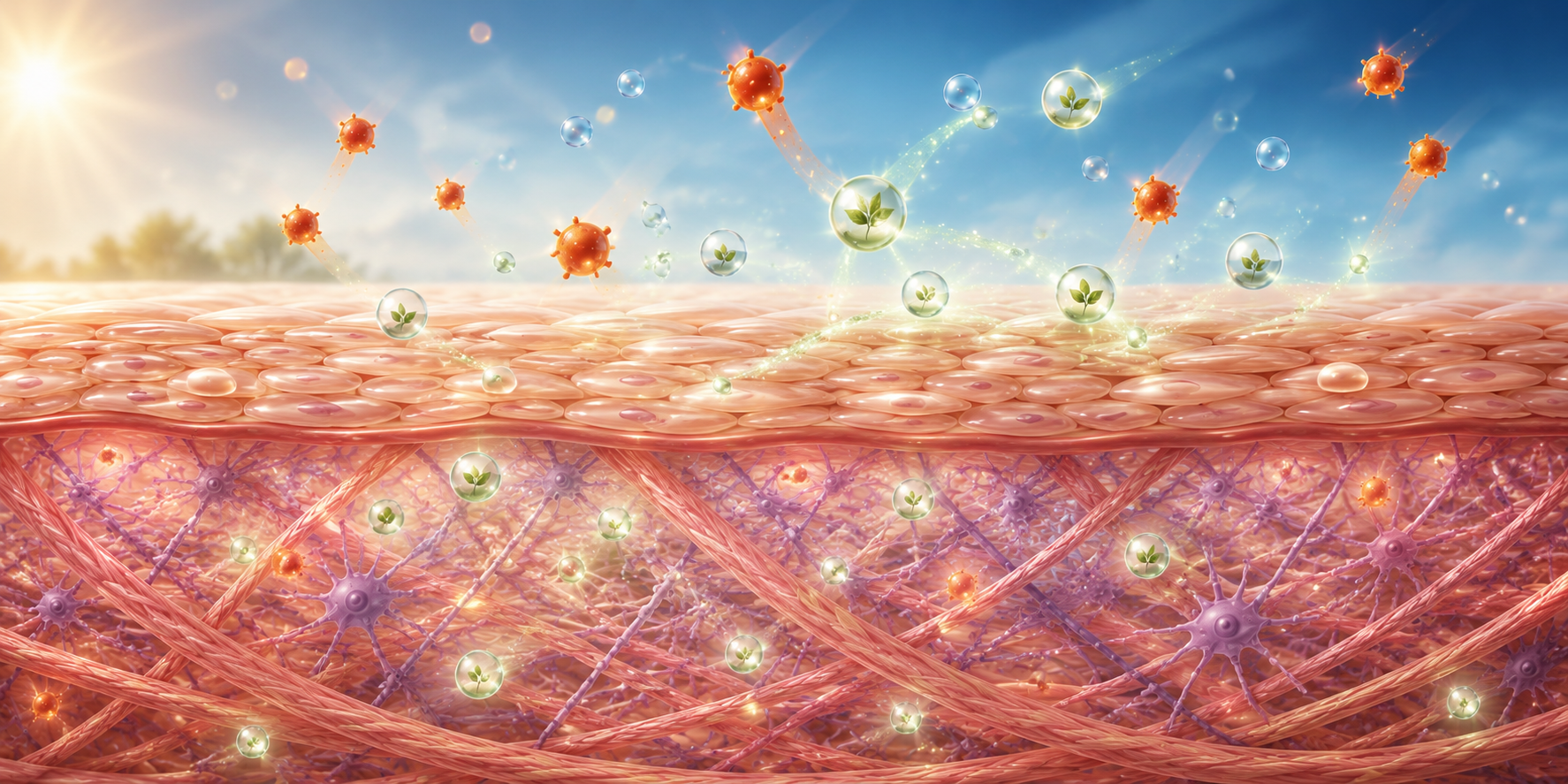
Every day, your skin is exposed to sunlight, pollution, normal metabolism and countless environmental influences that naturally produce unstable molecules called free radicals. Left unchecked, these molecules can gradually place stress on healthy skin cells.
Fortunately, your body has its own remarkable defence system. Antioxidants work continuously to neutralise many free radicals before they can trigger larger chain reactions. Understanding how antioxidants work helps explain why they are so important for maintaining healthy, resilient skin throughout life.

What Are Antioxidants?
Antioxidants are protective molecules that help defend the skin against free radicals.
A free radical is an unstable molecule with an unpaired electron. Because molecules naturally seek stability, a free radical may try to take an electron from a neighbouring molecule.
This can create a chain reaction. One molecule becomes unstable, then affects another, and the process can continue through nearby cells and tissues.
Antioxidants help interrupt this cycle.
They can safely donate an electron to a free radical without becoming dangerously unstable themselves. This helps neutralise the free radical and reduce the likelihood of the reaction spreading.
Rather than thinking of antioxidants as ingredients that reverse every visible sign of ageing, it is more accurate to see them as part of the skin’s ongoing protective network.

Where Do Free Radicals Come From?
Free radicals are not unusual or entirely harmful. Your body naturally produces them during normal processes such as energy production, immune activity and cellular communication.
In controlled amounts, they are part of healthy biology.
The challenge arises when free radical production becomes greater than the body’s ability to neutralise them.
Factors that may increase free radical activity in the skin include:
- Ultraviolet radiation from the sun
- Air pollution
- Cigarette smoke
- Inflammation
- Normal cellular metabolism
- Some environmental chemicals
- Ongoing psychological and physical stress
When free radicals begin to outnumber available antioxidants, the balance shifts towards oxidative stress.
Oxidative stress does not mean the skin suddenly becomes damaged. It describes a biological imbalance that, when repeated over time, may influence the structures and processes that keep skin healthy.
How Antioxidants Help Protect Skin
The skin is made from many interconnected systems. Cells, structural proteins, lipids, enzymes and immune signals all work together to maintain a stable, protective surface.
Free radicals may interact with several important skin structures, including:
- Collagen fibres
- Elastin fibres
- Cell membranes
- Skin barrier lipids
- Proteins and enzymes
- DNA within skin cells
Antioxidants help by neutralising some free radicals before they interact with these structures.
This does not make the skin invulnerable. No antioxidant can prevent every environmental effect or stop the natural ageing process. Instead, antioxidants support the skin’s ability to manage everyday oxidative activity.
They are one part of a broader system that also includes sun protection, skin barrier function, DNA repair, immune regulation and healthy cell turnover.

Your Skin Has Its Own Antioxidant Network
These natural systems are known as endogenous antioxidants, meaning they are made within the body.
They include antioxidant enzymes that help convert reactive molecules into less harmful forms, as well as compounds that can participate directly in neutralising free radicals.
The skin also receives antioxidant nutrients through the bloodstream. These nutrients come from a varied, balanced diet and support many processes throughout the body.
However, antioxidant protection is not unlimited. Environmental exposure, inflammation and normal ageing can increase demand on these systems.
This is one reason prevention matters. Reducing unnecessary exposure may be more effective than expecting antioxidants to compensate for it later.
Antioxidants From Food and Skincare
The skin can be supported by antioxidants from both internal and topical sources.
Antioxidants From Food
A varied diet provides vitamins, minerals and plant compounds that contribute to the body’s natural antioxidant systems.
Antioxidant-rich foods include:
- Berries
- Citrus fruits
- Tomatoes
- Leafy green vegetables
- Broccoli
- Capsicum
- Nuts and seeds
- Green tea
No single food provides everything the skin needs. Variety is more valuable than focusing on one so-called superfood.
Antioxidants in Skincare
Topical antioxidants are applied directly to the skin. Depending on the ingredient and formulation, they may help support the skin’s response to environmental stress.
Common skincare antioxidants include:
- Vitamin C
- Vitamin E
- Niacinamide
- Green tea extract
- Resveratrol
- Coenzyme Q10
- Ferulic acid
These ingredients do not all work in the same way.
Some help neutralise free radicals directly. Others support the skin barrier, help maintain a more even-looking complexion or work alongside other antioxidants within a formulation.
The performance of an antioxidant product depends on more than the ingredient name. Concentration, stability, packaging, pH and the complete formula all influence how well it may perform.

Why Sunscreen and Antioxidants Work Well Together
Antioxidants are often discussed alongside sunscreen because the two provide different forms of support.
Sunscreen helps reduce the amount of ultraviolet radiation reaching the skin.
Antioxidants help the skin manage some of the free radicals that may still be produced through UV exposure and other environmental influences.
Antioxidants do not replace sunscreen.
Even a well-formulated antioxidant serum cannot provide the broad, measurable protection of a properly applied sunscreen.
A practical morning routine may include:
- Gentle cleansing, when needed
- An antioxidant serum or moisturiser
- A moisturiser suited to the skin
- Broad-spectrum sunscreen
This approach helps reduce exposure at the surface while supporting the skin’s internal protective systems.
Why Antioxidant Protection Changes Over Time
The skin’s antioxidant systems remain active throughout life, but the balance between exposure, protection and recovery gradually changes.
Over time:
- Cumulative UV exposure increases
- Natural antioxidant activity may become less efficient
- Cellular repair processes may slow
- Collagen and elastin gradually change
- The skin barrier may become less resilient
- Inflammatory signals may take longer to resolve
These changes are gradual rather than sudden.
They also differ from person to person depending on genetics, environment, lifestyle, health and skincare habits.
Antioxidants cannot stop this natural process. They may, however, help support the skin as it responds to everyday environmental stress.
This makes them most valuable as part of a long-term approach rather than a quick solution.
Choosing an Antioxidant Product
You do not need to use every antioxidant available.
Choose products according to your skin’s needs, tolerance and existing routine.
When comparing antioxidant skincare, consider:
- Whether the formula suits your skin type
- Whether the product is packaged to protect sensitive ingredients from light and air
- Whether the ingredient concentration is clearly stated
- Whether the formula contains unnecessary irritants for your skin
- Whether it can be used consistently within your routine
Sensitive or reactive skin may benefit from starting with a gentle antioxidant such as niacinamide or green tea rather than combining several strong active ingredients.
Vitamin C can also be useful, but different forms vary in strength, stability and tolerability.
The most sophisticated product is not automatically the best choice. A well-tolerated product that you use regularly is often more valuable than a complex formula that irritates the skin.
Antioxidants as Part of Healthy Skin Biology
Antioxidants do not work in isolation.
They interact with many other systems that influence skin health, including:
- Free radical activity
- Collagen and elastin maintenance
- Skin barrier function
- Inflammatory signalling
- DNA protection and repair
- Cell turnover
- Sun protection
This is why healthy skin is rarely created by a single product or ingredient.
Skin is a living organ. Its protective, structural and regenerative systems continuously influence one another.
Antioxidants help support this network by reducing some of the oxidative pressure placed on cells and tissues each day.

Conclusion
Antioxidants are part of the skin’s natural defence system.
They help neutralise free radicals, interrupt oxidative chain reactions and support the structures that allow skin to function well.
They cannot stop ageing, replace sunscreen or protect the skin from every environmental influence. Their role is quieter and more realistic: helping the skin maintain balance as it responds to daily life.
Supported by a varied diet, appropriate skincare, a healthy skin barrier and daily sun protection, antioxidants can form a valuable part of a thoughtful long-term skincare routine.
Key Takeaways
- Antioxidants help neutralise unstable molecules known as free radicals.
- Free radicals are a normal part of biology but may contribute to oxidative stress when they become excessive.
- The skin produces its own antioxidants and also receives antioxidant nutrients from food.
- Topical antioxidants may help support collagen, elastin, cell membranes, DNA and the skin barrier.
- Different antioxidants perform different roles within skincare formulas.
- Antioxidants complement sunscreen but cannot replace it.
- Product stability, packaging and formulation matter as much as the ingredient name.
- Consistent, well-tolerated skincare is more valuable than using many active ingredients at once.
Continue Your Learning
Now that you understand how antioxidants help defend healthy skin, the next step is to explore one of the structures they help protect.

In the next lesson, DNA Damage Explained, you'll discover how everyday environmental exposure can affect the genetic instructions inside skin cells, how your body repairs much of this damage naturally, and why protecting DNA is essential for maintaining healthy skin over time. Go to next lesson