DNA Damage Explained
Every second, millions of skin cells are quietly carrying out instructions written inside their DNA. These microscopic blueprints tell each cell when to grow, divide, repair itself and eventually make way for new healthy cells.
Like every part of the body, our skin experiences small amounts of DNA damage throughout life. Fortunately, healthy skin is remarkably good at detecting and repairing much of this damage before it causes problems
Understanding how DNA works - and how to help protect it - reveals why sunscreen, antioxidants and healthy daily habits remain some of the most valuable investments you can make for your skin.

Full Lesson
What Is DNA?
DNA (deoxyribonucleic acid) is often called the body's instruction manual.
Almost every skin cell contains DNA inside its nucleus. This long molecule stores thousands of genes that tell each cell:
- when to divide
- which proteins to produce
- how to repair damage
- when to stop growing
- when it is time for the cell to be replaced.
Without healthy DNA, skin simply couldn't function.
Every new skin cell created during cell turnover relies on accurate DNA instructions.
Rather than being a fixed blueprint, DNA is constantly being read, copied, monitored and repaired throughout life.
🧠 Did You Know?
If all the DNA from a single human cell were stretched out, it would measure about two metres long—even though it fits inside a nucleus far smaller than the width of a human hair.
Why Does DNA Become Damaged?
DNA is surprisingly resilient, but it isn't indestructible.
Throughout life, skin cells are exposed to many different sources of stress.
Some occur naturally inside the body.
Others come from the environment.
The most important causes include:
- ultraviolet (UV) radiation
- free radicals
- pollution
- cigarette smoke
- chronic inflammation
- normal cellular metabolism.
Most DNA damage is small and happens gradually over time.
Healthy skin is designed with sophisticated repair systems that continuously search for these tiny mistakes.
Problems arise when damage occurs faster than the skin can repair it.

Understanding UV Damage
Sunlight is the single biggest environmental cause of DNA damage in skin.
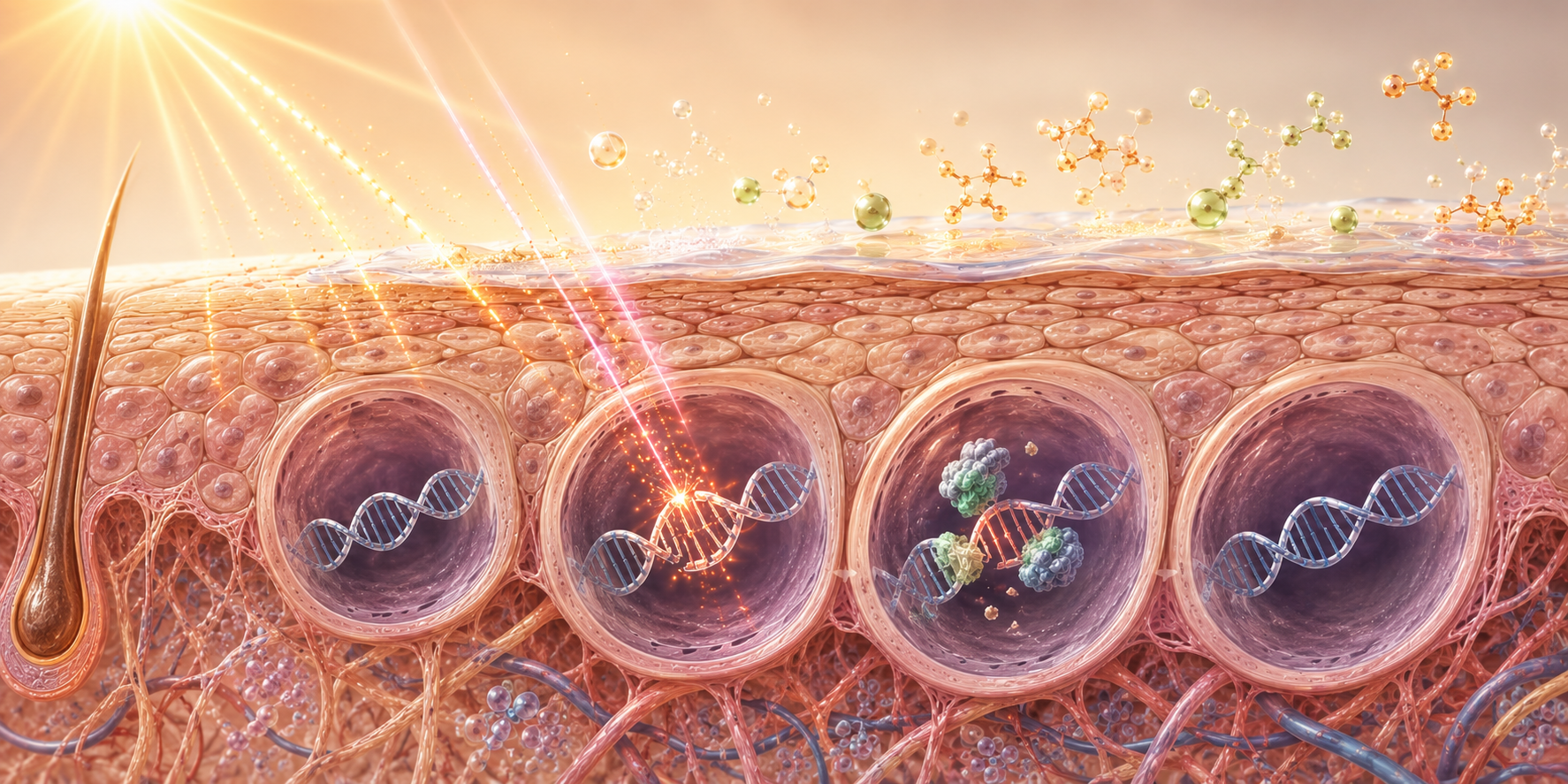
Ultraviolet radiation contains enough energy to directly affect DNA molecules inside skin cells.
When this happens, tiny sections of DNA can become altered.
Think of it like finding a typo inside an instruction manual.
One typo may not change the meaning.
Many repeated typos can eventually make the instructions harder to follow.
Fortunately, skin contains specialised repair enzymes that continually scan DNA looking for these errors.
When damage is detected, they carefully remove the affected section and rebuild it using the original genetic template.
This remarkable process happens thousands of times every day.
💡 Joanne's Insight
One of the biggest misconceptions I hear is that DNA damage only happens after severe sunburn.
In reality, much of it develops gradually through everyday sun exposure—walking the dog, driving, sitting beside a sunny window or enjoying lunch outdoors. Small exposures accumulate over many years, which is why consistent protection matters far more than occasional perfection.
DNA and Free Radicals
Not all DNA damage comes directly from sunlight.
Many skin cells are also exposed to free radicals.
Free radicals are unstable molecules that may interact with important cellular structures, including DNA.
Normally, antioxidants neutralise many of these molecules before they cause damage.
However, when oxidative stress develops, more free radicals are present than antioxidants can manage.
Some of these unstable molecules may reach DNA and alter small parts of its structure.
This is one reason antioxidants and sunscreen work so well together.
Sunscreen reduces the number of UV rays reaching the skin.
Antioxidants help neutralise many of the free radicals that still form despite sunscreen.
Together, they support the skin's natural protective systems.
Myth vs Reality
❌ Myth: DNA damage only matters if you get sunburnt.
✅ Reality: Small amounts of DNA damage can accumulate from repeated everyday UV exposure, even without visible burning. Daily sun protection helps reduce this ongoing stress.
Your Skin's Remarkable Repair System
Perhaps the most reassuring fact about DNA damage is that your skin is constantly repairing itself.
Every cell contains an impressive quality-control system.
These repair mechanisms:
- detect damaged DNA
- remove faulty sections
- replace missing pieces
- check the repair for accuracy
- decide whether severely damaged cells should be removed altogether.
If damage cannot be repaired safely, the cell may undergo programmed cell death—a natural process called apoptosis.
Although this sounds dramatic, it is actually one of the body's most important protective mechanisms.
Removing damaged cells helps healthy tissue continue functioning normally.

When Damage Builds Up
Most DNA damage is repaired successfully.
However, repeated exposure over many years gradually increases the workload placed on these repair systems.
Factors that influence long-term DNA health include:
- cumulative sun exposure
- age
- repeated oxidative stress
- smoking
- chronic inflammation
- genetics.
Over time, unrepaired DNA changes may contribute to:
- uneven skin tone
- reduced skin resilience
- accelerated visible ageing
- an increased risk of certain skin cancers.
This is why dermatologists often describe sunscreen as the most effective anti-ageing skincare product—not because it reverses ageing, but because it helps prevent unnecessary DNA damage from occurring in the first place.
✨ Why It Matters
Healthy DNA supports healthy skin from the inside out.
Every new skin cell relies on accurate genetic instructions to grow, mature and function normally.
By reducing unnecessary DNA damage, you're helping support the natural processes that keep skin resilient, balanced and functioning well throughout life.
How Skincare Can Help
No skincare product can completely prevent DNA damage.
Nor can cosmetics repair every change that occurs inside skin cells.
However, good skincare can help support the skin's own protective systems.
Daily habits that support healthy skin include:
- applying broad-spectrum sunscreen every morning
- wearing hats and protective clothing outdoors
- seeking shade during periods of intense UV
- using antioxidant-rich skincare where appropriate
- maintaining a healthy skin barrier
- avoiding smoking
- following a consistent skincare routine rather than chasing quick fixes.
Healthy skin is built through thousands of small protective choices repeated over time.
👩⚕️ Skin Therapist Tip
If you only choose one skincare habit to practise consistently, make it daily sunscreen application.
Many active ingredients help improve the appearance of skin, but sunscreen helps reduce one of the biggest causes of preventable DNA damage before it begins.

Conclusion
DNA is the quiet architect behind every healthy skin cell.
Although small amounts of DNA damage are an unavoidable part of life, our skin is equipped with remarkably sophisticated repair systems that work continuously to maintain healthy function.
The goal isn't to avoid every source of damage - that simply isn't possible.
Instead, it's to support the skin's natural defences through sensible sun protection, antioxidant support and consistent skincare habits.
When you understand how your skin protects its own genetic blueprint, everyday choices like applying sunscreen become less about routine and more about preserving healthy skin for the years ahead.
Key Takeaways
- DNA contains the instructions every skin cell needs to function.
- UV radiation is one of the leading causes of DNA damage in skin.
- Free radicals can also contribute to DNA changes through oxidative stress.
- Healthy skin continuously detects and repairs much of this damage.
- Sunscreen helps reduce DNA damage before it occurs.
- Antioxidants complement sunscreen by neutralising many free radicals.
- Consistent daily protection supports healthier skin over time.
Continue Your Learning
DNA damage affects what happens inside individual skin cells, but another important ageing process happens outside the cells themselves.

In the next lesson, Glycation Explained, you'll discover how excess sugar can gradually stiffen collagen and elastin, reducing the skin's flexibility and contributing to visible signs of ageing—even when your DNA remains healthy. Go to next lesson