Glycation Explained: How Sugar Gradually Changes Your Skin
Most people associate skin ageing with sunlight or simply getting older. While both are important, another process quietly takes place inside the body every day - glycation.
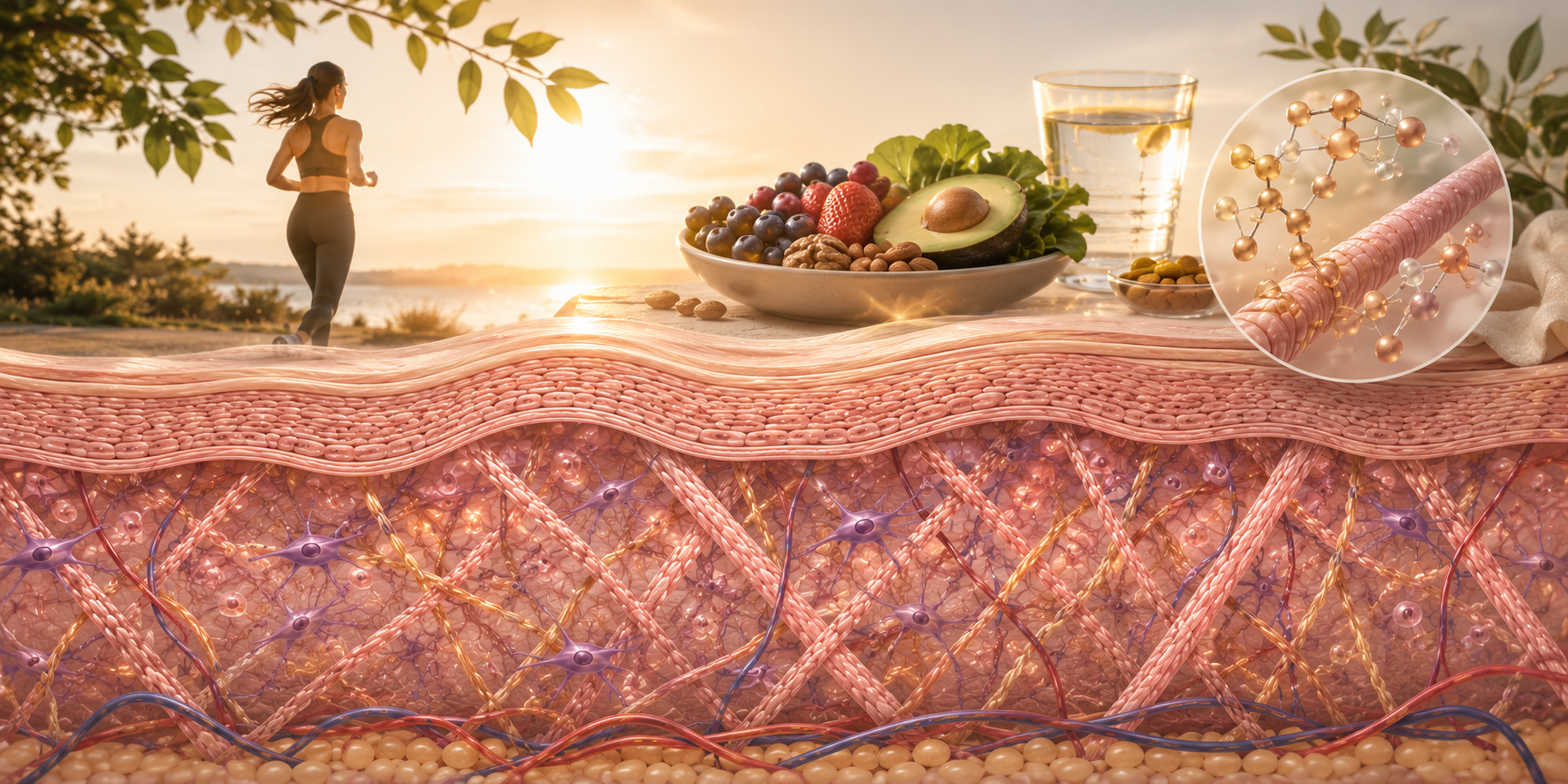
Glycation is a natural chemical reaction where excess sugars attach to proteins such as collagen and elastin. Over time, these proteins become less flexible and less able to support smooth, resilient skin. Although glycation is a normal part of ageing, lifestyle choices can influence how quickly it occurs.
Understanding glycation helps explain why healthy skin is influenced not only by skincare, but also by the way we care for our bodies each day.

What Is Glycation?
Glycation is a completely natural process that occurs throughout the body.
It happens when glucose (a simple sugar found in the bloodstream) attaches to proteins without the help of enzymes. Unlike normal biological processes that are carefully controlled, glycation is largely a random chemical reaction.
In the skin, the proteins most affected are:
- Collagen
- Elastin
- Structural proteins within connective tissue
Because collagen and elastin remain in the skin for many years, they have plenty of time to accumulate these changes.
As glycation gradually progresses, the proteins become stiffer and less flexible than when they were first produced.
This gradual change contributes to many of the visible characteristics associated with skin ageing.
Glycation Isn't Caused by Eating One Sweet Treat
One of the biggest misconceptions is that eating dessert immediately damages your skin.
In reality, glycation develops slowly over many years.
Healthy bodies are designed to regulate blood sugar very effectively, and occasional treats are part of a balanced lifestyle.
Instead, glycation is influenced by long-term patterns including:
- Normal ageing
- Persistent high blood sugar
- Overall dietary habits
- Smoking
- Chronic inflammation
- Oxidative stress
It is the cumulative effect over decades—not individual meals—that matters most.
💡 Joanne's Insight
During consultations, I've found that people often look for one ingredient to "reverse ageing." In reality, healthy skin reflects thousands of small choices made consistently over time. Glycation reminds us that caring for skin isn't only about what we apply—it also reflects how we care for our overall wellbeing.
Glycation is a completely natural process that occurs throughout the body.
It happens when glucose (a simple sugar found in the bloodstream) attaches to proteins without the help of enzymes. Unlike normal biological processes that are carefully controlled, glycation is largely a random chemical reaction.
In the skin, the proteins most affected are:
- Collagen
- Elastin
- Structural proteins within connective tissue
Because collagen and elastin remain in the skin for many years, they have plenty of time to accumulate these changes.
As glycation gradually progresses, the proteins become stiffer and less flexible than when they were first produced.
This gradual change contributes to many of the visible characteristics associated with skin ageing.
Glycation Isn't Caused by Eating One Sweet Treat
One of the biggest misconceptions is that eating dessert immediately damages your skin.
In reality, glycation develops slowly over many years.
Healthy bodies are designed to regulate blood sugar very effectively, and occasional treats are part of a balanced lifestyle.
Instead, glycation is influenced by long-term patterns including:
- Normal ageing
- Persistent high blood sugar
- Overall dietary habits
- Smoking
- Chronic inflammation
- Oxidative stress
It is the cumulative effect over decades—not individual meals—that matters most.
💡 Joanne's Insight
During consultations, I've found that people often look for one ingredient to "reverse ageing." In reality, healthy skin reflects thousands of small choices made consistently over time. Glycation reminds us that caring for skin isn't only about what we apply—it also reflects how we care for our overall wellbeing.

Can Skincare Prevent Glycation?
This is an area of active scientific research.
Unlike hydration or barrier repair, glycation occurs largely within the deeper layers of the skin and throughout the body.
No cosmetic product can completely stop glycation.
However, skincare can support healthy skin in ways that may indirectly help minimise its effects.
For example:
- Daily sunscreen reduces UV-related oxidative stress.
- Antioxidants help reduce free radical activity.
- Barrier-supporting skincare helps maintain healthier skin overall.
- Vitamin A (retinoids and retinal) supports normal collagen renewal.
- Vitamin C supports healthy collagen production.
These ingredients don't "remove sugar" from collagen.
Instead, they support the skin's natural ability to remain healthy despite the many biological processes occurring every day.
❌ Myth vs ✅ Reality
Myth: Eating sugar occasionally causes immediate wrinkles.
Reality: Glycation develops gradually over many years. Overall lifestyle patterns matter far more than enjoying occasional treats as part of a balanced diet.

How Does Glycation Affect the Skin?
To understand glycation, imagine a fresh elastic band.
It stretches easily, returns to shape and feels supple.
Now imagine that elastic band becoming coated in hardened glue.
It can still move—but not nearly as well.
Something similar happens to collagen and elastin.
When sugars bind to these proteins, they form compounds known as Advanced Glycation End Products (AGEs).
Despite the name, AGEs are not a sign of old age alone. They are simply molecules created by long-term glycation.
These compounds create extra chemical links—or cross-links—between collagen fibres.
Instead of sliding smoothly past one another, the fibres become increasingly rigid.
As this gradual process continues, skin may become:
- Less resilient
- Less elastic
- Less firm
- Slower to recover after movement
- More prone to visible fine lines over time
These changes happen gradually and are only one part of the complex biology of skin ageing.
Glycation and Collagen Work Together
Healthy collagen is continuously remodelled throughout life.
Fibroblasts produce new collagen while older collagen is gradually broken down.
However, glycated collagen becomes more difficult for the body to remove and replace.
This means some older collagen remains in the skin for longer than intended.
The result isn't weaker collagen overnight—but a gradual decline in the quality and flexibility of the skin's supportive framework.
🧠 Did You Know?
Collagen molecules can remain in the skin for many years. Because they last so long, they have more opportunity to accumulate glycation than rapidly renewing skin cells.
What Can Influence Glycation?
While ageing itself cannot be avoided, several everyday habits may influence how quickly glycation develops.
Healthy Blood Sugar Regulation
Keeping blood sugar relatively stable over time supports many systems throughout the body—not just the skin.
This doesn't require eliminating carbohydrates.
Instead, balanced meals containing:
- vegetables
- protein
- healthy fats
- whole grains
- fibre
can help moderate blood glucose responses.
Antioxidants
Oxidative stress and glycation are closely connected.
Free radicals can increase glycation reactions, while glycation can also contribute to oxidative stress.
This creates a cycle where both processes may reinforce one another.
Eating antioxidant-rich foods and using topical antioxidants may help support healthier skin overall.
Sun Protection
Ultraviolet radiation accelerates many forms of skin ageing.
Research suggests UV exposure can also increase the accumulation of Advanced Glycation End Products within skin.
Daily sunscreen remains one of the simplest ways to help preserve collagen over time.
Healthy Lifestyle Habits
Supporting overall health also supports the skin.
Helpful habits include:
- not smoking
- regular physical activity
- quality sleep
- managing chronic stress
- eating a varied diet rich in colourful plant foods
- protecting skin from excessive sun exposure
No single habit prevents glycation.
Together, however, they help create an environment that supports healthier skin throughout life.
👩⚕️ Skin Therapist Tip
Think about skincare as one part of a bigger picture. Daily sunscreen, a consistent skincare routine, nutritious food, movement and good sleep all contribute to healthier skin over time. Small habits practised consistently usually matter more than dramatic changes.
Why Glycation Matters
When people think about ageing, they often focus only on wrinkles.
But glycation helps us understand that skin ageing is actually the result of many interconnected biological processes.
These include:
- Cell turnover
- Collagen production
- Elastin changes
- Oxidative stress
- DNA damage
- Inflammation
- Glycation
Each influences the others.
Rather than acting independently, they form a network that shapes how healthy skin looks and functions throughout life.
Understanding glycation shifts our focus away from quick fixes and towards supporting the body's natural biology.
✨ Why It Matters
Healthy skin isn't determined by one ingredient or one habit. Glycation reminds us that skin reflects years of biology, lifestyle and daily care. By supporting collagen, protecting against sun exposure and maintaining healthy routines, you're helping your skin remain resilient for the future—not chasing perfection today.

Conclusion
Glycation is one of the quieter processes involved in skin ageing, yet it plays an important role in how collagen and elastin gradually change over time.
Although it cannot be completely prevented, glycation is only one piece of a much larger biological story.
Daily sun protection, antioxidant-rich nutrition, healthy lifestyle habits and consistent skincare all work together to support resilient skin throughout life.
Rather than fearing sugar or searching for miracle products, understanding glycation encourages a balanced, evidence-informed approach to caring for your skin.
Key Takeaways
- Glycation occurs when sugars gradually attach to proteins such as collagen and elastin.
- Over time, glycated proteins become less flexible and more rigid.
- Advanced Glycation End Products (AGEs) accumulate slowly over many years.
- Glycation is influenced by ageing, blood sugar regulation, oxidative stress and lifestyle.
- No skincare product can completely prevent glycation, but healthy skincare supports resilient skin.
- Daily sunscreen and antioxidants help protect collagen from other forms of skin damage.
- Healthy skin reflects consistent habits rather than quick fixes.
Continue Your Learning
Glycation continues around the clock, but so does your skin's remarkable ability to maintain and renew itself. While some proteins gradually change over time, your skin is constantly repairing damage, rebuilding its barrier and supporting healthy cells as you sleep.

Next lesson: Overnight Repair, where we'll explore what really happens during the night, how your skin's natural maintenance processes work, and why a consistent evening skincare routine can help support these biological rhythms. Go to next lesson