Argan Oil for Skin: Nature's Golden Barrier Support
Argan oil has earned a reputation as one of the world's most celebrated botanical oils—and for good reason. Extracted from the kernels of the Moroccan argan tree, it is naturally rich in essential fatty acids, vitamin E and antioxidant compounds that help support healthy skin. Despite its luxurious feel, argan oil is surprisingly lightweight, making it suitable for many different skin types. Understanding how this remarkable oil works can help you choose skincare that supports your skin barrier while maintaining softness, comfort and long-term resilience.

Full Lesson
What Is Argan Oil?
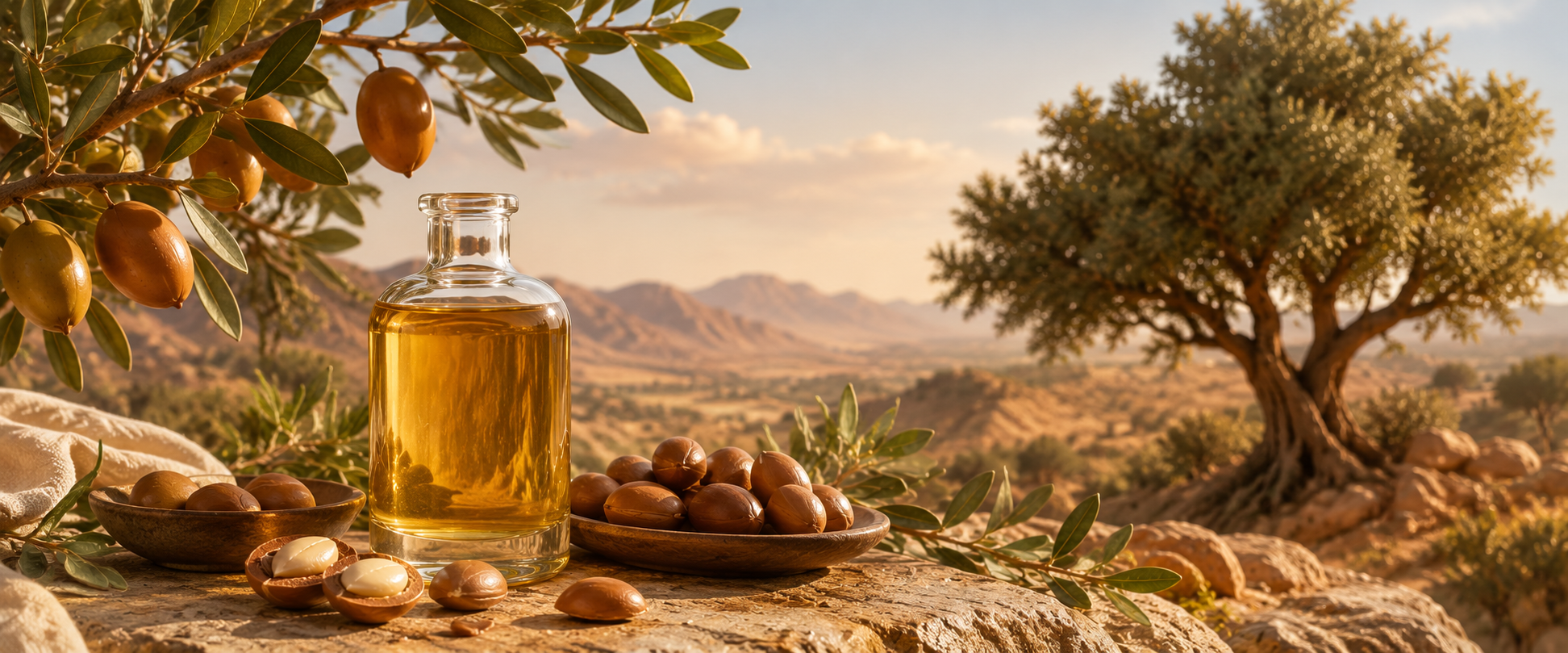
Argan oil is a botanical oil extracted from the kernels of the argan tree (Argania spinosa), which grows almost exclusively in south-western Morocco.
For centuries, local communities have valued the oil for both culinary and cosmetic purposes. Today, cosmetic-grade argan oil is carefully cold pressed to preserve its naturally occurring nutrients.
Unlike essential oils, argan oil is a true botanical carrier oil. This means it contains beneficial lipids that closely resemble many of the protective oils naturally found within healthy skin.
Its composition includes:
- Oleic acid (Omega-9)
- Linoleic acid (Omega-6)
- Natural vitamin E (tocopherols)
- Plant sterols
- Antioxidant polyphenols
- Squalene (naturally occurring in small amounts)
Together these compounds help support the skin's outer protective barrier while providing lightweight nourishment.
Why Is the Skin Barrier So Important?
Your skin barrier is the outermost layer of your skin.
It acts as your body's first line of defence by helping to:
- reduce moisture loss
- protect against environmental stress
- keep irritants out
- maintain comfortable hydration
- support smooth, healthy skin.
The barrier is often compared to a brick wall.
The skin cells act as the bricks, while lipids—including ceramides, cholesterol and fatty acids—act as the mortar holding everything together.
When this lipid layer becomes depleted, skin may begin to feel:
- dry
- rough
- tight
- uncomfortable
- more easily irritated.
Botanical oils like argan oil help replenish some of these protective surface lipids.

How Does Argan Oil Support the Skin?
Essential fatty acids
Argan oil is naturally rich in oleic and linoleic acids.
These essential fatty acids become part of the skin's outer lipid layer, helping improve flexibility while reducing transepidermal water loss—the gradual evaporation of water from the skin.
Rather than adding water to the skin itself, argan oil helps the skin hold onto the hydration it already has.
Natural vitamin E
Argan oil is also an excellent source of vitamin E.
Vitamin E functions as an antioxidant, helping protect the skin's own lipids from oxidation caused by everyday environmental exposure such as sunlight and pollution.
Healthy skin is constantly exposed to oxidative stress, making antioxidants an important part of maintaining long-term skin health.
Lightweight nourishment
One reason argan oil remains so popular is its texture.
Although nourishing, it absorbs relatively quickly and generally feels less heavy than richer oils such as avocado or olive oil.
This makes it suitable for people who want comfort without an overly greasy finish.
💡 Joanne's Insight
One of the reasons I've always appreciated argan oil is its versatility. Clients often assume richer oils are automatically better for dry skin, but texture matters too. A beautifully balanced oil that feels comfortable on the skin is often one people will enjoy using consistently—and consistency is where good skincare habits begin.
Who Can Benefit From Argan Oil?
Argan oil is remarkably adaptable.
Many skin types can enjoy its barrier-supporting properties.
It may be particularly suitable for:
- normal skin
- dry skin
- mature skin
- dehydrated skin
- combination skin
- skin exposed to dry climates
- skin experiencing seasonal dryness.
People with oily skin may also tolerate argan oil surprisingly well because of its relatively lightweight composition.
Every person's skin is different, however, and the overall formulation of a product matters just as much as any individual ingredient.

Argan Oil and Antioxidant Protection
Healthy skin naturally produces free radicals during normal metabolism.
Environmental factors such as:
- UV exposure
- pollution
- smoke
- wind
- temperature extremes
can increase this oxidative stress.
Argan oil contributes antioxidant support through its naturally occurring vitamin E and plant polyphenols.
These antioxidants help neutralise many free radicals before they interact with the skin's lipids.
While no skincare ingredient can completely prevent environmental damage, maintaining a healthy antioxidant network helps support resilient skin over time.
🧠 Did You Know?
An argan tree can live for well over 150 years. These remarkable trees have adapted to harsh desert environments, producing nutrient-rich kernels that have been valued in Morocco for generations.
Why Formulation Matters More Than One Ingredient
It's easy to think one "hero ingredient" determines whether a product is effective.
In reality, skincare works through thoughtful formulation.
Argan oil is often combined with complementary ingredients that support different aspects of skin health, including:
- ceramides
- squalane
- jojoba oil
- rosehip oil
- vitamin E
- hyaluronic acid
- antioxidants.
Each ingredient contributes something slightly different, creating a formula that supports the skin in multiple ways.
This is why ingredient lists should always be viewed as a complete recipe rather than a collection of individual stars.
❌ Myth vs ✅ Reality
Myth: Argan oil is too oily for most people.
Reality: Cosmetic argan oil is relatively lightweight and absorbs well. Many people with combination or even oilier skin find it comfortable when used in a well-formulated product.
✨ Why It Matters
Understanding why argan oil works helps you look beyond marketing claims.
Rather than choosing products simply because they contain a fashionable ingredient, you can begin recognising whether a formula supports the skin barrier, provides antioxidant protection and delivers balanced nourishment.
That knowledge leads to more confident skincare decisions and healthier long-term routines.
Which Shanga Products Contain Argan Oil?
Within the current Shanga collection, Radiance Elixir contains Argania Spinosa (Argan) Kernel Oil, alongside a blend of other nutrient-rich botanical oils including watermelon seed, jojoba, grape seed, avocado, seabuckthorn, rosehip and cranberry seed oils. The formula uses argan oil as part of a balanced blend designed to nourish the skin while maintaining an elegant, lightweight finish.
👩⚕️ Skin Therapist Tip
If you're introducing a facial oil, apply it as the final step of your evening routine after water-based serums and moisturiser. Oils help seal in hydration—they don't replace it.

Conclusion
Argan oil has remained a skincare favourite because it combines nourishment with elegance. Rich in essential fatty acids, vitamin E and naturally occurring antioxidants, it helps support the skin barrier while maintaining softness and comfort without feeling excessively heavy.
Like all botanical oils, its greatest value comes when it forms part of a thoughtfully balanced formulation. Understanding how argan oil functions allows you to look beyond trends and choose products that genuinely support healthy skin over time.
Key Takeaways
- Argan oil is extracted from the kernels of the Moroccan argan tree.
- It is naturally rich in essential fatty acids and vitamin E.
- It helps support the skin barrier and reduce moisture loss.
- Its lightweight texture suits many different skin types.
- Antioxidants in argan oil help protect skin lipids from oxidative stress.
- The overall formulation of a product matters more than any single ingredient.
- Shanga's Radiance Elixir includes argan oil as part of a carefully balanced botanical oil blend.
Continue Your Learning
Argan oil and squalane are often compared because both help support the skin barrier while offering a lightweight feel. In the next lesson, Squalane Explained, you'll discover how this skin-identical lipid differs from botanical oils, why it has become a modern skincare favourite, and how it helps maintain healthy, resilient skin.