Botanical Oils in Skincare: Benefits, Types & How to Choose the Right Oil
From jojoba and argan to rosehip and grapeseed, botanical oils have become some of the most celebrated ingredients in modern skincare. Yet despite their popularity, many people are unsure what these oils actually do or whether they are suitable for their skin.
The truth is that botanical oils do far more than simply make skin feel soft. They help reinforce the skin barrier, reduce moisture loss, deliver naturally occurring antioxidants and improve overall skin comfort. Understanding how different oils work—and why no single oil is perfect for everyone—can help you choose products that truly support healthy, resilient skin.

Full Lesson
Understanding Botanical Oils
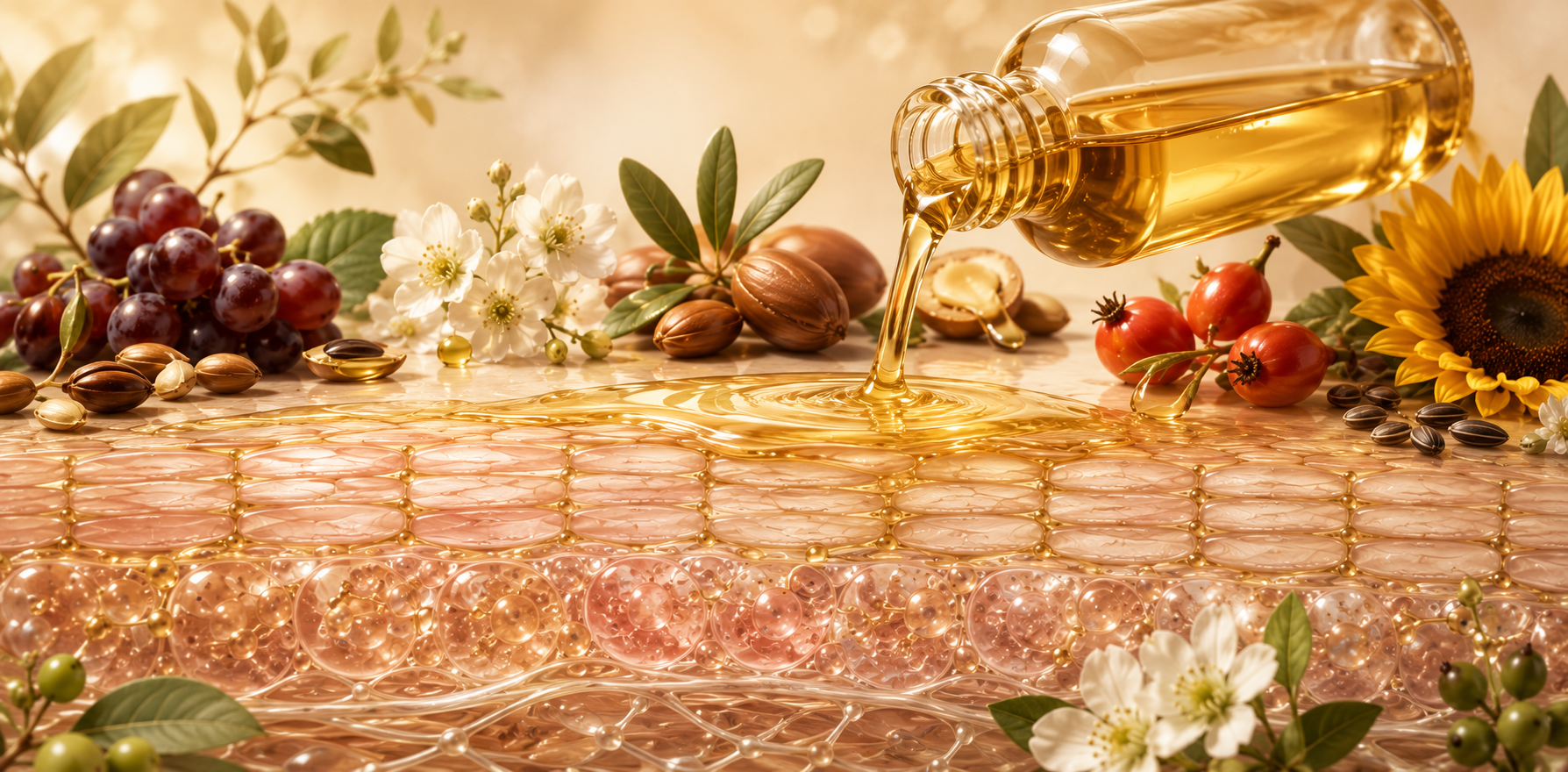
Botanical oils are naturally derived lipids extracted from plants. Depending on the plant, they may come from seeds, nuts, kernels or fruits.
Common examples include:
- Jojoba oil
- Argan oil
- Rosehip oil
- Sweet almond oil
- Grapeseed oil
- Sunflower seed oil
- Avocado oil
- Meadowfoam seed oil
- Sea buckthorn oil
Each botanical oil has its own unique balance of fatty acids, antioxidants, vitamins and plant compounds, giving it distinct characteristics and benefits for the skin.
Although many people think of botanical oils as "moisturisers", their primary role is actually supporting the skin's protective barrier.
Why Your Skin Needs Lipids
Healthy skin contains its own natural mixture of oils and lipids.
These include:
- Ceramides
- Cholesterol
- Free fatty acids
- Naturally produced sebum
Together, these lipids form part of the skin barrier, helping prevent excessive water loss while protecting the skin from environmental stress.
As we age—or when the barrier becomes disrupted through weather, over-exfoliation or certain skin conditions—these natural lipids can become depleted.
Applying botanical oils can help replenish the skin's surface, making it feel softer, smoother and more comfortable while reducing transepidermal water loss (TEWL).
Importantly, botanical oils don't replace the skin's own lipids exactly, but they can complement them by creating a protective, nourishing layer.
How Botanical Oils Support Healthy Skin
Strengthening the Skin Barrier
One of the most valuable roles of botanical oils is helping reinforce the skin's outer protective layer.
A healthy barrier:
- reduces water loss
- protects against environmental stress
- improves comfort
- supports smoother skin texture
- helps maintain resilience
Many botanical oils naturally contain essential fatty acids that help support this protective function.

Reducing Moisture Loss
One of the biggest misconceptions in skincare is that oils hydrate the skin.
They don't.
Hydration refers to the amount of water within the skin.
Botanical oils help by slowing the evaporation of that water.
This makes them excellent partners for humectants such as:
- Glycerin
- Hyaluronic Acid
- Saccharide Isomerate
- Beta-Glucan
These ingredients attract water into the skin, while botanical oils help keep it there.
Delivering Natural Antioxidants
Many plant oils naturally contain antioxidant compounds including:
- Vitamin E (tocopherols)
- Polyphenols
- Carotenoids
- Phytosterols
These compounds help defend the skin against oxidative stress caused by UV exposure and pollution.
Although antioxidants in botanical oils are generally less concentrated than dedicated antioxidant serums, they still contribute to overall skin health.
Improving Skin Comfort
Well-formulated botanical oils can:
- soften rough skin
- improve flexibility
- reduce feelings of tightness
- enhance smoothness
- support a healthy-looking glow
This is why facial oils are often particularly appreciated by people with dry, mature or environmentally stressed skin.

Not All Botanical Oils Are the Same
One of the biggest myths in skincare is that every facial oil performs the same function.
In reality, each oil has its own unique fatty acid profile, influencing how it feels on the skin and which skin types may benefit most.
Jojoba Oil
Despite its name, jojoba is technically a liquid wax rather than a true oil.
Its structure closely resembles components of human sebum, giving it a lightweight feel that suits many skin types.
Best suited for:
- Combination skin
- Oily skin
- Normal skin
Argan Oil
Rich in vitamin E and nourishing fatty acids, argan oil provides excellent emollient benefits while supporting the skin barrier.
Best suited for:
- Dry skin
- Mature skin
- Environmentally stressed skin
Rosehip Oil
Rosehip oil is naturally rich in linoleic acid and carotenoid pigments.
It is widely used in products designed to improve radiance and support healthy-looking skin.
Best suited for:
- Uneven skin tone
- Mature skin
- Dull skin
Sweet Almond Oil
Sweet almond oil has been used in skincare for generations because of its soft, nourishing feel.
It is particularly valued for dry or rough skin.
Best suited for:
- Dry skin
- Sensitive-feeling skin
- Body care
Grapeseed Oil
Grapeseed oil feels noticeably lighter than many richer oils and contains high levels of linoleic acid.
Best suited for:
- Combination skin
- Oily skin
- Congested skin
Sunflower Seed Oil
Sunflower oil is rich in linoleic acid and is well recognised for supporting the skin barrier.
It appears in many moisturisers designed for sensitive or compromised skin.
Best suited for:
- Sensitive skin
- Dry skin
- Barrier support
Understanding Fatty Acids
The unique balance of fatty acids largely determines how an oil performs.
Oleic Acid
Oils rich in oleic acid tend to feel:
- richer
- more cushioning
- deeply nourishing
Examples include:
- Olive oil
- Avocado oil
- Sweet almond oil
These oils are often preferred by people with dry or mature skin.
Linoleic Acid
Linoleic acid creates a lighter skin feel and plays an important role in supporting the skin barrier.
Examples include:
- Grapeseed oil
- Sunflower oil
- Rosehip oil
Many people with combination or oily skin find these oils more comfortable.
Botanical Oils vs Essential Oils
Although their names sound similar, botanical oils and essential oils are completely different ingredients.
|
Botanical Oils |
Essential Oils |
|
Contain fatty acids |
Contain aromatic compounds |
|
Nourish the skin |
Primarily provide fragrance |
|
Support the barrier |
Used in very small amounts |
|
Can be used as carrier oils |
Must usually be diluted |
Understanding this difference helps consumers choose products more confidently and safely.

Choosing the Right Botanical Oil
Rather than searching for the "best" facial oil, it is more helpful to choose one that suits your skin's individual needs.
Dry Skin
Look for richer oils such as:
- Argan
- Sweet Almond
- Avocado
Oily or Combination Skin
Lighter oils often feel more comfortable, including:
- Jojoba
- Grapeseed
- Sunflower
Mature Skin
Many people enjoy oils containing naturally occurring antioxidants, including:
- Argan
- Rosehip
- Sea Buckthorn
Sensitive Skin
Simple formulations containing well-tolerated botanical oils may help improve comfort while supporting the skin barrier.

How to Use Botanical Oils
Botanical oils work best as part of a complete skincare routine rather than as a replacement for moisturisers.
A simple routine might include:
Morning
- Gentle cleanser
- Hydrating serum
- Moisturiser
- Botanical oil (if needed)
- Sunscreen
Evening
- Cleanser
- Treatment serum
- Moisturiser
- Botanical oil as the final step
Applying oils after water-based products helps seal hydration into the skin.

Myth vs Reality
Myth
Facial oils always clog pores.
Reality
Some oils are richer than others. Lightweight oils such as jojoba and grapeseed are often well tolerated by oily or combination skin when appropriately formulated.
Myth
Oils hydrate the skin.
Reality
Oils reduce moisture loss. Ingredients such as glycerin and hyaluronic acid provide hydration by attracting water into the skin.
Myth
More expensive oils are automatically better.
Reality
The quality of the formulation, stability of the ingredients and suitability for your skin matter far more than price alone.
Did You Know?
Many premium facial oils combine several botanical oils rather than relying on a single "hero" ingredient.
This allows formulators to balance lighter and richer fatty acids, improve stability and create a more elegant skin feel while delivering a wider range of naturally occurring antioxidants and plant lipids.
Joanne's Insight
For many years, skincare marketing focused on finding one miracle oil. In reality, healthy skin rarely relies on a single ingredient. Every botanical oil has its own unique profile of fatty acids, antioxidants and plant compounds, which is why experienced formulators often combine several oils to create a more balanced result. Rather than searching for the most fashionable oil, look for thoughtfully formulated products that support hydration, strengthen the skin barrier and work in harmony with your skin's natural biology.
The Bottom Line
Botanical oils are far more than luxurious finishing touches. They play an important role in supporting the skin barrier, reducing moisture loss and improving overall skin comfort.
Because every oil has its own unique composition, there is no single "best" botanical oil for everyone. The ideal choice depends on your skin type, concerns and the overall formulation.
When combined with humectants, barrier-supporting ingredients and daily sun protection, botanical oils become part of a balanced skincare routine that helps skin remain healthy, resilient and comfortable over time.
Continue Your Learning
Jojoba Oil is the ideal ingredient to follow the Botanical Oils lesson because you now understand what botanical oils are, and this article can explain why jojoba is actually quite different from most other plant oils. Next Academy lesson,