Ceramides for Skin: How They Strengthen the Skin Barrier and Support Healthy Hydration
Healthy skin depends on much more than hydration alone. One of the most important components of the skin barrier is a family of naturally occurring lipids called ceramides. Although they rarely receive the same attention as ingredients like vitamin C or retinoids, ceramides quietly perform one of the skin's most essential jobs—helping keep moisture in while protecting against the outside world.
Understanding ceramides helps explain why some skin feels comfortable, resilient and well balanced, while other skin becomes dry, reactive or easily irritated. They are among the most valuable ingredients for supporting long-term skin health.

Understanding Ceramides
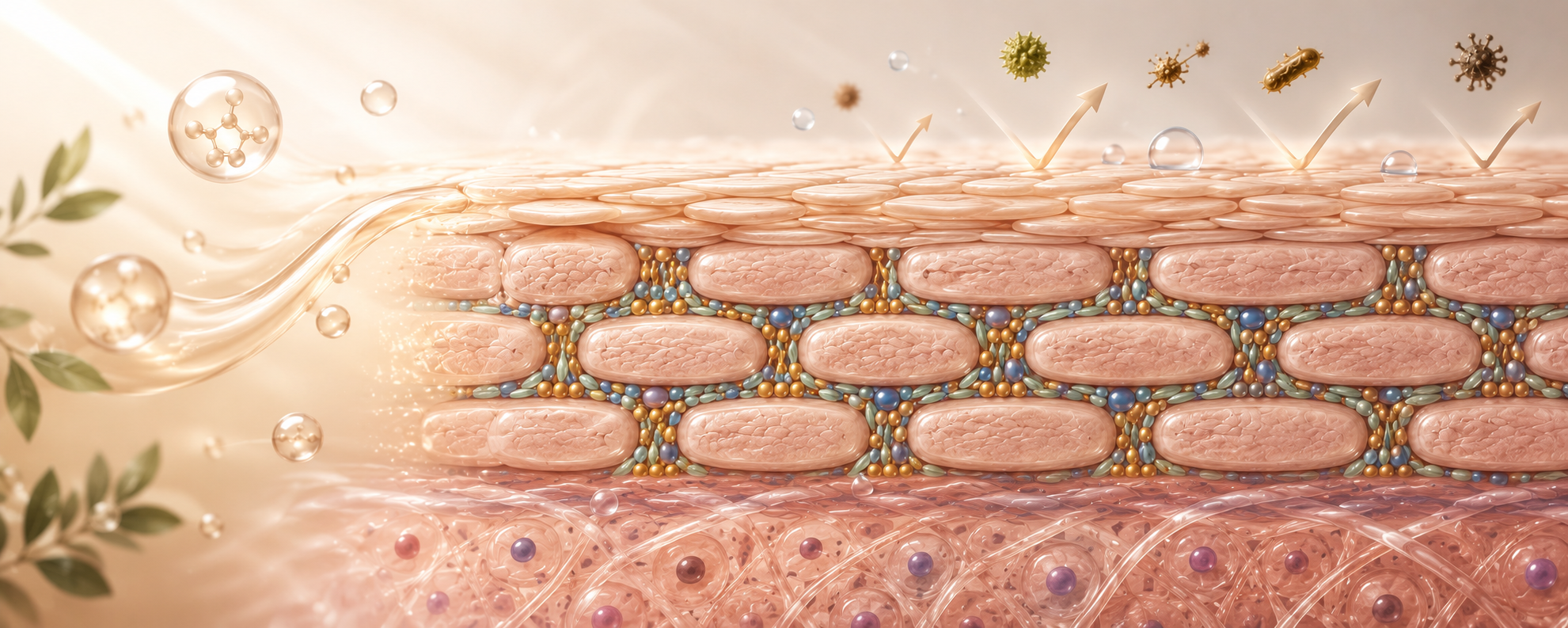
Ceramides are naturally occurring fats (lipids) that make up around half of the outer skin barrier by weight. Together with cholesterol and free fatty acids, they form the protective "mortar" between the skin's outer cells.
A helpful way to picture this is the classic brick and mortar analogy.
- The skin cells (corneocytes) are the bricks.
- Ceramides, cholesterol and fatty acids are the mortar holding everything together.
Without enough mortar, even perfectly healthy bricks cannot form a strong wall.
The same is true for your skin.
When ceramide levels are healthy, the barrier remains strong, flexible and effective at retaining moisture while limiting unnecessary water loss and helping defend against environmental stressors.

Why Does the Skin Barrier Matter?
The skin barrier performs several important functions every day.
It helps:
- reduce transepidermal water loss (TEWL)
- maintain hydration
- protect against pollution and environmental stress
- reduce penetration of potential irritants
- support a balanced skin microbiome
- create an environment where skin can function normally
When this barrier becomes disrupted, skin often becomes less comfortable.
Rather than looking at individual concerns like dryness, sensitivity or redness separately, many dermatologists now recognise that a weakened barrier can contribute to several of these issues at the same time.
What Causes Ceramides to Decline?
Although our skin naturally produces ceramides, production gradually changes throughout life.
Ceramide levels may also become lower due to:
- increasing age
- excessive UV exposure
- over-cleansing
- frequent exfoliation
- harsh soaps or cleansers
- cold, dry climates
- certain inflammatory skin conditions
- prolonged skin irritation
This doesn't necessarily mean the skin is damaged—it simply means it may need additional barrier support while it restores its natural balance.
💡 Joanne's Insight
One of the most common patterns I see in clinic is people trying to solve sensitive skin by adding more active ingredients. Often, the skin doesn't need another treatment—it needs its barrier supported first. Once the barrier feels comfortable again, the rest of the routine usually performs much better.
How Do Ceramides Work?
Topical ceramides help replenish some of the lipids naturally found within the outer skin barrier.
Rather than dramatically changing the skin overnight, they work gradually by supporting the barrier's normal structure.
This may help:
- reduce moisture loss
- improve skin comfort
- strengthen barrier resilience
- support smoother skin texture
- reduce feelings of tightness after cleansing
- improve tolerance to other skincare ingredients
Ceramides are particularly effective when formulated alongside cholesterol and free fatty acids, which together mimic the skin's own natural lipid composition. Modern formulations may also include phytosphingosine, another naturally occurring skin lipid that contributes to barrier function.

Ceramides and Hydration Are Not the Same Thing
People often confuse hydration with barrier repair.
Hydration refers to the amount of water within the skin.
Ceramides don't directly add water.
Instead, they help the skin hold onto the water it already has.
Think of it this way:
A sponge can be full of water, but if it has holes, it will quickly dry out.
Ceramides help close those holes.
For this reason, ceramides work beautifully alongside humectants such as:
- glycerin
- hyaluronic acid
- saccharide isomerate
- beta-glucan
- panthenol
The humectants attract water, while ceramides help keep it there.
❌ Myth vs ✅ Reality
Myth: Ceramides are only useful for dry skin.
Reality: Every skin type relies on ceramides. Oily, combination, acne-prone and mature skin all benefit from a healthy skin barrier.
🧠 Did You Know?
Scientists have identified more than a dozen different ceramide types within healthy human skin. Each plays a slightly different role in maintaining the skin barrier, which is why many advanced skincare formulations include a blend of ceramides rather than just one.
Who Can Benefit from Ceramides?
Almost everyone.
Ceramides are especially valuable for people experiencing:
- dehydration
- dry skin
- sensitive skin
- redness
- mature skin
- seasonal dryness
- frequent exfoliation
- retinoid use
- compromised skin barriers
They are also excellent for maintaining healthy skin, even when no obvious concerns are present.
Supporting the skin barrier isn't only about fixing problems—it's about helping healthy skin stay healthy.

Why This Matters
Many skincare ingredients work by encouraging change within the skin.
Vitamin C supports antioxidant defence.
Retinoids encourage healthy cell renewal.
Exfoliating acids help remove surface cells.
All of these ingredients can play an important role within a routine.
However, they also rely on a healthy skin barrier to perform well.
When the barrier is functioning comfortably, the skin often becomes more resilient and better able to tolerate active ingredients.
Ceramides therefore don't replace these treatments—they help create the healthy environment that allows them to work more comfortably.
✨ Why It Matters
A healthy skin barrier supports almost every aspect of skin health. By helping retain moisture and reinforcing the skin's natural protective layer, ceramides contribute to skin that feels more comfortable, resilient and balanced over time.
👩⚕️ Skin Therapist Tip
If you're introducing ingredients such as retinal, exfoliating acids or vitamin C, pairing them with a ceramide-rich moisturiser or mist can help support your skin barrier as it adapts. Consistency is usually more beneficial than applying large amounts all at once.
Which Shanga Products Contain Ceramides?
Within the Shanga collection, ceramides are included in products designed to support the skin barrier and overall skin resilience.
Current products featuring ceramides include:
- Repair Hydromist – contains Ceramide NP, Ceramide AP and Ceramide EOP, together with cholesterol, phytosphingosine, panthenol and sodium hyaluronate to help reinforce the skin barrier and maintain hydration.
- Restore Cream Moisturiser – Contains ceramides alongside barrier-supporting lipids and nourishing ingredients to help replenish the skin's protective barrier, improve moisture retention and support dry, sensitive or compromised skin.
Together, Repair Hydromist and Restore Cream provide complementary barrier support, delivering ceramides at different stages of a skincare routine to help maintain hydration, comfort and skin resilience. As formulations evolve, ceramides may also appear in future barrier-supporting products as part of Shanga's performance-led clean skincare philosophy.
Conclusion
Ceramides may not be the most talked-about skincare ingredient, but they are among the most important.
By supporting the skin's natural barrier, helping retain moisture and improving resilience, they create the conditions healthy skin needs to function at its best.
Whether your goal is maintaining hydration, reducing sensitivity or simply supporting long-term skin health, ceramides are one of the most evidence-informed ingredients you can include in a skincare routine.
Key Takeaways
- Ceramides are natural lipids that make up much of the skin barrier.
- They help reduce water loss and maintain healthy hydration.
- Ceramides work best alongside cholesterol and fatty acids.
- Healthy barrier function supports overall skin comfort and resilience.
- All skin types benefit from maintaining healthy ceramide levels.
- Ceramides complement active ingredients by supporting the skin barrier.
- Consistent daily use helps maintain long-term barrier health.
Continue Your Learning
Now that you understand how ceramides help protect the skin barrier, the next step is to explore another fascinating group of ingredients that communicate directly with skin cells.

In our next Academy lesson, Peptides, you'll discover how these tiny protein fragments help support collagen production, skin firmness and healthy skin renewal through sophisticated biological signalling. Go to next lesson