Understanding Dry Skin
Dry skin is one of the most common skin concerns, yet it is also one of the most misunderstood. Many people assume dry skin simply needs more moisturiser, but the story is more complex. Dry skin is a skin type characterised by reduced natural oils and a weakened protective barrier. Understanding why this happens can help you choose skincare that genuinely supports your skin rather than simply masking temporary discomfort. In this lesson, we'll explore the science behind dry skin, what causes it, and how thoughtful skincare can help restore comfort and resilience.

What Is Dry Skin?
Dry skin, sometimes called xerosis, is a skin type that naturally produces fewer protective oils, known as sebum.
Sebum forms part of the skin's natural barrier, helping to soften the surface and reduce water loss. When there is not enough of it, skin can feel tight, rough or uncomfortable.
Unlike temporary dehydration, which involves a lack of water, dry skin is primarily linked to a shortage of oils and lipids within the skin barrier.
Many people inherit dry skin genetically, although age, climate and lifestyle also influence how dry skin becomes over time.
Common signs include:
- Tightness after cleansing
- Rough or flaky patches
- A dull appearance
- Increased sensitivity
- Fine surface lines
- Itching or discomfort
Dry skin exists on a spectrum. Some people notice only mild tightness during winter, while others experience persistent dryness throughout the year.
💡 Joanne's Insight
After treating thousands of clients, one pattern appears again and again: people with dry skin often try stronger exfoliants or harsher cleansers because their skin looks dull. In reality, dry skin usually responds far better to gentle cleansing and consistent barrier support than frequent exfoliation.

Why Does Skin Become Dry?
Healthy skin depends on three important components working together:
- Natural oils (sebum)
- Skin barrier lipids (including ceramides, cholesterol and fatty acids)
- Water held within the outer skin layers
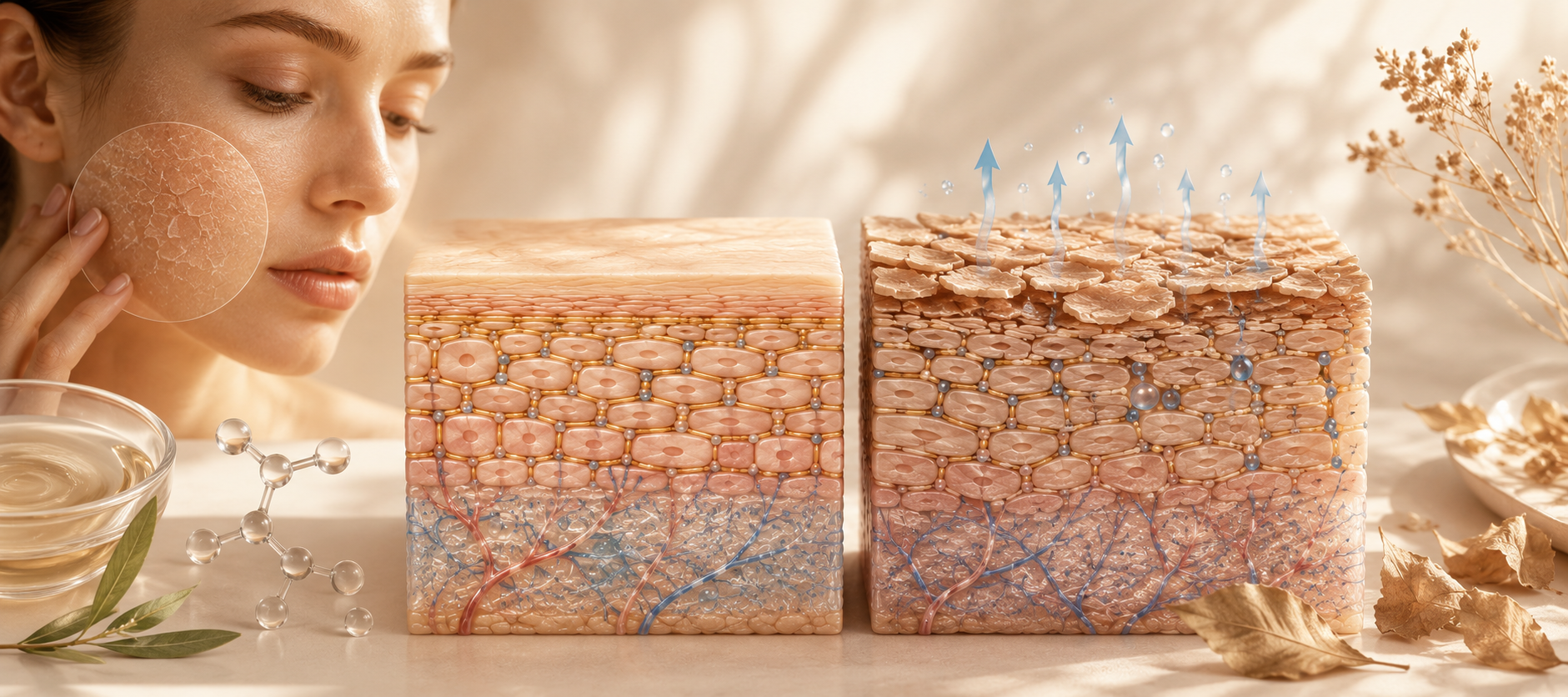
When oil production decreases, the barrier becomes less efficient at keeping water inside the skin.
This leads to increased transepidermal water loss (TEWL)—the gradual evaporation of water from the skin's surface.
As more water escapes, skin feels tighter and becomes less flexible.
Several factors contribute to dry skin.
Genetics
Some people naturally produce less sebum than others. This often becomes noticeable during adolescence and remains their lifelong skin type.
Age
As we age, oil production gradually declines.
The skin also produces fewer barrier lipids and natural moisturising factors, making dryness increasingly common after middle age.
Environment
Cold weather, low humidity, indoor heating and air conditioning all reduce moisture in the surrounding air.
The drier the environment, the harder the skin must work to maintain hydration.
Cleansing Habits
Very hot water and harsh cleansers can remove protective surface oils faster than the skin can replace them.
Repeated stripping gradually weakens the barrier.
Medical Conditions
Conditions such as eczema, psoriasis and certain medications may also contribute to ongoing dryness.
🧠 Did You Know?
Your skin loses water continuously—even when it feels healthy. The skin barrier doesn't completely stop water escaping; it simply slows the process enough to keep skin comfortable and functioning normally.
Understanding the Skin Barrier
The outermost layer of skin is often compared to a brick wall.
The skin cells (corneocytes) are the bricks.
The surrounding lipids act as the mortar holding everything together.
When those lipids become depleted, tiny gaps develop between skin cells.
Water escapes more easily.
Environmental irritants enter more easily.
The result is skin that feels dry, sensitive and less resilient.
Supporting this barrier is one of the most effective long-term approaches for dry skin.
Rather than forcing moisture into the skin, modern skincare focuses on helping the barrier perform its natural role more effectively.

Ingredients That Support Dry Skin
There is no single ingredient that solves dry skin because healthy skin depends on multiple systems working together.
The most effective routines usually combine several ingredient types.
Barrier Lipids
Ingredients such as:
- Ceramides
- Cholesterol
- Essential fatty acids
help replenish components naturally found within the skin barrier.
Humectants
Humectants attract water into the outer skin layers.
Examples include:
- Glycerin
- Hyaluronic acid
- Saccharide isomerate
- Panthenol
These ingredients improve hydration but work best when paired with barrier-supporting moisturisers.
Emollients
Emollients soften rough skin by filling microscopic gaps between skin cells.
Examples include:
- Squalane
- Jojoba oil
- Sunflower seed oil
- Shea butter
They improve skin texture and comfort without necessarily increasing oil production.
Soothing Ingredients
Dry skin often becomes more reactive.
Ingredients such as:
- Allantoin
- Colloidal oatmeal
- Centella asiatica
- Beta-glucan
can help calm feelings of discomfort while supporting barrier recovery.
❌ Myth vs ✅ Reality
Myth: Drinking more water will cure dry skin.
Reality: Staying hydrated supports overall health, but dry skin is primarily caused by reduced oils and a weakened skin barrier. Topical skincare plays a much larger role in improving comfort and barrier function.
Building a Routine for Dry Skin
Dry skin benefits most from consistency rather than complexity.
A simple routine performed every day is usually more effective than frequently changing products.
A gentle approach may include:
Morning
- Gentle cleanser (or rinse with water if appropriate)
- Hydrating mist or serum
- Barrier-supporting moisturiser
- Broad-spectrum SPF
Evening
- Gentle cleanser
- Hydrating serum
- Rich moisturiser or nourishing cream
Avoid over-exfoliating.
While exfoliation can improve rough texture, excessive exfoliation may weaken an already fragile barrier.
Most people with dry skin tolerate gentle exfoliation only occasionally.
👩⚕️ Skin Therapist Tip
If your skin feels tight within a few minutes of cleansing, your cleanser may be removing too much of your natural protective oil. Choosing a gentler cleanser is often one of the simplest ways to improve dry skin.

Why Dry Skin Changes Throughout Life
Dry skin isn't static.
Hormones, seasons, health and ageing all influence how your skin behaves.
During winter, lower humidity increases water loss.
As we age, sebaceous glands naturally become less active.
Menopause often accelerates this decline due to reduced oestrogen, leading to thinner, drier skin.
Even stress may indirectly influence skin health by affecting sleep, inflammation and daily skincare habits.
Understanding these changes helps explain why routines sometimes need adjusting throughout the year.
✨ Why It Matters
Healthy skin isn't defined by how oily or dry it is.
It's defined by how well the skin barrier performs.
When dry skin is supported with gentle cleansing, barrier-friendly ingredients and consistent care, it often feels more comfortable, resilient and balanced.
Rather than chasing quick fixes, understanding your skin allows you to make informed decisions that support its natural biology over time.
Conclusion
Dry skin is a lifelong skin type for many people, but it doesn't have to feel uncomfortable.
By understanding the role of natural oils, barrier lipids and water balance, you can build a routine that supports your skin's natural protective functions.
The goal isn't to force your skin to become something it isn't.
Instead, it's to help your skin perform at its healthiest through thoughtful, consistent care.
Key Takeaways
- Dry skin is a skin type characterised by reduced natural oil production.
- A healthy skin barrier helps reduce water loss and protect against environmental stress.
- Ceramides, fatty acids, humectants and emollients all play different roles in supporting dry skin.
- Gentle cleansing is often more beneficial than aggressive exfoliation.
- Seasons, ageing and lifestyle can all influence dryness.
- Consistency is usually more effective than using many different products.
- Healthy skin is about supporting barrier function rather than simply adding moisture.
Related Shanga Academy Lessons
Healthy skin is built on understanding how your skin works—not simply choosing the richest moisturiser. If you'd like to explore dry skin in more depth, these lessons naturally build on what you've learned here.
Related Ingredients
Learn how key ingredients help support dry skin and strengthen the skin barrier.
- Ceramides — replenish essential barrier lipids.
- Hyaluronic Acid — attracts and holds water within the skin.
- Panthenol (Provitamin B5) — supports hydration and skin comfort.
- Allantoin — helps soothe rough, dry skin.
- Colloidal Oatmeal — calms and protects a compromised barrier.
- Centella Asiatica — supports barrier recovery.
- Squalane — lightweight emollient that softens without feeling heavy.
- Jojoba Oil — closely resembles the skin's natural sebum.
- Sunflower Seed Oil — rich in linoleic acid to help support barrier function.
Related Skin Biology
Understanding the biology behind dry skin makes it easier to choose skincare with confidence.
- The Skin Barrier
- Hydration vs Moisturising
- Transepidermal Water Loss (TEWL)
- Natural Moisturising Factors (NMF)
- Skin Healing
Related Skin Rituals
Dry skin often benefits from gentle, barrier-focused routines that prioritise hydration and nourishment.
- Calm & Repair Ritual — ideal for dry, sensitive or compromised skin.
- Renew & Restore Ritual — combines overnight renewal with barrier support for mature, dry skin.
Related Products
If your skin feels persistently dry, these products are designed to support comfort, hydration and a healthy skin barrier.
- Calm Cleanser
- Repair Hydromist
- B-Gentle Serum
- Hydrate Moisturiser
- Restore Cream
Continue Your Learning
Dry skin is often confused with dehydrated skin, but they are not the same thing.
In the next lesson, Understanding Dehydrated Skin, you'll learn why skin can lack water even when it isn't naturally dry, how to recognise the signs of dehydration, and which ingredients best support skin hydration.