Free Radicals and Oxidative Stress Explained
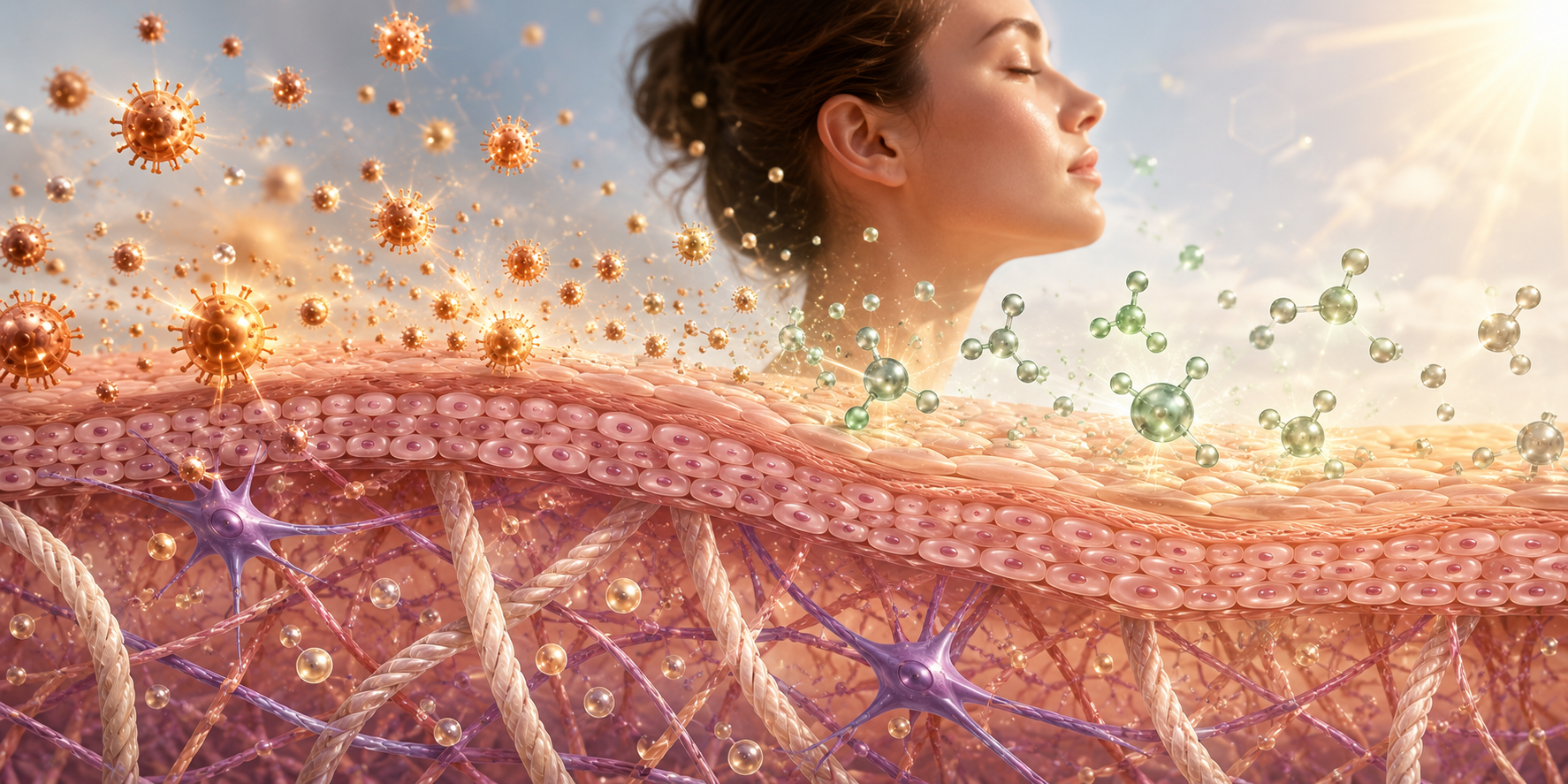
Every day, your skin is exposed to sunlight, pollution, stress and the natural processes that keep your body alive. These experiences create tiny unstable molecules called free radicals. In healthy amounts, they are a normal part of life. But when they build up faster than your skin can manage them, they contribute to oxidative stress—a gradual process that can influence how skin ages over time. Understanding this invisible balance helps explain why protecting your skin each day is just as important as treating it.

Understanding Free Radicals and Oxidative Stress
What Are Free Radicals?
Despite their dramatic name, free radicals are not something to fear. They are a completely normal part of biology.
A free radical is an unstable molecule that is missing an electron. Because it wants to become stable again, it reacts with nearby molecules, taking an electron wherever it can find one.
This sounds alarming, but free radicals are constantly being produced inside healthy skin.
They are created when:
- your cells produce energy
- your immune system responds to infection
- your body repairs tissue
- your skin is exposed to ultraviolet (UV) light
- pollution comes into contact with the skin
- cigarette smoke introduces reactive chemicals
- normal ageing occurs.
In small amounts, free radicals even help the body perform important functions such as immune defence and cell signalling.
The goal isn't to eliminate them.
It's to keep them in balance.
🧠 Did You Know?
Every cell in your body produces small numbers of free radicals simply by converting oxygen into energy. Healthy skin has evolved sophisticated antioxidant systems to manage them every day.

The Balance Between Damage and Protection
Healthy skin is constantly balancing two opposing forces.
On one side are free radicals.
On the other are antioxidants.
As long as these two systems remain balanced, your skin can usually maintain itself remarkably well.
Problems arise when free radicals begin to outnumber your skin's protective defences.
This imbalance is called oxidative stress.
Oxidative stress doesn't happen all at once.
Instead, it develops gradually over months and years as exposure accumulates.
Think of it like a timber fence exposed to weather.
One rainy day causes little change.
Years of sun, wind and rain slowly wear the surface away.
Your skin experiences something similar.
Daily exposure to UV radiation, pollution and other environmental factors creates tiny amounts of cumulative stress that your skin continually works to repair.
What Is Oxidative Stress?
Oxidative stress occurs when there are more free radicals than antioxidants available to neutralise them.
When this happens, free radicals may begin reacting with important structures inside the skin.
These include:
- collagen fibres
- elastin fibres
- cell membranes
- DNA inside skin cells
- protective barrier lipids.
This doesn't mean immediate damage is visible.
Instead, oxidative stress contributes to the gradual biological changes associated with skin ageing.
Healthy skin is remarkably resilient and continuously repairs itself, but excessive oxidative stress increases the amount of work it must do.
❌ Myth vs ✅ Reality
Myth: Free radicals only come from sunlight.
Reality: Sun exposure is one of the biggest sources, but free radicals are also produced naturally during normal metabolism and by pollution, smoking, inflammation and psychological stress.

Where Do Free Radicals Come From?
Some sources of free radicals are unavoidable.
Others can be reduced through healthy habits.
The biggest contributors include:
Sunlight
Ultraviolet radiation is one of the largest external sources of free radicals affecting the skin.
Even on cloudy days, UV exposure stimulates free radical production.
Pollution
Particles from traffic, smoke and urban air can trigger oxidative reactions on the skin's surface.
Smoking
Tobacco smoke introduces enormous numbers of reactive molecules while also reducing natural antioxidant levels.
Inflammation
Whenever skin experiences irritation, injury or infection, immune cells naturally produce free radicals as part of the healing response.
Normal Cell Function
Even perfectly healthy cells generate small amounts of free radicals while producing energy inside structures called mitochondria.
The important point is that free radicals themselves aren't the enemy.
They simply become problematic when production consistently exceeds protection.
💡 Joanne's Insight
One of the biggest changes I've seen throughout my career is that people often focus only on treating visible concerns. Healthy skin starts much earlier than that. Daily protection—especially sunscreen, gentle skincare and supporting the skin barrier—often does more over time than constantly chasing the latest treatment.
What Does Oxidative Stress Mean for Your Skin?
Oxidative stress affects the skin gradually rather than dramatically.
Over time, it may contribute to:
- slower collagen support
- reduced skin firmness
- changes in elastin
- uneven skin tone
- dullness
- reduced barrier resilience
- slower recovery after environmental stress.
Importantly, oxidative stress is only one piece of the ageing process.
Skin ageing is influenced by genetics, hormones, lifestyle, sleep, nutrition, sun exposure and overall health.
Oxidative stress is one factor among many—not the entire story.
Why Doesn't Everyone Age at the Same Rate?
Everyone produces free radicals.
However, the balance between damage and protection differs from person to person.
Factors that influence this include:
- genetics
- cumulative sun exposure
- smoking history
- environmental pollution
- nutrition
- stress
- sleep quality
- skincare habits.
This helps explain why two people of the same age may have very different skin characteristics.

How Your Skin Protects Itself
Fortunately, your skin isn't defenceless.
It contains an impressive network of natural antioxidant systems.
These include specialised enzymes and protective molecules that continually neutralise free radicals before they can react with healthy cells.
Your skin barrier also plays an important protective role by reducing exposure to environmental stressors.
Healthy lifestyle habits support these natural defences as well.
Examples include:
- wearing sunscreen daily
- eating a varied diet rich in colourful fruit and vegetables
- getting adequate sleep
- avoiding smoking
- managing stress
- using skincare that supports the skin barrier.
- These habits don't stop free radicals from forming.
Instead, they help maintain the balance that healthy skin relies upon.
👩⚕️ Skin Therapist Tip
If you're choosing just one habit to reduce oxidative stress, make it daily broad-spectrum sunscreen. UV exposure is one of the largest external sources of free radicals, making sun protection one of the simplest ways to support long-term skin health.
✨ Why It Matters
Most skincare isn't about reversing every change that has already happened. It's about supporting the skin's natural biology every day. By reducing unnecessary oxidative stress and maintaining a healthy skin barrier, you're giving your skin the best opportunity to protect, repair and renew itself over time.
Conclusion
Free radicals are a normal and unavoidable part of life. They are produced naturally inside your body and are also created through everyday environmental exposure.
The challenge isn't eliminating them—it is maintaining balance.
When free radicals overwhelm the skin's natural protective systems, oxidative stress develops. Over many years, this gradual process contributes to the visible changes we associate with skin ageing.
Fortunately, healthy skin is remarkably capable of defending itself. Through its own antioxidant systems, a strong skin barrier, daily sun protection and supportive skincare, your skin continually works to maintain this delicate balance.
Understanding free radicals isn't about becoming worried about every source of exposure.
It's about appreciating how small daily habits can support healthy skin for years to come.

Key Takeaways
- Free radicals are unstable molecules produced naturally inside the body and through environmental exposure.
- Small amounts of free radicals are a normal and healthy part of biology.
- Oxidative stress occurs when free radicals outnumber the skin's antioxidant defences.
- Oxidative stress contributes gradually to changes associated with skin ageing.
- UV radiation is one of the largest external sources of free radicals affecting the skin.
- Healthy skin protects itself using antioxidants, a strong skin barrier and continuous repair processes.
- Daily sunscreen and barrier-supportive skincare help reduce unnecessary oxidative stress.
- Healthy skin is built through consistency rather than perfection.
Continue Your Learning
Now that you understand how free radicals and oxidative stress influence healthy skin, the next lesson explores your skin's natural defence system.

Next lesson: Antioxidants Explained — discover how antioxidants neutralise free radicals, where they come from, and why they play such an important role in protecting healthy skin every day. Go to next lesson