Grapeseed Oil for Skin
Grapeseed oil is one of skincare's quiet achievers. Although often overshadowed by more famous botanical oils, it offers an impressive combination of lightweight nourishment, essential fatty acids and naturally occurring antioxidants. Extracted from the tiny seeds left behind after winemaking, grapeseed oil is rich in linoleic acid and vitamin E, making it particularly well suited to supporting the skin barrier while leaving very little residue. Whether your skin is dry, combination or prone to congestion, this elegant botanical oil demonstrates that effective moisturising doesn't have to feel heavy.

Full Lesson
What Is Grapeseed Oil?
Grapeseed oil is extracted from the small seeds of grapes (Vitis vinifera). After grapes are pressed for juice or wine, the remaining seeds can be cold pressed to produce a light botanical oil that is naturally rich in beneficial fatty acids and antioxidants.
Unlike heavier plant oils, grapeseed oil has an exceptionally fine texture. It spreads easily across the skin, absorbs comfortably and provides nourishment without creating a rich or greasy finish.
Its unique composition has made it popular in both facial skincare and body care, particularly for people who prefer lightweight moisturisers.
The primary components include:
- Linoleic acid (Omega-6 fatty acid)
- Vitamin E (tocopherols)
- Plant sterols
- Polyphenols
- Small amounts of oleic acid
- Naturally occurring antioxidant compounds
Together these ingredients help support healthy skin while protecting the oil itself from oxidation.

Why Is Grapeseed Oil Good for Skin?
The benefits of grapeseed oil come largely from its balance of essential fatty acids and antioxidants.
Many botanical oils are dominated by oleic acid, which creates a richer, more occlusive texture. Grapeseed oil contains much more linoleic acid instead, giving it a lighter feel that many skin types enjoy.
Linoleic acid is one of the fatty acids naturally found within the skin barrier.
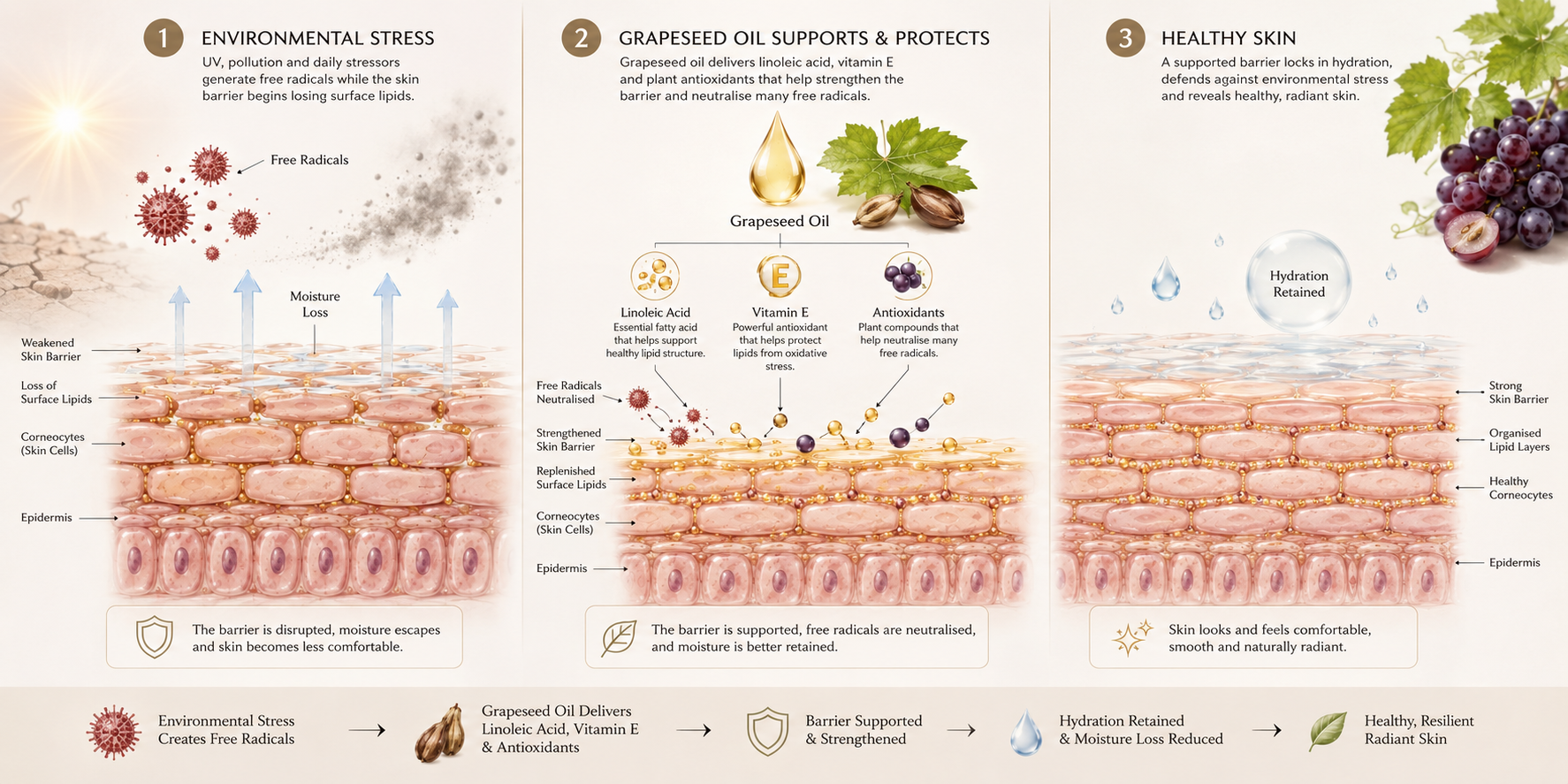
When applied as part of a moisturiser or facial oil, grapeseed oil helps replenish surface lipids that support healthy barrier function.
This can assist with:
- improving skin softness
- reducing moisture loss
- supporting comfortable skin
- maintaining a smooth skin surface
- reinforcing the outer protective barrier
Because it feels exceptionally lightweight, grapeseed oil is often recommended for people who dislike heavy creams.
Linoleic Acid: The Star Nutrient
Linoleic acid is an essential fatty acid, meaning our bodies cannot produce it and must obtain it from external sources.
Within healthy skin, linoleic acid contributes to organised barrier lipids that help keep moisture inside while limiting unnecessary water loss.
Some studies have also found that skin prone to congestion may naturally contain relatively lower levels of linoleic acid within surface sebum, which may partly explain why lightweight linoleic-rich oils are often well tolerated by oily and combination skin.
This doesn't mean grapeseed oil treats acne, but it does explain why it often feels comfortable even on skin that dislikes heavier oils.
Vitamin E Provides Antioxidant Support
Grapeseed oil also contains naturally occurring vitamin E.
Vitamin E is one of the skin's most important fat-soluble antioxidants.
Its role is to help neutralise free radicals before they contribute to oxidative stress within skin lipids.
Daily exposure to sunlight, pollution and environmental stress gradually generates free radicals.
While no topical ingredient can completely prevent this process, antioxidants like vitamin E help support the skin's natural protective systems.
💡 Joanne's Insight
For many years I've recommended grapeseed oil to clients who tell me they don't enjoy wearing facial oils. They're often surprised by how silky and weightless it feels. It reminds us that nourishing the skin isn't about using the richest product—it's about choosing ingredients your skin enjoys wearing consistently.

How Does Grapeseed Oil Support the Skin Barrier?
The outermost layer of skin—the stratum corneum—acts as your body's protective barrier.
This barrier relies on organised lipids that sit between skin cells like mortar between bricks.
When these lipids become depleted, moisture escapes more easily and skin may begin feeling:
- dry
- tight
- rough
- uncomfortable
- less resilient
Botanical oils cannot replace every component of the barrier, but they can supplement the surface with beneficial lipids that support its normal function.
Because grapeseed oil spreads into this outer layer so easily, it helps soften roughness while improving the skin's overall comfort.
Importantly, it achieves this without leaving the thick film associated with richer oils.
Antioxidants Beyond Vitamin E
Grapeseed oil also contains naturally occurring plant polyphenols.
These compounds help protect the oil from oxidation and contribute additional antioxidant activity on the skin.
Although much research into grape antioxidants focuses on grape extracts rather than the oil itself, the combination of vitamin E and plant compounds makes grapeseed oil an excellent supporting ingredient within antioxidant-rich skincare formulations.
🧠 Did You Know?
A single grape seed contains only a tiny amount of oil. Thousands of seeds are needed to produce one bottle of high-quality cold-pressed grapeseed oil.
Who Is Grapeseed Oil Best Suited To?
One of grapeseed oil's greatest strengths is its versatility.
Because of its lightweight texture, many different skin types enjoy using it.
It may be particularly suitable for:
Dry skin
Provides lightweight nourishment while supporting the skin barrier.
Combination skin
Helps replenish moisture without feeling overly rich.
Oily skin
Its high linoleic acid content makes it lighter than many traditional botanical oils.
Mature skin
Provides antioxidant support while improving skin softness.
Sensitive skin
When included within well-formulated skincare, grapeseed oil is generally well tolerated by many sensitive skin types.
Like all botanical ingredients, individual responses can vary.
❌ Myth vs ✅ Reality
Myth: All facial oils are too heavy for oily skin.
Reality: Oils vary enormously. Linoleic acid-rich oils like grapeseed oil often feel exceptionally lightweight and may be comfortable even for combination and oily skin.

Why This Matters
Healthy skin depends on balance.
It needs enough water.
Enough protective lipids.
Enough antioxidants.
And products that support—not overwhelm—its natural biology.
Grapeseed oil demonstrates that an effective moisturising ingredient doesn't need to feel thick or greasy.
Instead, it delivers elegant nourishment that complements the skin's own barrier while providing antioxidant support against everyday environmental stress.
When combined with ingredients such as ceramides, hyaluronic acid and vitamin E, grapeseed oil becomes part of a balanced approach to maintaining healthy, comfortable skin.
✨ Why It Matters
Choosing the right botanical oil isn't simply about finding the richest ingredient. It's about selecting an oil whose natural fatty acid profile matches your skin's needs. Grapeseed oil offers nourishment with remarkable lightness, making consistent skincare easier and more enjoyable.
👩⚕️ Skin Therapist Tip
If heavier facial oils leave your skin feeling oily or shiny, look for moisturisers or facial oils that include grapeseed oil high in the ingredient list. Its lightweight texture makes it ideal for layering beneath sunscreen or makeup.
Shanga Products Featuring Grapeseed Oil
Within the current Shanga collection, grapeseed oil (Vitis Vinifera (Grape) Seed Oil) appears in:
- Dual Action Peel — includes grapeseed oil alongside lactic acid, green tea, white tea and hyaluronic acid to provide lightweight nourishment while exfoliating.
- Radiance Elixir — a luxurious botanical facial oil featuring grapeseed oil together with watermelon, argan, jojoba, sea buckthorn, cranberry and other nutrient-rich botanical oils.
Conclusion
Grapeseed oil may not attract the same attention as some of today's trending skincare ingredients, but its science remains quietly impressive.
Rich in linoleic acid, naturally containing vitamin E and beautifully lightweight on the skin, it supports the skin barrier while providing antioxidant nourishment without heaviness.
For many people, especially those seeking elegant everyday hydration, grapeseed oil represents exactly what modern botanical skincare aims to achieve: simple ingredients that work in harmony with healthy skin.
Key Takeaways
- Grapeseed oil is extracted from the seeds of Vitis vinifera grapes.
- It is naturally rich in linoleic acid and vitamin E.
- It helps support the skin barrier while providing lightweight nourishment.
- Its elegant texture suits many skin types, including combination and oily skin.
- Naturally occurring antioxidants help support the skin against everyday environmental stress.
- Grapeseed oil works particularly well alongside ceramides, hyaluronic acid and other barrier-supporting ingredients.
- Not all botanical oils feel heavy—fatty acid composition makes a significant difference.
Continue Your Learning
Now that you've learned how grapeseed oil supports the skin with lightweight essential fatty acids and antioxidants, continue to the next lesson on Sunflower Seed Oil, where you'll discover why this vitamin E-rich botanical oil is one of the most researched and versatile ingredients for strengthening the skin barrier.