Understanding Hormonal Acne
Why Hormones Can Influence Breakouts Throughout Life
Hormonal acne is often thought of as something that only affects teenagers, yet many people experience persistent or new breakouts well into adulthood. These changes can feel confusing, particularly when your skincare routine has worked well in the past.
Understanding the biology behind hormonal acne helps explain why these breakouts often appear at certain times of life, why they commonly affect the lower face, and why treating them requires more than simply drying out the skin. In this lesson, we'll explore how hormones interact with your skin, what current research tells us, and how thoughtful skincare can help support healthier skin over time.

Who This Lesson Is For
This lesson may be helpful if you:
- Experience recurring breakouts around your menstrual cycle.
- Develop acne along the jawline, chin or neck.
- Have acne that continued beyond your teenage years.
- Have recently noticed breakouts during pregnancy, postpartum or perimenopause.
- Have been diagnosed with, or suspect, a hormonal condition such as polycystic ovary syndrome (PCOS).
- Want to better understand why hormonal changes influence your skin.
- Are looking for evidence-informed skincare that supports healthy skin rather than harsh treatments.
Before We Begin
Hormonal acne is a specific form of acne influenced by changes in the body's hormonal environment. This lesson focuses on how hormones alter the behaviour of the skin, rather than explaining acne from the beginning.
If you're unfamiliar with how acne develops inside the hair follicle, we recommend reading Understanding Acne first. That lesson explains clogged pores, inflammation, the skin microbiome and the formation of different types of acne. Here, we'll build upon that knowledge by exploring the important role hormones play in those biological processes.
At a Glance
|
|
|
|
What is it? |
Acne influenced by hormonal activity that increases oil production and affects how hair follicles function. |
|
Who can experience it? |
Teenagers, adults, women and men. It is particularly common during puberty, menstrual cycles, pregnancy, postpartum and perimenopause. |
|
Common signs |
Deep tender pimples, jawline or chin breakouts, recurring monthly flare-ups, inflamed bumps and slower healing lesions. |
|
What contributes? |
Hormonal fluctuations, increased sensitivity of sebaceous glands, genetics, inflammation, stress and underlying hormonal conditions in some people. |
|
Can it be improved? |
Yes. Understanding the biology allows skincare, lifestyle measures and medical treatment where appropriate to better support healthy skin. |
Key Biology
Understanding hormonal acne becomes much easier when you follow the biological sequence.

While hormones begin the process, they are only one part of a much larger biological story involving the sebaceous glands, skin cells, the skin microbiome and the immune system.
Understanding the Biology
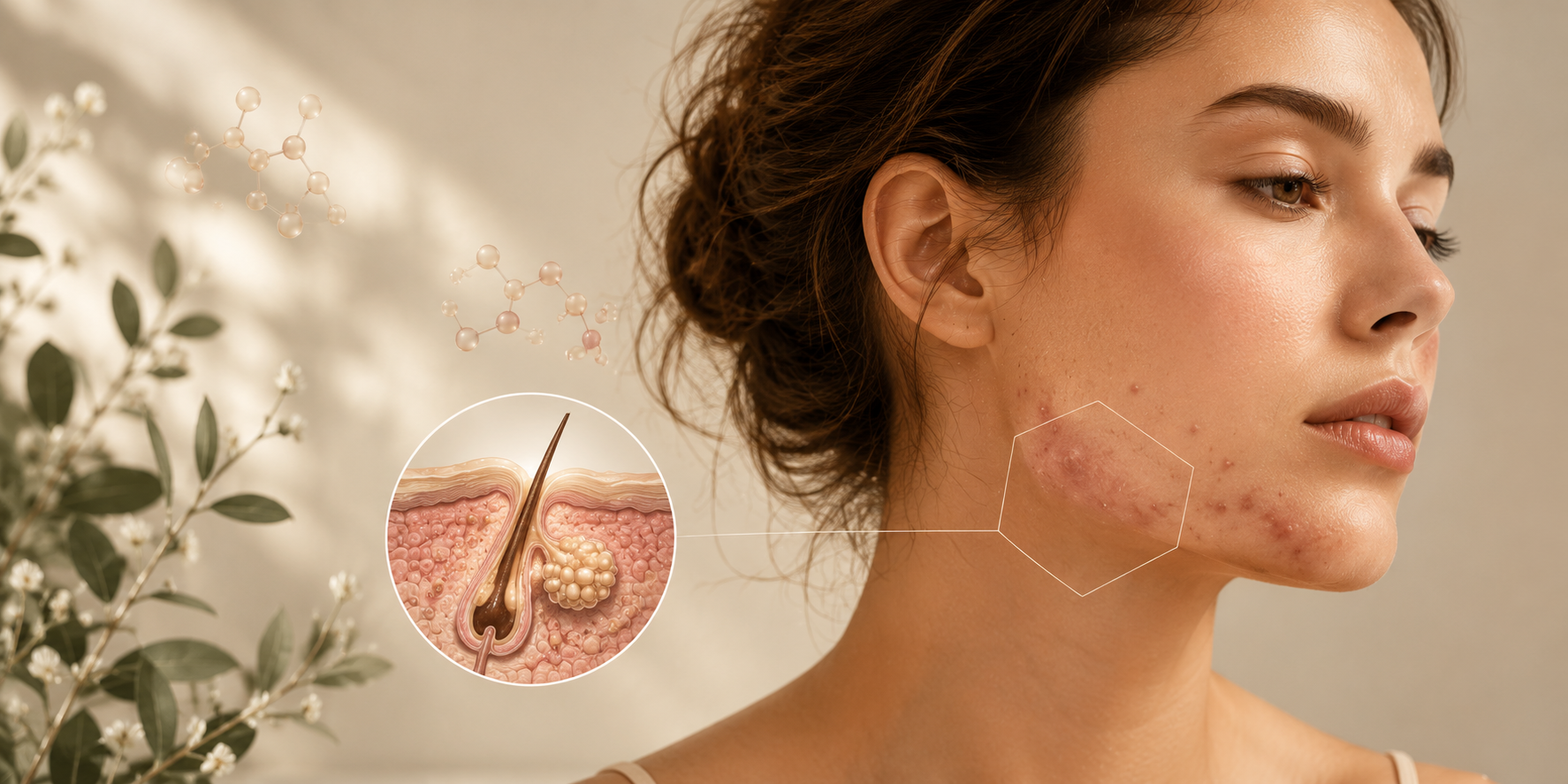
Hormonal acne begins long before a pimple becomes visible on the surface. It develops through a series of biological events taking place deep within the hair follicle, where hormones influence the skin's natural oil-producing structures.
Unlike acne caused primarily by external factors such as pore-clogging cosmetics or friction, hormonal acne begins with internal chemical signals. These signals alter the behaviour of skin cells and sebaceous glands, gradually creating an environment where breakouts are more likely to occur.
To understand why this happens, it helps to first understand the relationship between hormones and healthy skin.
Healthy Skin Responds to Hormones Every Day
Hormones are chemical messengers produced by glands throughout the body. They travel through the bloodstream carrying instructions that help regulate growth, reproduction, metabolism, sleep, mood and countless other functions.
The skin is one of the body's largest hormone-responsive organs. Cells within the epidermis, hair follicles and sebaceous glands contain specialised receptors that recognise certain hormones and respond accordingly.
This is entirely normal.
Throughout life, hormones help regulate:
- sebum (skin oil) production
- skin cell renewal
- wound healing
- collagen production
- skin hydration
- inflammation
- hair growth
Most of the time these processes remain in balance.
Hormonal acne develops when changes in hormone activity begin shifting that balance.
The Sebaceous Gland Is Especially Sensitive
One of the most hormone-responsive structures in the skin is the sebaceous gland.
These tiny glands sit beside each hair follicle and produce sebum, the natural oil that helps lubricate the skin and maintain the skin barrier.
Sebum is not harmful.
In fact, healthy sebum:
- reduces water loss
- supports barrier function
- helps maintain flexibility
- contributes to a healthy skin microbiome
Problems usually arise when sebaceous glands become overactive.
Rather than producing just enough oil to protect the skin, they begin producing more sebum than the follicle can comfortably manage.
This creates conditions that make follicle blockage more likely.
Androgens: The Hormones Most Closely Linked to Hormonal Acne
The hormones most strongly associated with hormonal acne belong to a group called androgens.
Although often referred to as "male hormones", everyone produces androgens.
Women naturally produce them in smaller amounts through the ovaries and adrenal glands, while men produce higher levels through the testes and adrenal glands.
The most important androgens involved in acne include:
- Testosterone
- Dihydrotestosterone (DHT)
- Dehydroepiandrosterone sulphate (DHEAS)
These hormones play many important roles throughout the body.
Within the skin, however, one of their key functions is stimulating sebaceous glands to produce sebum.
When androgen activity increases—or when sebaceous glands become unusually sensitive to normal hormone levels—oil production can rise significantly.
Interestingly, many people with hormonal acne have hormone levels that fall within the normal range. Research suggests that, in these individuals, the sebaceous glands themselves may simply respond more strongly to the same hormonal signals than those of someone who rarely develops acne.
This helps explain why two people with similar hormone levels can experience very different skin.

More Sebum Changes the Follicle Environment
Extra sebum does more than make the skin appear oily.
Inside the follicle, excess oil mixes with naturally shedding skin cells.
Normally, these dead cells separate easily and leave the follicle without causing problems.
When sebum production increases, however, the mixture becomes thicker and more likely to remain inside the follicle.
Over time this creates the ideal conditions for a tiny blockage known as a microcomedone.
The microcomedone is invisible to the naked eye, yet it represents the earliest stage of acne formation.
Long before redness develops, the biological changes are already underway beneath the skin's surface.

Hormones Don't Cause Inflammation Directly
One of the biggest misconceptions about hormonal acne is that hormones directly create pimples.
The process is more complex.
Hormones primarily change the environment inside the follicle.
Once excess sebum and dead skin cells accumulate, the follicle becomes increasingly enclosed.
This altered environment encourages the growth of naturally occurring skin bacteria known as Cutibacterium acnes.
These bacteria are a normal part of healthy skin and are not an infection.
However, within a blocked follicle they multiply more readily, producing substances that stimulate the body's immune system.
Immune cells respond by releasing chemical messengers that trigger inflammation.
The visible result is redness, swelling and tenderness.
In other words:
Hormones begin the process, but inflammation creates the pimple people actually see.
Why Hormonal Acne Often Appears on the Lower Face
Hormonal acne has a recognisable pattern.
Many people notice recurring breakouts around the:
- chin
- jawline
- lower cheeks
- neck
Researchers believe these areas contain sebaceous glands that respond particularly strongly to androgen stimulation.
Because hormonal signals influence these glands repeatedly over time, the same areas may flare during predictable stages of the menstrual cycle or other periods of hormonal change.
Not everyone experiences this pattern, however.
Some people continue to develop acne across the forehead, chest or back, particularly when higher androgen activity affects multiple oil-rich areas of the body.
Understanding these patterns helps clinicians distinguish hormonal acne from other forms of acne and guides more individualised treatment approaches.

How It Appears
Hormonal acne rarely looks exactly the same from one person to another. Age, genetics, skin type, hormone sensitivity and existing acne biology all influence how it presents.
For some people, it consists of a few deep pimples that appear before each menstrual period and then gradually settle. For others, breakouts become more persistent, with inflammation present throughout the month.
The severity can also change over time. A person who experienced only mild teenage acne may develop more noticeable hormonal breakouts during adulthood, while someone with significant adolescent acne may find it improves as hormone levels stabilise.

Common Presentations
|
Presentation |
Typical Features |
|
Mild hormonal acne |
Small clusters of inflamed pimples appearing around predictable hormonal changes. |
|
Moderate hormonal acne |
Recurrent inflamed papules and pustules with ongoing congestion, often centred on the lower face. |
|
Deep inflammatory acne |
Larger, tender nodules that develop deeper within the skin and may take weeks to settle. |
|
Persistent adult hormonal acne |
Breakouts continue beyond adolescence or begin for the first time during adulthood, often with recurring jawline involvement. |

How Hormonal Acne May Look on Different Skin Tones
Hormonal acne affects all skin tones, but the way it appears may differ.
On lighter skin, inflamed lesions often appear pink or red. On deeper skin tones, inflammation may look purple, brown or darker than the surrounding skin rather than obviously red.
After inflammation settles, some people also develop post-inflammatory hyperpigmentation, where areas of increased pigment remain after the breakout has healed. These marks are not true scars, but they can persist for weeks or months and often become a significant concern, particularly in medium to deeper skin tones.
Understanding these differences helps ensure hormonal acne is recognised and managed appropriately, regardless of skin colour.
Why It Happens
Hormonal acne rarely has a single cause. Instead, it develops when several biological influences overlap. Hormones may increase sebum production, but genetics, inflammation, the skin microbiome and everyday lifestyle factors can all influence how the skin responds.
Understanding these contributing factors helps explain why hormonal acne varies so much from one person to another—and why treatment often requires patience rather than a single quick fix.

Genetics Influence How Your Skin Responds
Hormones circulate throughout everyone's body, yet not everyone develops hormonal acne.
One reason is genetics.
Some people inherit sebaceous glands that are naturally more responsive to androgens. Their skin may produce more oil even when hormone levels fall within the normal range.
Genes can also influence:
- how quickly skin cells shed
- how much inflammation develops
- the strength of the skin barrier
- the tendency to develop deeper inflammatory lesions
- the likelihood of post-inflammatory pigmentation or scarring
This inherited sensitivity helps explain why hormonal acne often runs in families.
Hormonal Fluctuations Throughout Life
Hormones naturally rise and fall throughout life.
These changes do not guarantee acne, but they can temporarily increase oil production in people whose skin is genetically susceptible.
Common life stages include:
|
Life Stage |
Why Acne May Develop |
|
Puberty |
Rising androgen activity stimulates sebaceous glands. |
|
Menstrual Cycle |
Hormonal shifts before menstruation may increase oil production and inflammation. |
|
Pregnancy |
Hormone changes affect everyone differently—some notice improvement while others experience new breakouts. |
|
Postpartum |
Rapid hormonal changes after birth may temporarily influence the skin. |
|
Perimenopause |
Declining oestrogen relative to androgen activity may contribute to adult hormonal acne. |
These changes help explain why hormonal acne often appears during specific life stages rather than remaining constant.

Stress May Amplify Existing Acne
Stress does not directly cause hormonal acne.
However, chronic stress activates the body's stress response, increasing hormones such as cortisol that can influence oil production, inflammation and skin barrier function.
At the same time, stress may affect:
- sleep quality
- skin healing
- daily skincare habits
- picking or touching the skin
Together, these changes may contribute to more persistent or noticeable breakouts in people who are already prone to hormonal acne.
The Skin Barrier Matters Too
A healthy skin barrier helps regulate moisture, reduce irritation and support the skin's natural defences.
When the barrier becomes compromised through excessive cleansing, harsh exfoliation or unsuitable skincare, inflammation may increase.
Although a weakened barrier does not create hormonal acne, it can make existing breakouts feel more irritated, sensitive and slower to recover.
Supporting the barrier is therefore an important part of managing acne comfortably.
The Skin Microbiome Plays a Supporting Role
Your skin is home to millions of naturally occurring microorganisms that form the skin microbiome.
When pores become blocked, conditions inside the follicle change. Certain strains of Cutibacterium acnes can multiply more easily within these blocked follicles, encouraging immune activity and inflammation.
Researchers now believe the balance of the microbiome may be just as important as the number of bacteria present.
This is why modern acne care focuses on supporting healthy skin rather than attempting to eliminate all bacteria.
Lifestyle Can Influence Severity
Lifestyle alone does not create hormonal acne, but it may influence how severe breakouts become. Factors such as stress, sleep, diet, smoking and daily skincare habits can all affect inflammation, barrier function and overall skin health. Rather than looking for a single trigger, it is often more helpful to consider overall lifestyle patterns alongside appropriate skincare.
Evidence varies between these factors, and responses differ considerably between individuals. Rather than looking for one trigger, it is often more helpful to consider overall lifestyle patterns alongside appropriate skincare.

Common Questions
Why does hormonal acne usually appear on the jawline and chin?
These areas often contain sebaceous glands that are particularly responsive to androgen hormones. Increased oil production in this region makes clogged follicles and inflammation more likely.

Why do breakouts often appear before my period?
Hormone levels naturally fluctuate during the menstrual cycle. In many people, the days before menstruation involve changes that increase sebaceous gland activity, allowing existing microcomedones to become inflamed.
Why has hormonal acne appeared in adulthood?
Adult hormonal acne is increasingly common.
Hormonal changes, genetics, stress, pregnancy, postpartum changes and perimenopause can all contribute. Adult acne does not necessarily mean hormone levels are abnormal—it often reflects how the skin responds to normal hormonal fluctuations.
Can men experience hormonal acne?
Yes.
Although discussions often focus on women, men can also develop hormonally influenced acne because androgens play an important role in regulating sebaceous gland activity in both sexes.
Will hormonal acne eventually disappear?
For many people, hormonal acne improves as hormone patterns stabilise with age.
Others continue to experience occasional hormonal breakouts throughout adulthood. Consistent skincare and, when appropriate, professional treatment can help support healthier skin over time.
Myth vs Reality
|
Myth |
Reality |
|
Hormonal acne only affects teenagers. |
Hormonal acne can occur at any age, including adulthood. |
|
Hormonal acne means your hormone levels are abnormal. |
Many people have normal hormone levels but skin that is more sensitive to hormonal fluctuations. |
|
Washing your face more often prevents hormonal acne. |
Over-cleansing may weaken the skin barrier and increase irritation without addressing the underlying hormonal influence. |
|
Diet is the main cause of hormonal acne. |
Diet may influence acne in some people, but it is only one of many contributing factors. |
|
Hormonal acne will disappear if you simply "wait it out." |
Some people improve naturally, while others benefit from ongoing skincare or medical guidance. |
Did You Know?
Although hormones are often blamed for hormonal acne, research suggests that the skin's sensitivity to hormones may be more important than the amount of hormone circulating in the bloodstream. Two people can have very similar hormone levels, yet experience completely different skin because their sebaceous glands respond differently. This helps explain why hormonal acne is so individual and why treatment plans often need to be personalised.

Supporting Healthy Skin
Hormonal acne cannot always be prevented, but healthy skincare can help create an environment that supports clearer, more comfortable skin.
The aim is not to strip away oil or aggressively dry the skin. Instead, modern acne care focuses on supporting the biological processes already discussed.
A balanced routine may help to:
- support normal follicle function
- reduce unnecessary inflammation
- maintain a healthy skin barrier
Gentle consistency generally produces better long-term results than frequent changes or harsh treatments.
|
Ingredient |
Biological Process Supported |
How it Helps |
|
Niacinamide |
Sebum regulation, inflammation and barrier support |
May help reduce excess oil while supporting the skin barrier and calming visible redness. |
|
Salicylic Acid (BHA) |
Follicle exfoliation |
Oil-soluble exfoliant that helps keep pores clear by loosening built-up skin cells and sebum. |
|
Azelaic Acid |
Inflammation and pigmentation |
May help reduce inflammatory lesions while supporting a more even-looking skin tone after breakouts. |
|
Retinoids (including retinal) |
Cell turnover and follicle function |
Help normalise skin cell shedding, reducing the formation of new clogged pores over time. |
|
Benzoyl Peroxide |
Bacterial balance |
Helps reduce acne-causing bacteria within follicles and supports inflammatory acne management. |
|
Ceramides |
Skin barrier |
Help strengthen the skin barrier, improving comfort during acne treatment. |
|
Panthenol and Beta-Glucan |
Barrier support |
Help soothe the skin and support hydration, particularly if active treatments cause dryness. |
.
Supporting Hormonal Acne
Building a Routine
When hormonal acne develops beneath the skin, it can be tempting to try stronger products, wash more often or switch skincare every few days in search of a quick solution.
Ironically, these approaches often make the skin more irritated without addressing the underlying hormonal signals.
A thoughtful routine aims to support the skin's natural barrier, reduce excess oil, minimise clogged pores and calm inflammation while allowing active ingredients enough time to work.
Rather than treating every blemish individually, the goal is to create an environment where healthy skin function can gradually be restored.
Morning Routine
A gentle morning routine helps prepare the skin for the day while protecting it from environmental stress.
A typical routine may include:
- Gentle cleanser
- Lightweight hydrating mist
- Niacinamide serum (if suitable)
- Moisturiser appropriate for your skin type
- Broad-spectrum SPF 50+ sunscreen
Daily sunscreen is particularly important if you are using exfoliating acids, retinoids or prescription acne treatments, as these ingredients can increase sun sensitivity.
Evening Routine
Night-time is when many acne treatments are applied because the skin is not exposed to sunlight.
An evening routine may include:
- Gentle cleanser
- Treatment product (such as a retinoid, azelaic acid or salicylic acid if recommended)
- Barrier-supportive moisturiser
Some treatments are used every night, while others are introduced gradually to reduce irritation.
Using too many active ingredients together rarely speeds improvement and often increases dryness and inflammation.
Supporting the Skin Barrier
Many people assume oily skin does not require moisturiser.
In reality, an impaired skin barrier can become more irritated, more inflamed and sometimes produce even more oil in response.
Barrier-supportive ingredients that may help include:
- Ceramides
- Niacinamide
- Panthenol (Vitamin B5)
- Beta-glucan
- Glycerin
- Hyaluronic acid
These ingredients help maintain hydration while supporting the outer protective layer of the skin.

Simple Habits That Support Healthier Skin
Small habits often have a greater long-term impact than dramatic changes.
Helpful habits include:
- Cleansing gently twice daily
- Avoiding picking or squeezing pimples
- Removing makeup thoroughly each evening
- Cleaning makeup brushes regularly
- Changing pillowcases frequently
- Using non-comedogenic skincare where possible
- Applying sunscreen every day
While none of these habits can prevent hormonal acne on their own, together they help create an environment that supports healthier skin and may reduce unnecessary irritation.

Why Consistency Matters
Hormonal acne develops gradually beneath the skin long before a pimple becomes visible.
Likewise, improvement also takes time.
Many acne treatments work by preventing new blockages from forming rather than immediately removing existing blemishes.
For this reason, visible improvement often takes several weeks, and sometimes several months.
Changing products too frequently can make it difficult to know what is helping and may increase irritation.
Consistency is often more valuable than intensity.
A gentle routine followed every day usually produces better long-term results than an aggressive routine followed inconsistently.
If a new treatment causes mild dryness or temporary irritation, introducing it slowly and using a moisturiser may improve comfort while allowing the skin to adapt.

When Hormones May Need Investigation
Most people with hormonal acne have hormone levels within the normal range. However, if acne develops alongside irregular menstrual cycles, increased facial or body hair, unexplained weight changes or scalp hair thinning, it may be worth discussing these symptoms with your GP. In some cases, hormonal acne can be associated with underlying conditions such as polycystic ovary syndrome (PCOS), which may benefit from further assessment.
When to Seek Professional Advice
Many people can successfully manage mild hormonal acne with appropriate skincare and over-the-counter treatments.
However, professional assessment is worthwhile if:
- Acne is painful or deep beneath the skin.
- Breakouts are causing permanent scarring.
- Acne is affecting your confidence or emotional wellbeing.
- Acne continues despite several months of appropriate skincare.
- Breakouts are accompanied by irregular periods, increased facial hair or other symptoms that may suggest an underlying hormonal condition.
- Acne develops suddenly or changes significantly in adulthood.
A GP, dermatologist or appropriately qualified healthcare professional can determine whether prescription treatments or further investigation may be beneficial.
Treatment recommendations are highly individual and may include topical therapies, oral medications or hormonal treatments depending on the underlying cause. Current evidence-based guidelines recommend tailoring therapy to acne severity while limiting unnecessary antibiotic use and combining treatments when appropriate.

Current Research
Research continues to improve our understanding of hormonal acne. Current areas of investigation include:
• why some sebaceous glands respond more strongly to hormones
• the role of genetics in androgen sensitivity
• better understanding of the skin microbiome
• new topical anti-androgen treatments
• more personalised treatment approaches
Modern acne management increasingly focuses on tailoring treatment to an individual's biology while protecting the skin barrier and minimising unnecessary antibiotic use..
Why It Matters
Hormonal acne is often described as simply a skin problem, yet its effects can extend far beyond the surface. Recurring breakouts may influence confidence, self-image and daily routines, particularly when they continue into adulthood or appear during significant life stages such as pregnancy or perimenopause.
Understanding what is happening beneath the skin can replace frustration with clarity. Rather than viewing each breakout as something that has gone wrong, it becomes easier to recognise that the skin is responding to a complex combination of hormones, genetics, inflammation and normal biological processes.
This understanding also changes the way we approach skincare. Instead of trying to fight the skin with increasingly harsh products, we can focus on supporting its natural functions—maintaining a healthy skin barrier, encouraging normal cell turnover, calming unnecessary inflammation and choosing ingredients that work with the skin rather than against it.
Perhaps most importantly, hormonal acne reminds us that healthy skin is rarely achieved through quick fixes. Consistency, patience and evidence-informed care almost always outperform aggressive routines that promise immediate results.
Learning the biology behind hormonal acne empowers you to make thoughtful skincare decisions with greater confidence, both now and as your skin continues to change throughout life.
Skin Therapist Tip
One of the most common mistakes I see is people changing products too quickly.
Because hormonal acne develops beneath the skin weeks before a breakout becomes visible, improvements also take time to appear. Constantly switching cleansers, exfoliants or treatment serums often creates additional irritation without allowing the skin enough time to respond.
Instead, choose a gentle routine that supports your skin barrier, introduce active ingredients gradually, and give your routine several weeks before judging its effectiveness. Healthy skin usually responds best to consistency rather than intensity.
Joanne's Insight
Over many years of treating clients, I've learned that hormonal acne is rarely just about the blemishes themselves.
Many people arrive feeling frustrated because they believe they're doing something wrong. They've tried countless products, followed advice from social media or blamed themselves for every breakout.
The reality is much kinder than that.
Hormonal acne is influenced by biology that we can't completely control. What we can influence is how we care for our skin each day.
I've found that clients who understand why their skin behaves the way it does are often far more successful than those searching for the next miracle product. When expectations become realistic and routines become consistent, skin usually becomes calmer, healthier and much easier to manage.
Beautiful skin isn't about perfection. It's about supporting your skin with knowledge, patience and kindness.
Continue Your Learning
Hormonal acne is only one part of the bigger picture of skin health. Understanding the topics below will help you build a deeper understanding of why breakouts occur and how evidence-informed skincare supports healthier skin over time.
Skin Fundamentals
- Understanding Acne
- The Skin Barrier
- The Skin Microbiome
- Morning vs Evening Skincare
- How to Build a Skincare Routine
Skin Biology
- Understanding Inflammation
- Cell Turnover Explained
- Skin Healing
- How Hormones Influence the Skin
- Overnight Skin Repair
Ingredients
- Niacinamide Explained
- Salicylic Acid (BHA)
- Azelaic Acid
- Retinoids Explained
- Ceramides and Skin Barrier Repair
Each lesson builds upon the last, helping you understand not only which ingredients to choose, but why they work.
Key Takeaways
- Hormonal acne develops through a combination of hormonal signalling, increased sebum production, follicle blockage and inflammation.
- Many people with hormonal acne have normal hormone levels, but skin that is more sensitive to hormonal changes.
- Hormonal breakouts commonly occur around the jawline and chin, although they can develop anywhere oil-producing follicles are found.
- Genetics, the skin microbiome, inflammation and lifestyle all influence how hormonal acne develops.
- A healthy skin barrier supports comfort and resilience during acne treatment.
- Gentle, consistent skincare is usually more effective than harsh routines or frequent product changes.
- Ingredients such as niacinamide, salicylic acid, retinoids, azelaic acid and ceramides each support different biological processes involved in acne.
- Professional assessment is worthwhile when acne is severe, persistent, painful or causing scarring.
- Improvement takes time because new breakouts begin forming beneath the skin weeks before they become visible.
- Understanding your skin helps you make calmer, more confident skincare decisions.
Conclusion
Hormonal acne is a reminder that the skin is a living, responsive organ influenced by many interconnected biological systems. While hormones often begin the process, they are only one part of a much larger story involving the sebaceous glands, skin cells, the microbiome, inflammation and the skin barrier.
Although hormonal acne cannot always be prevented, understanding how it develops allows you to care for your skin with greater confidence. Rather than chasing quick fixes, evidence-informed skincare focuses on supporting healthy skin function, reducing unnecessary irritation and creating the conditions that allow the skin to become healthier over time.
Every person's skin responds differently, and progress is rarely immediate. With patience, consistency and an approach guided by science rather than myths, many people are able to achieve skin that feels calmer, healthier and more comfortable.
Healthy skin is rarely about perfection—it is about understanding how your skin works and giving it the support it needs at every stage of life.