Hydration vs Moisturisation
Understanding What Your Skin Really Needs
It's one of the most common questions in skincare: Does my skin need more hydration or more moisturiser?
Although the words are often used as though they mean the same thing, hydration and moisturisation describe two very different processes. One relates to water inside the skin, while the other helps keep that water from escaping.
Understanding the difference makes choosing skincare far simpler. Rather than guessing which products to buy, you'll learn to recognise what your skin is asking for—and how to support it in a way that feels balanced, comfortable and realistic.

Full Lesson
What Do Hydration and Moisturisation Actually Mean?
Healthy skin depends on both water and oils.
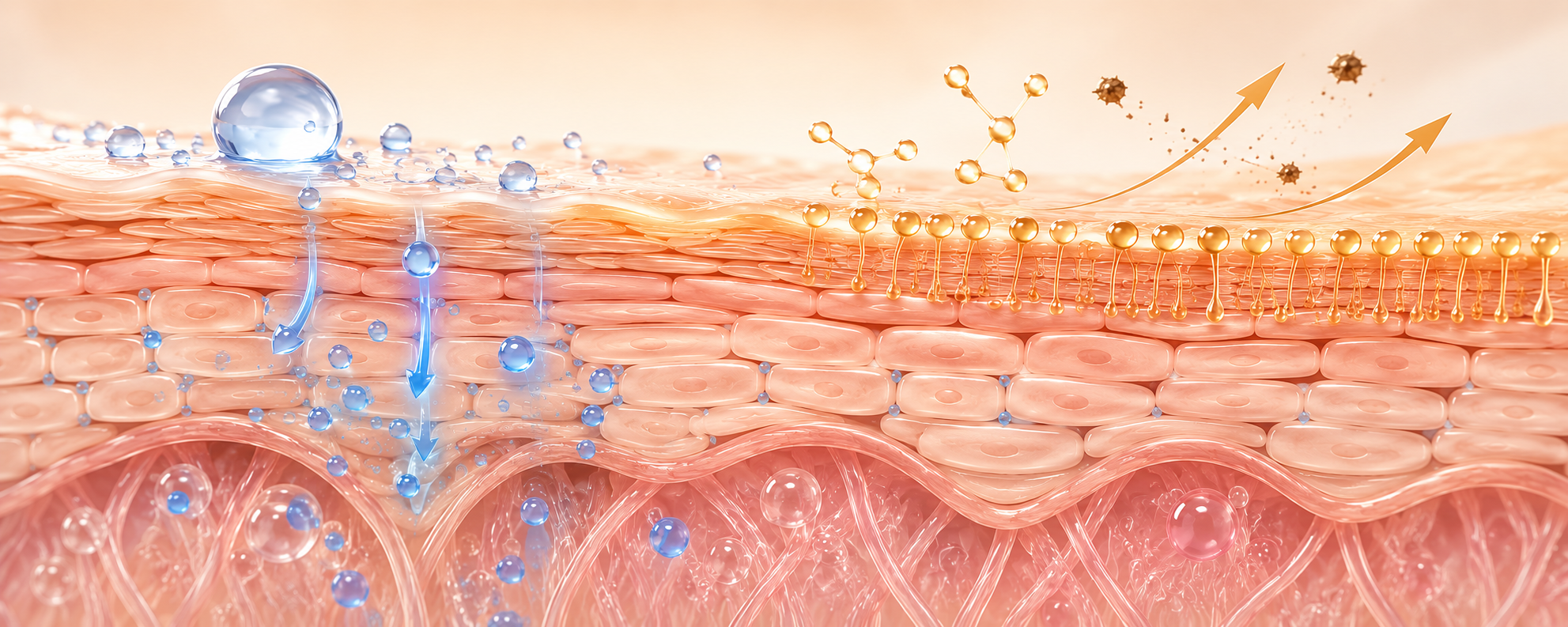
Water keeps skin cells functioning normally, allowing the skin to feel smooth, comfortable and flexible. Protective lipids—natural fats found within the skin barrier—help seal that water inside the skin while defending against the outside environment.
Think of it this way:
- Hydration is about increasing the skin's water content.
- Moisturisation is about reducing water loss by supporting the skin barrier.
- Both are essential, but they solve different problems.
Many skincare products provide one, the other, or a combination of both. Knowing the difference helps you understand why one moisturiser may feel wonderful while another doesn't seem to help at all.
💡 Joanne's Insight
One of the most common things I hear in the treatment room is, "My skin is dry, so I need a heavier cream." Quite often, the skin isn't lacking oil—it simply isn't holding enough water. Once hydration is restored, the skin often feels softer and more comfortable without needing richer products.

Understanding Hydration
Hydration refers to the amount of water contained within the skin
Every skin cell relies on water to perform its normal functions. When water levels are well maintained, skin tends to appear:
- smoother
- softer
- more supple
- naturally radiant
When hydration drops, the skin may begin to feel:
- tight after cleansing
- rough or slightly papery
- dull
- less comfortable throughout the day
Hydration depends on several factors, including:
- the skin barrier
- humidity
- temperature
- age
- overall health
- skincare products
How Hydrating Ingredients Work
Hydrating ingredients are often called humectants.
These ingredients attract water and help increase moisture within the outer layers of the skin.
Common examples include:
- Hyaluronic acid
- Glycerin
- Sodium PCA
- Panthenol (Vitamin B5)
- Aloe vera
- Beta-glucan
Rather than creating moisture from nothing, these ingredients help the skin retain available water more effectively.
🧠 Did You Know?
The outermost layer of your skin contains its own natural collection of water-attracting molecules called the Natural Moisturising Factor (NMF). These compounds help keep the skin hydrated every day without us even noticing.
Understanding Moisturisation

Moisturisation focuses on protecting the skin's natural barrier.
Even well-hydrated skin continuously loses small amounts of water through a normal process called transepidermal water loss (TEWL).
This is completely natural.
However, when the skin barrier becomes weakened, water escapes more quickly than usual, leaving skin feeling dry, sensitive or uncomfortable.
Moisturisers work by supporting this protective barrier.
Many contain ingredients that replenish or reinforce the skin's natural lipids, helping the barrier function more effectively.
Barrier-supporting ingredients may include:
- Ceramides
- Cholesterol
- Fatty acids
- Squalane
- Shea butter
- Plant oils
These ingredients don't necessarily add water to the skin.
Instead, they help keep existing hydration where it belongs.
❌ Myth vs ✅ Reality
Myth: Oily skin doesn't need moisturiser.
Reality: Every skin type benefits from a healthy skin barrier. Even oily skin can become dehydrated or experience barrier disruption, especially after excessive cleansing or exfoliation.
Hydration and Moisturisation Work Together
The easiest way to understand the relationship is to imagine a garden.
Watering the soil provides moisture to the plants.
Mulch placed over the soil helps keep that water from evaporating.
Healthy skin works in much the same way.
Hydration provides water.
Moisturisation helps keep it there.
One without the other is often less effective.
This is why many modern skincare products combine:
- humectants to attract water
- emollients to soften skin
- barrier lipids to reduce water loss
Together they help support healthy, resilient skin.

How Can You Tell What Your Skin Needs?
Many people assume their skin is dry when it is actually dehydrated.
Understanding the difference can make skincare much simpler.
Signs of Dehydrated Skin
Dehydration is a lack of water.
Skin may feel:
- tight
- uncomfortable
- temporarily rough
- dull
- slightly lined, especially after cleansing
Importantly, dehydrated skin can also produce excess oil.
This is why oily skin and dehydrated skin can exist at the same time.
Signs of Dry Skin
Dry skin is a skin type that naturally produces fewer protective oils.
It may appear:
- flaky
- rough
- less supple
- prone to irritation
- consistently dry throughout the year
Dry skin usually benefits from richer moisturising ingredients that reinforce the skin barrier.
Many people experience a combination of both.
👩⚕️ Skin Therapist Tip
If your skin feels tight immediately after cleansing but becomes oily later in the day, dehydration may be contributing. Choosing a gentle cleanser followed by a hydrating serum and barrier-supporting moisturiser can often create a more comfortable balance.
Why Ingredients Matter More Than Product Names
Many products labelled "moisturiser" also provide hydration.
Likewise, some serums offer both hydrating and barrier-supporting benefits.
Rather than focusing only on the product category, it helps to understand what the ingredients are designed to do.
For example:
Hydrating ingredients may include:
- Hyaluronic acid
- Glycerin
- Panthenol
- Beta-glucan
- Sodium PCA
Barrier-supporting ingredients may include:
- Ceramides
- Squalane
- Cholesterol
- Fatty acids
- Plant oils
A balanced routine often includes both.
This approach supports healthy skin rather than chasing temporary sensations.
✨ Why It Matters
When you understand whether your skin is asking for water, barrier support, or both, skincare becomes far less confusing. Instead of choosing products based on trends or marketing claims, you can build a routine that responds to your skin's actual needs and supports long-term skin health.

Why This Matters
Healthy skin isn't simply well hydrated or well moisturised.
It's both.
Water allows skin cells to function efficiently.
The skin barrier helps protect that water while defending against everyday environmental stress.
When these systems work together, skin is more likely to feel:
- comfortable
- resilient
- smooth
- balanced
- healthy
Skincare doesn't need to be complicated.
Understanding this one distinction often changes the way people choose products for years to come.
Conclusion
Hydration and moisturisation are partners, not competitors.
Hydration replenishes the skin's water content, while moisturisation helps preserve that water by supporting the skin barrier. Most healthy skincare routines include elements of both because healthy skin relies on both.
Rather than asking whether your skin needs hydration or moisturisation, the better question is whether your routine supports both water balance and barrier function. When it does, your skin is better equipped to stay comfortable, resilient and healthy through everyday life.
Key Takeaways
- Hydration refers to water within the skin.
- Moisturisation supports the skin barrier and reduces water loss.
- Dehydrated skin lacks water, while dry skin lacks protective oils.
- Every skin type can become dehydrated, including oily skin.
- Humectants attract water, while barrier lipids help keep it in.
- Healthy skin depends on both hydration and moisturisation working together.
- Understanding the difference makes choosing skincare simpler and more effective.
Continue Your Learning

Now that you understand how water and the skin barrier work together, the next lesson explores another essential part of healthy skin: The Skin Microbiome. Discover how trillions of beneficial microorganisms live on your skin, support the barrier and help maintain balance every day. Go to next lesson