PHAs Explained: Gentle Exfoliation for Healthy, Comfortable Skin
Chemical exfoliation does not have to be aggressive to be effective. Polyhydroxy acids, commonly known as PHAs, offer one of the gentlest ways to encourage smoother, brighter-looking skin while helping maintain hydration and supporting the skin barrier. Their larger molecular structure means they work gradually on the skin's surface, making them particularly suitable for people with dry, sensitive or easily irritated skin. Understanding how PHAs work can help you choose exfoliating products with greater confidence and build a routine that supports long-term skin health rather than short-term results.

Full Lesson
What Are PHAs?
Polyhydroxy acids (PHAs) are a newer generation of chemical exfoliants that gently remove the outermost layer of dead skin cells while helping the skin retain moisture.
Like alpha hydroxy acids (AHAs), PHAs work on the surface of the skin by loosening the tiny connections that hold older skin cells together. As these cells naturally shed, fresher cells underneath become more visible.
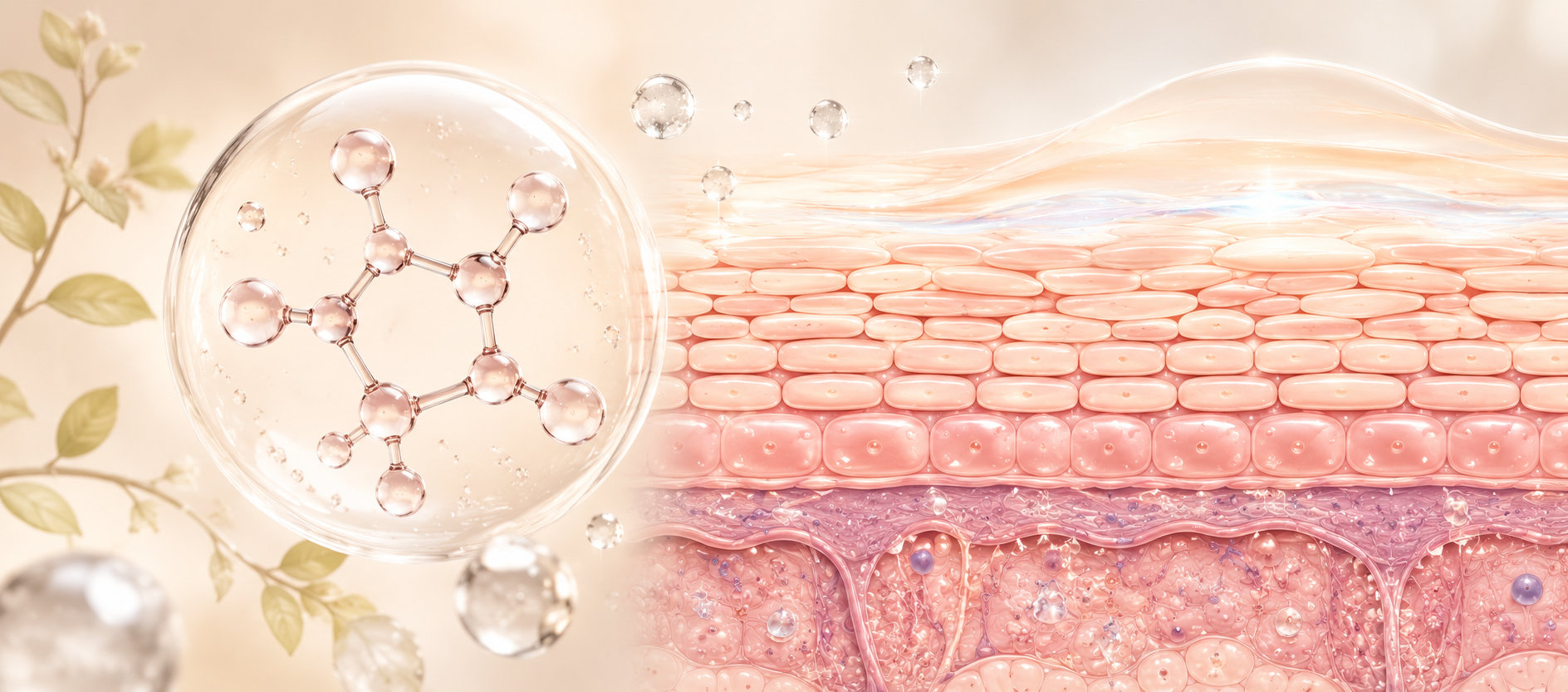
The difference is that PHAs have much larger molecules.
Because they penetrate the skin more slowly than AHAs, they tend to produce less irritation while still encouraging healthy skin renewal.
This makes PHAs an excellent option for people who want the benefits of exfoliation without the stronger sensations that sometimes accompany glycolic acid or other AHAs.
Some of the best-known PHAs include:
- Gluconolactone
- Lactobionic acid
- Galactose derivatives
Among these, gluconolactone is the ingredient most commonly found in modern skincare formulations.

How Do PHAs Work?
Healthy skin naturally renews itself by gradually moving new cells towards the surface while older cells are shed.
Over time, this process can become slower due to age, environmental exposure or barrier disruption.
PHAs gently encourage this natural cycle.
Rather than physically scrubbing the skin, they dissolve some of the bonds that hold dead surface cells together.
The process is gradual and controlled.
As these cells are released, skin may appear:
- Smoother
- Softer
- More even in texture
- Brighter
One unique characteristic of many PHAs is that they also behave as humectants.
A humectant is an ingredient that attracts and helps retain water within the upper layers of the skin.
This means PHAs can exfoliate and hydrate at the same time—something relatively uncommon among exfoliating ingredients.
Why Are PHAs So Gentle?
The size of a skincare molecule influences how quickly it moves into the skin.
Because PHA molecules are considerably larger than glycolic acid molecules, they diffuse more slowly through the outer skin layers.
This slower movement means the exfoliation occurs more gradually.
For many people, this translates into:
- Less stinging
- Reduced redness
- Better comfort
- Improved tolerance with regular use
Although every skin type is different, PHAs are often recommended for people whose skin becomes irritated by stronger exfoliating acids.
🧠 Did You Know?
Although PHAs exfoliate the skin, many also bind water like traditional hydrating ingredients. That means they can support smoother skin while helping maintain hydration at the same time.

Who Can Benefit from PHAs?
PHAs are among the most versatile exfoliating ingredients because they combine exfoliation with hydration.
They may be particularly suitable for people with:
- Sensitive skin
- Dry skin
- Dehydrated skin
- Mature skin
- Skin that is new to chemical exfoliation
- Skin recovering after barrier disruption
This does not mean PHAs are only for sensitive skin.
Many people with normal or combination skin also enjoy using PHAs because they provide gentle ongoing maintenance rather than intensive resurfacing.
People with significant congestion or very oily skin may sometimes benefit more from BHAs, while those seeking stronger surface renewal may prefer AHAs.
The best exfoliant depends on your skin goals rather than which ingredient is considered "strongest."
💡 Joanne's Insight
One of the biggest misconceptions I see in clinic is that stronger exfoliation always produces better skin.
In reality, healthy skin often responds best to consistency rather than intensity. Many clients achieve calmer, smoother skin by reducing the strength of their exfoliation and focusing on protecting their skin barrier.
PHAs and the Skin Barrier
For many years, exfoliation was thought to involve simply removing dead skin.
Today we understand that maintaining a healthy skin barrier is just as important.
The skin barrier is made up of tightly organised skin cells surrounded by protective lipids such as ceramides, cholesterol and fatty acids.
If exfoliation is too frequent or too aggressive, this protective barrier can become disrupted.
Signs may include:
- Tightness
- Dryness
- Increased sensitivity
- Temporary redness
- Reduced comfort
Because PHAs exfoliate gradually while also supporting hydration, they are often easier to incorporate into routines focused on maintaining barrier health.
They do not replace barrier-supporting ingredients such as ceramides or moisturisers, but they may work alongside them very effectively.
❌ Myth vs ✅ Reality
Myth: Gentle exfoliants don't really work.
Reality: Gentle exfoliation still supports healthy skin renewal. It simply works more gradually, which many skin types tolerate better over time.

How to Use PHAs in a Skincare Routine
PHAs are generally simple to incorporate into an existing routine.
Most people begin by using them several evenings each week before gradually increasing frequency if their skin remains comfortable.
A simple evening routine might include:
- Gentle cleanser
- PHA exfoliating product
- Hydrating serum
- Moisturiser
During the day, sunscreen remains important because freshly exfoliated skin can become more susceptible to UV damage.
Although PHAs are often well tolerated, introducing only one new active ingredient at a time makes it easier to observe how your skin responds.
👩⚕️ Skin Therapist Tip
If your skin often feels dry after exfoliating, look for products that combine PHAs with hydrating ingredients such as glycerin, beta-glucan, panthenol or hyaluronic acid. Supporting hydration helps maintain comfort while your skin naturally renews itself.
Why PHAs Matter
Healthy skin is not achieved by removing as many skin cells as possible.
It comes from supporting the skin's natural renewal process while maintaining hydration, barrier integrity and long-term comfort.
PHAs represent this balanced approach.
They demonstrate that effective skincare does not always need to be stronger—it often needs to be smarter.
For many people, PHAs offer an opportunity to enjoy smoother, brighter-looking skin while respecting the skin's own protective systems.
That balance is one reason they have become increasingly popular in modern barrier-focused skincare.
✨ Why It Matters
Choosing the right exfoliant isn't about finding the strongest acid—it's about finding the one your skin can comfortably use consistently. PHAs help many people achieve regular exfoliation without compromising hydration or barrier health, making them an excellent option for long-term skin maintenance.
PHAs in the Shanga Collection
At Shanga, gluconolactone, one of the best-researched PHAs, is currently featured in:
- Purify Cleanser — where gluconolactone provides gentle exfoliation while cleansing, alongside soothing and hydrating ingredients such as glycerin, panthenol and allantoin.
Rather than acting as an intensive exfoliating treatment, this formulation supports daily skin renewal while helping maintain comfort and skin balance.
Conclusion
PHAs offer a thoughtful approach to exfoliation.
By gently encouraging the removal of older surface cells while helping the skin retain moisture, they bridge the gap between exfoliation and hydration.
For anyone seeking smoother, healthier-looking skin without unnecessary irritation, PHAs demonstrate that gentle science can be remarkably effective.
As with all skincare ingredients, consistency, patience and supporting the skin barrier remain the foundations of healthy skin.
Key Takeaways
- PHAs are gentle chemical exfoliants that work primarily on the skin's surface.
- Their larger molecules exfoliate more slowly than many AHAs.
- Many PHAs also function as humectants, helping attract and retain water.
- They are well suited to sensitive, dry and barrier-conscious skin.
- Consistent gentle exfoliation is often more sustainable than aggressive treatments.
- A healthy skin barrier remains essential for comfortable, resilient skin.
- Daily sunscreen is recommended whenever using exfoliating products.
Continue Your Learning
Now that you understand how PHAs gently support healthy skin renewal, the next step is learning about another form of exfoliation that works in a completely different way.
In the next Academy lesson, Enzymes Explained, you'll discover how fruit-derived enzymes such as papain and bromelain selectively break down surface proteins to provide exceptionally gentle exfoliation, and how enzyme exfoliants compare with AHAs, BHAs and PHAs for different skin types. Next lesson