Rosehip Oil: Nature's Nutrient-Rich Skin Conditioner
Rosehip oil has been treasured for generations as a nourishing botanical oil, but modern skincare science helps explain why it remains so popular today. Pressed from the seeds inside the fruit of wild rose bushes, this lightweight oil contains essential fatty acids, naturally occurring antioxidants and provitamin A compounds that help support healthy-looking skin. Rather than dramatically changing the skin overnight, rosehip oil works by supporting the skin's natural barrier, helping maintain softness, comfort and resilience. Understanding how it works can help you decide whether this botanical ingredient deserves a place in your skincare routine.

Full Lesson
What Is Rosehip Oil?
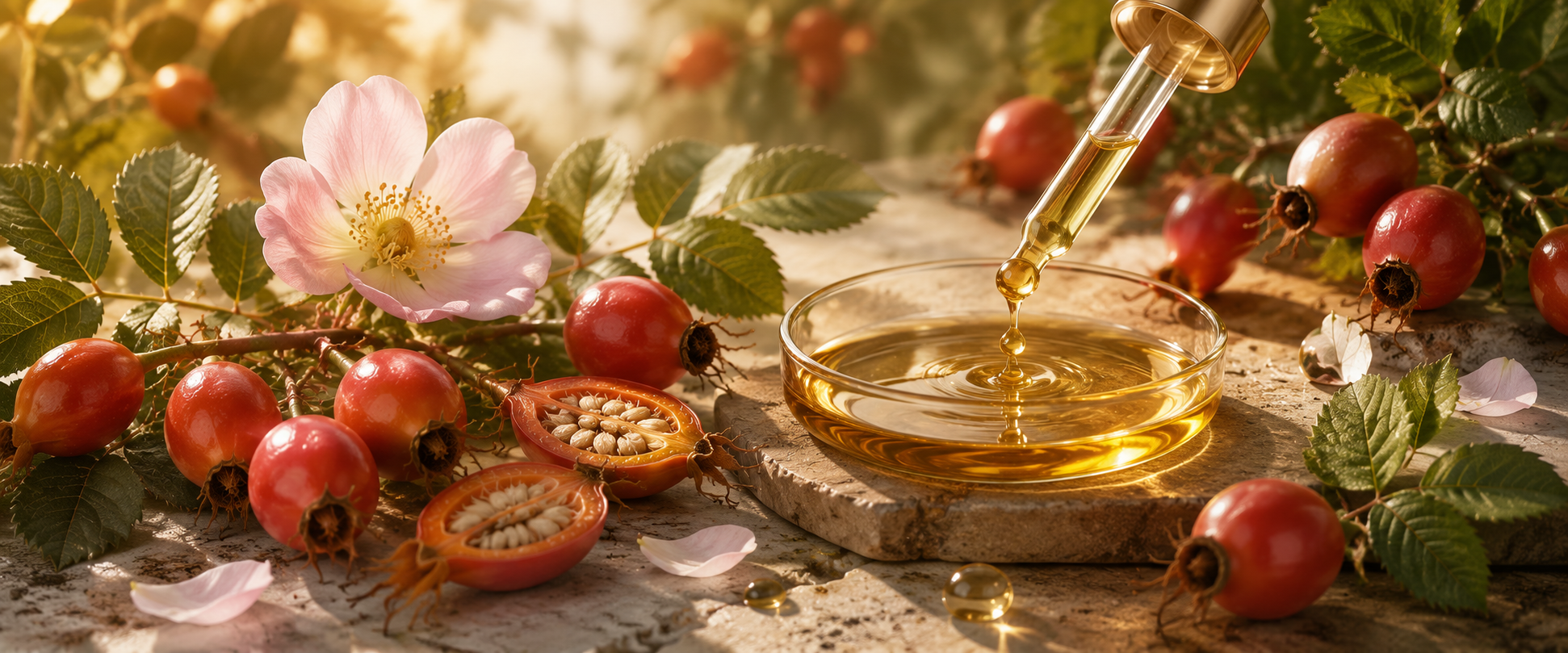
Rosehip oil is a botanical oil extracted from the seeds of the wild rose, most commonly Rosa canina. Unlike rose essential oil, which is distilled from flower petals for its fragrance, rosehip oil is cold pressed from the tiny seeds found inside the rosehip fruit.
This distinction is important.
The oil contains very little fragrance but is naturally rich in skin-supporting nutrients, making it popular in moisturisers, facial oils and restorative skincare formulations.
Its natural composition includes:
- Essential fatty acids including linoleic acid (Omega-6) and alpha-linolenic acid (Omega-3)
- Oleic acid
- Natural vitamin E
- Plant sterols
- Carotenoids that give the oil its characteristic golden-orange colour
- Naturally occurring antioxidant compounds
Together, these ingredients help nourish the outer layers of the skin while supporting a healthy skin barrier.

Why Is Rosehip Oil So Popular?
Many botanical oils contain nourishing fatty acids, but rosehip oil has a particularly balanced composition that allows it to feel lightweight while still providing excellent nourishment.
Its relatively high proportion of linoleic acid makes it absorb more readily than heavier oils.
This means it can leave the skin feeling soft rather than greasy.
Rosehip oil is often chosen because it may help support:
- Skin softness
- Skin comfort
- Barrier function
- Moisture retention
- Healthy-looking radiance
- Overall skin resilience
These benefits come from supporting the skin's natural protective barrier rather than forcing the skin to behave differently.
Core Concept One: Supporting the Skin Barrier
Your skin barrier is the body's first line of defence.
It helps prevent moisture from escaping while protecting against environmental stressors including wind, pollution and changing weather.
The barrier is largely made from specialised skin cells surrounded by natural lipids including ceramides, cholesterol and fatty acids.
Rosehip oil contributes additional beneficial fatty acids to the skin's surface.
Although these plant oils do not replace the skin's own lipids, they help reinforce the outer barrier by reducing roughness and improving flexibility.
When the skin barrier is well supported, skin often feels:
- Softer
- More comfortable
- Better hydrated
- Less tight after cleansing
This is one reason rosehip oil is frequently recommended for dry or environmentally stressed skin.
💡 Joanne's Insight
After many years treating dry and sensitive skin, I've found that clients often think they need heavier creams when what they actually need is better barrier support. A lightweight botanical oil like rosehip can help improve comfort without making the skin feel overloaded.

Core Concept Two: Antioxidant Support
Every day, your skin encounters environmental challenges such as sunlight, pollution and normal metabolic processes.
These generate unstable molecules called free radicals.
Over time, free radicals may contribute to oxidative stress, which gradually affects healthy skin structures.
Rosehip oil naturally contains antioxidant compounds including vitamin E and carotenoids.
These antioxidants help neutralise many free radicals before they interact with skin lipids and proteins.
It's important to understand that antioxidants don't stop ageing.
Instead, they help support the skin's own protective systems against everyday environmental exposure.
For this reason, antioxidant-rich ingredients work best alongside sunscreen rather than replacing it.
🧠 Did You Know?
The deep golden-orange colour of high-quality rosehip oil comes from naturally occurring carotenoids—the same family of protective plant pigments found in carrots and pumpkins.
Core Concept Three: Supporting Smooth, Healthy-Looking Skin
Rosehip oil also contains naturally occurring provitamin A compounds.
These are very different from prescription retinoids or cosmetic retinal products.
Rather than delivering strong exfoliating activity, these naturally occurring compounds simply contribute to the oil's overall nutritional profile.
Combined with essential fatty acids, this helps explain why rosehip oil is commonly included in products designed to support:
- Dry skin
- Mature skin
- Dull-looking skin
- Skin exposed to environmental stress
Its lightweight texture also makes it suitable for many people who find richer oils too heavy.

❌ Myth vs ✅ Reality
Myth: Rosehip oil can replace retinol.
Reality: Rosehip oil naturally contains small amounts of provitamin A compounds, but it works very differently from retinoids. It is valued primarily for its nourishing fatty acids and antioxidant support rather than significant skin renewal.
Why This Matters
Choosing skincare becomes much easier when you understand why an ingredient is included.
Rosehip oil isn't popular because it's fashionable.
It's popular because its composition naturally complements the skin's own barrier.
For people experiencing dryness, seasonal dehydration or a compromised barrier, botanical oils can provide valuable support alongside humectants such as hyaluronic acid and barrier ingredients like ceramides.
Rather than replacing these ingredients, rosehip oil often works best as part of a balanced formulation.
✨ Why It Matters
Healthy skin isn't just about adding moisture.
It's about helping the skin hold onto that moisture. Ingredients like rosehip oil support the protective barrier that keeps hydration where your skin needs it most.
👩⚕️ Skin Therapist Tip
Apply rosehip oil or a moisturiser containing rosehip oil as the final nourishing step after water-based serums. This helps lock hydration into the skin while leaving the surface feeling comfortable and supple.
Rosehip Oil in Shanga Formulations
Rosehip oil is included where its nourishing fatty acids and antioxidant profile best complement each formulation.
Current Shanga products containing rosehip oil include:
- Calm Moisturiser – Rosehip seed oil works alongside jojoba oil, evening primrose oil, sunflower oil, beta glucan and calming botanical extracts to support hydration, comfort and the skin barrier.
- Radiance Elixir – Rosehip fruit oil forms part of a blend of nutrient-rich botanical oils including argan, jojoba, avocado, grape seed and cranberry seed oils to nourish and soften the skin.
Conclusion
Rosehip oil has remained a skincare favourite because it offers something timeless: gentle nourishment that works with the skin rather than against it.
Rich in essential fatty acids and naturally occurring antioxidants, it helps support the skin barrier, maintain softness and contribute to healthy-looking skin. While it isn't a replacement for ingredients like retinoids or sunscreen, it complements a well-rounded skincare routine by reinforcing the skin's natural protective functions.
Sometimes, the most valuable ingredients are those that quietly support healthy skin every day.
Key Takeaways
- Rosehip oil is cold pressed from the seeds of wild rose fruits.
- It is naturally rich in essential fatty acids and antioxidants.
- It helps support the skin's natural barrier and moisture retention.
- Its lightweight texture suits many skin types, including dry and mature skin.
- Rosehip oil is not the same as retinol or rose essential oil.
- It works best alongside ingredients such as ceramides, humectants and daily sunscreen.
- Shanga includes rosehip oil in Calm Moisturiser and Radiance Elixir to support healthy, nourished skin.
Continue Your Learning
Rosehip oil is just one of many nutrient-rich botanical oils used in modern skincare. Next, discover Argan Oil and learn why this Moroccan botanical has become renowned for supporting skin softness, barrier health and long-lasting nourishment.