Skin Turnover Explained
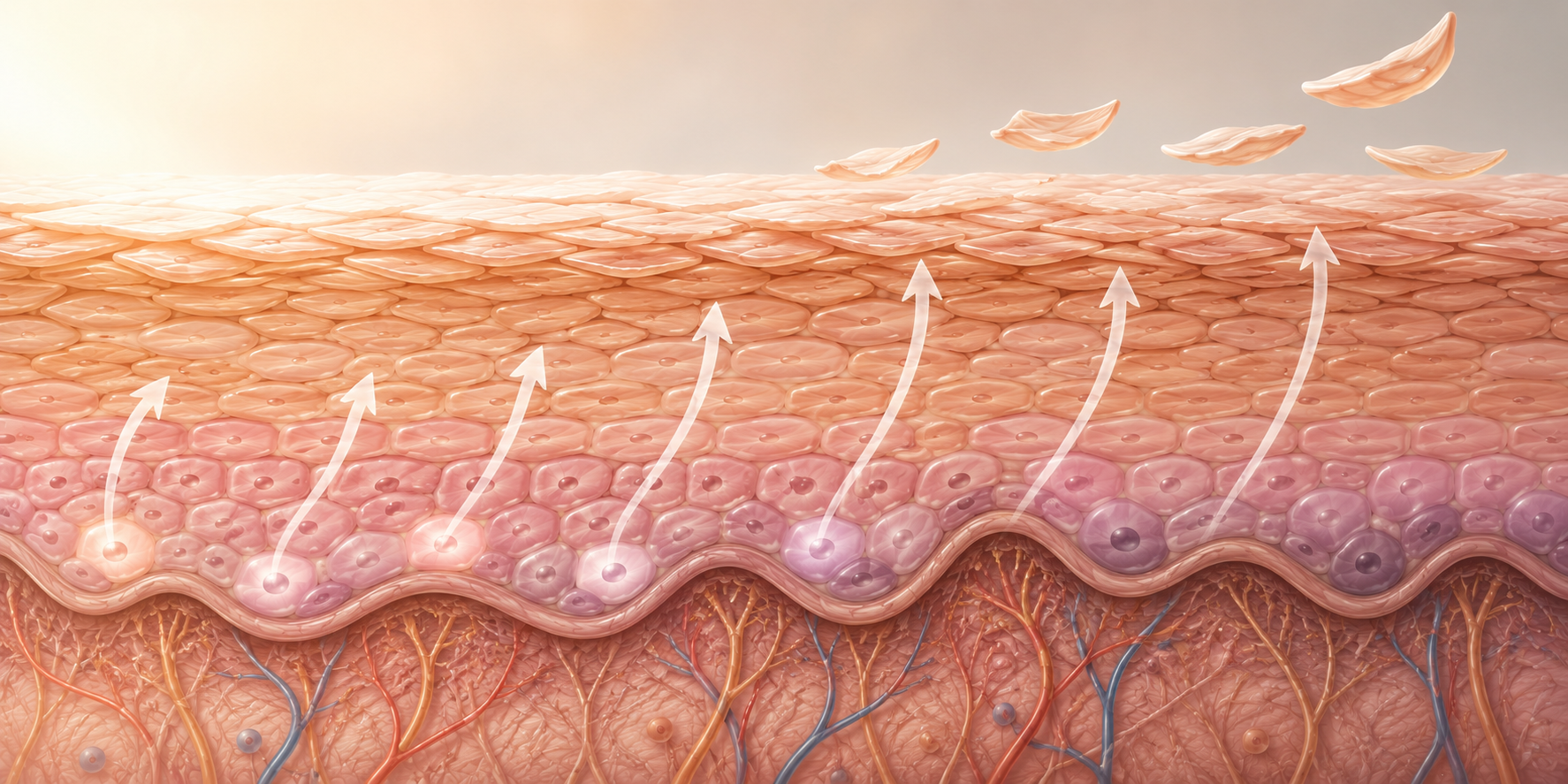
Every day, your skin quietly renews itself. New cells are created deep within the epidermis, gradually moving towards the surface before naturally shedding away. This remarkable process—known as skin turnover—is one of the foundations of healthy skin.
Understanding how skin turnover works helps explain why skin changes over time, why consistency matters in skincare, and why healthy skin improvements rarely happen overnight. Rather than forcing the skin to renew faster, the goal of good skincare is to support this beautifully organised biological process.

Full Lesson
Understanding Skin Turnover
Skin turnover is the continuous process of creating new skin cells and replacing old ones.
Most people think of skin as a single layer, but the outer epidermis is constantly changing. Every second, specialised cells divide near the base of the epidermis, beginning a slow journey towards the surface.
As these cells move upwards they gradually change.
They become flatter, stronger and filled with protective proteins before eventually forming the outermost layer of the skin barrier.
When their job is complete, they naturally shed away.
At the same time, new cells are already rising beneath them.
This cycle never stops.
Healthy skin is constantly renewing itself throughout your life.
Think of it like a moving walkway
Imagine standing on a slow-moving airport travelator.
New passengers continually step onto one end while others gently reach the exit and leave.
The walkway never suddenly speeds up or stops—it simply moves at its own carefully controlled pace.
Skin turnover works much the same way.
Your skin is always renewing itself, even when you cannot see it happening.
💡 Joanne's Insight
One of the biggest misconceptions I see is people expecting visible changes after only a few days of using new skincare. Healthy skin follows biology, not marketing timelines. Once people understand skin turnover, they're usually much more patient—and often much more successful—with their routine.

The Journey of a Skin Cell
Skin cells begin life in the deepest layer of the epidermis.
Here, specialised cells called keratinocytes divide and produce new cells that slowly migrate upwards.
As they travel, several important changes occur.
New cells are born
Cells are actively dividing and receiving nutrients from the tissues below.
Cells mature
As they move upwards, they produce keratin—a strong structural protein that helps protect the skin.
Cells become part of the barrier
Eventually the cells lose their nucleus and become flattened protective "bricks" within the skin barrier.
Cells naturally shed
Finally, these old cells are replaced by newer cells rising from beneath.
This continual renewal helps maintain:
- A smooth skin surface
- An effective skin barrier
- Even skin texture
- Healthy appearance
- Natural protection against the environment
🧠 Did You Know?
You don't shed your skin all at once. Healthy skin loses tiny individual cells every day—far too small to notice with the naked eye.
How Long Does Skin Turnover Take?
One of the most common questions in skincare is:
"How long does it take for my skin to renew?"
The answer depends on several factors.
In healthy younger adults, the complete journey from the deepest layer of the epidermis to the surface often takes around four weeks.
As we age, this process naturally becomes slower.
For mature skin, turnover may take six weeks or longer.
Many factors influence the speed of renewal, including:
- Age
- Genetics
- Overall health
- Sun exposure
- Sleep
- Nutrition
- Chronic inflammation
- Certain skin conditions
Importantly, slower turnover is a normal part of ageing—not something that needs to be "fixed."

What Happens When Skin Turnover Slows?
Slower turnover doesn't mean your skin has stopped working.
It simply means older surface cells remain in place for longer before being replaced.
This can contribute to changes such as:
- Skin feeling rougher
- A duller appearance
- Uneven texture
- Slower fading of post-inflammatory marks
- Fine lines appearing more noticeable because the skin surface reflects light less evenly
It's important to remember that these are natural biological changes.
Healthy ageing skin is still healthy skin.
The goal of skincare is not to make skin behave like it did at twenty years old.
Instead, good skincare helps support healthy renewal while maintaining comfort and barrier function.
❌ Myth vs ✅ Reality
❌ Myth: Skin completely renews itself every 28 days for everyone.
✅ Reality: Around four weeks is only an average for many younger adults. Turnover naturally varies between individuals and generally slows with age.
How Skincare Supports Healthy Skin Turnover
One of the biggest myths in skincare is that products "force" skin to renew itself.
In reality, healthy skin already knows exactly how to renew.
The role of skincare is to support this natural process—not replace it.
Different ingredients work in different ways.
Daily sun protection
Ultraviolet (UV) exposure can disrupt healthy skin function over time.
Daily sunscreen helps protect the cells responsible for ongoing renewal.
Gentle cleansing
Removing excess oil, sunscreen and pollutants helps maintain a healthy environment for skin without disrupting its barrier.
Hydration and moisturising
Well-hydrated skin functions more comfortably and supports normal shedding of surface cells.
Vitamin A (retinoids)
Vitamin A ingredients are among the best-studied skincare ingredients for supporting healthy epidermal renewal. They encourage normal cell differentiation rather than simply speeding everything up.
Alpha hydroxy acids (AHAs)
Ingredients such as glycolic acid and lactic acid help loosen the bonds between older surface cells, allowing them to shed more evenly.
Used appropriately, they can improve the appearance of skin texture and brightness.
A healthy skin barrier
Healthy renewal depends on a healthy barrier.
Over-exfoliating or using too many active ingredients may disrupt the barrier, sometimes making skin feel more sensitive rather than healthier.
👩⚕️ Skin Therapist Tip
If you're introducing exfoliating acids or a vitamin A product, start slowly. Supporting healthy turnover is about consistency over time—not using the strongest product as often as possible.

Why Patience Is Part of Good Skincare
Because skin turnover takes weeks—not days—visible improvements also take time.
Many skincare ingredients work beneath the surface long before you notice visible changes.
This is why consistency matters far more than constantly changing products.
When you introduce a new routine, your skin needs time to complete its natural renewal cycle.
Rather than looking for dramatic overnight transformation, it's more helpful to notice gradual improvements such as:
- Skin feeling smoother
- More even texture
- Improved hydration
- Greater comfort
- A healthier-looking glow
These small changes often reflect healthier skin function rather than quick cosmetic effects.
✨ Why It Matters
Understanding skin turnover changes the way you think about skincare. Instead of expecting instant results, you begin working with your skin's natural biology. This leads to more realistic expectations, more consistent routines and healthier long-term outcomes.
Conclusion
Skin turnover is one of the body's most remarkable natural processes.
Every day, new skin cells are created, mature, protect your body and eventually make way for the next generation.
Although this cycle naturally slows throughout life, healthy skin never stops renewing itself.
The most effective skincare doesn't fight this process—it supports it.
By protecting the skin barrier, using active ingredients thoughtfully and remaining consistent with your routine, you're helping your skin do what it has evolved to do remarkably well.
Key Takeaways
- Skin turnover is the continuous process of replacing old skin cells with new ones.
- New skin cells form in the lower epidermis and gradually move towards the surface.
- Healthy turnover supports the skin barrier, texture and overall appearance.
- The renewal cycle naturally slows with age and varies from person to person.
- Good skincare supports healthy turnover rather than forcing skin to renew faster.
- Daily sun protection, gentle cleansing and barrier support all contribute to healthy renewal.
- Consistency matters far more than expecting overnight results.
Continue Your Learning
Now that you understand how your skin naturally renews itself, the next step is learning what gives skin its strength and resilience beneath the surface.

Next Lesson: Collagen Explained — discover how collagen supports skin structure, why it gradually changes with age, and what skincare can realistically do to help maintain healthy collagen over time. Go to next lesson