Understanding AHAs: The Science of Smoother, Brighter Skin
Alpha hydroxy acids, commonly known as AHAs, are some of the most widely studied ingredients in modern skincare. Rather than scrubbing the skin, they gently loosen the bonds holding older surface cells together, allowing them to shed more evenly. This natural process can help improve skin texture, brightness and the appearance of uneven tone while supporting healthy skin renewal. Used thoughtfully, AHAs can become an important part of a balanced skincare routine that encourages smoother, healthier-looking skin without the need for harsh physical exfoliation.

What Are AHAs?
Our skin naturally renews itself every day.
New skin cells are produced deep within the epidermis before gradually travelling towards the surface. Eventually these older cells detach and shed, making way for fresh cells underneath.
When this natural shedding slows, older cells can accumulate on the surface.
The result may include:
- dull-looking skin
- rough texture
- uneven skin tone
- visible sun damage
- congestion
- reduced radiance
Alpha hydroxy acids help support this natural renewal process.
They work by gently dissolving the tiny protein connections that hold dead skin cells together, allowing them to detach more evenly.
Unlike facial scrubs that physically abrade the surface, AHAs perform what is known as chemical exfoliation—a carefully controlled process that can be both effective and gentle when used appropriately.

How Do AHAs Work?
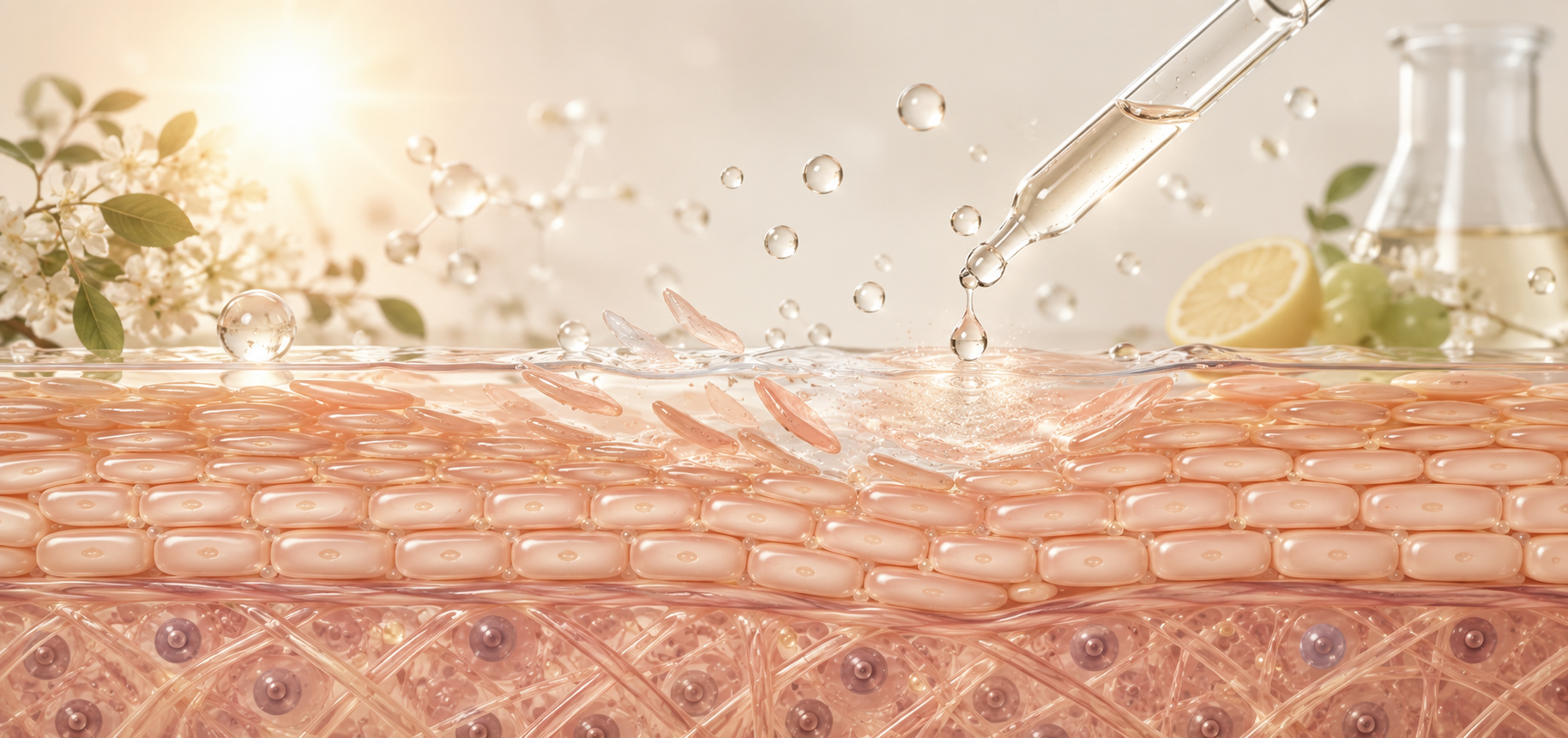
The outermost layer of the skin is called the stratum corneum.
Think of it as a wall made from bricks and mortar.
- The bricks are flattened skin cells called corneocytes.
- The mortar is made of specialised skin lipids.
- Tiny protein structures hold neighbouring cells together.
AHAs gently loosen some of these protein connections.
Rather than forcing cells away, they encourage older cells that are already nearing the end of their life cycle to shed more efficiently.
As this happens, fresher skin becomes visible.
Over time this may help improve:
- skin smoothness
- overall brightness
- uneven pigmentation
- the appearance of fine lines
- the penetration of other skincare products
Importantly, this is a gradual process.
Healthy skin renewal takes weeks—not days.
Consistency is far more important than strength.
🧠 Did You Know?
Your entire outer layer of skin naturally replaces itself approximately every four to six weeks in healthy young adults. AHAs don't create new skin—they simply help support this normal renewal process by encouraging older surface cells to shed more evenly.
The Different Types of AHAs
Not all AHAs behave in exactly the same way.
Some penetrate more quickly, while others also contribute hydration.
Glycolic Acid
Derived originally from sugar cane, glycolic acid has the smallest molecular size of the common AHAs.
Because it is so small, it penetrates the skin efficiently and is particularly effective for:
- dullness
- uneven texture
- early photoageing
- pigmentation caused by sun exposure
It is often considered one of the most effective resurfacing AHAs.
Lactic Acid
Lactic acid is naturally present within healthy skin as part of the Natural Moisturising Factor (NMF).
In addition to exfoliating, it also attracts water into the skin.
This makes it an excellent choice for:
- dry skin
- dehydrated skin
- mature skin
- more sensitive complexions
Fruit-Derived AHAs
Many botanical extracts naturally contain small amounts of AHAs.
Examples include:
- bilberry
- sugar cane
- orange
- lemon
- sugar maple
These extracts contribute gentle exfoliating activity alongside naturally occurring antioxidants and plant compounds.
❌ Myth vs ✅ Reality
Myth: Stronger acids always produce better results.
Reality: Higher concentrations are not always more effective. Skin responds best to gradual, consistent exfoliation that respects the skin barrier.

What Can AHAs Help Improve?
AHAs are primarily surface exfoliants.
Because they work within the upper layers of the epidermis, they can gradually improve several common skin concerns.
These include:
Dull Skin
Removing accumulated surface cells allows healthier skin to reflect light more evenly.
This often creates a brighter, fresher appearance.
Rough Texture
Regular exfoliation can leave the skin feeling softer and smoother.
Uneven Skin Tone
By encouraging healthy turnover, AHAs may gradually improve the appearance of post-inflammatory pigmentation and sun-related uneven tone.
Fine Lines
Surface dehydration and accumulated dead skin cells can exaggerate the appearance of fine lines.
Smoother skin often appears more refined.
Supporting Other Products
Removing excess surface build-up allows moisturisers, hydrating serums and antioxidants to interact more effectively with the upper layers of the skin.
It is important to remember that AHAs do not permanently change the skin.
Their benefits depend on regular, appropriate use.
💡 Joanne's Insight
"When clients tell me their skin has suddenly become dull or that makeup no longer sits beautifully, the answer isn't usually a stronger moisturiser. Often it's that healthy cell turnover has slowed. Gentle exfoliation, used consistently rather than aggressively, can make an enormous difference while keeping the skin calm and comfortable."
Using AHAs Safely
Because AHAs remove older surface cells, introducing them gradually is important.
Most people benefit from using AHAs only a few evenings each week rather than every day.
Some helpful guidelines include:
- begin slowly
- avoid combining multiple exfoliating products on the same evening
- moisturise afterwards
- always wear sunscreen during the day
Some temporary tingling can be normal.
However, persistent burning, redness or irritation suggests the skin barrier may need more recovery time.
Healthy exfoliation should never feel painful.
👩⚕️ Skin Therapist Tip
If you're introducing AHAs for the first time, start with one or two evenings each week. Give your skin several weeks to adapt before increasing frequency. Healthy skin responds best to gradual consistency.

Which Shanga Products Contain AHAs?
Several Shanga formulations include alpha hydroxy acids or naturally AHA-rich ingredients to support gentle skin renewal.
Clarify Tonic
A leave-on exfoliating tonic containing glycolic acid and lactic acid, combined with salicylic acid and botanical extracts for gentle surface renewal.
Dual Action Peel
Features lactic acid alongside pomegranate ferment, green tea and soothing ingredients to encourage smoother, brighter skin.
Glow Cleanser
Contains glycolic acid together with a blend of naturally derived fruit AHAs including sugar cane, bilberry, orange, lemon and sugar maple extracts.
Purify Cleanser
Includes a small amount of lactic acid within a gentle cleansing formula.
These products vary in strength and purpose, allowing exfoliation to be tailored to different skin types and routines.
✨ Why It Matters
Healthy skin isn't created by removing as much skin as possible.
It's created by supporting the skin's own renewal process while protecting the barrier that keeps skin comfortable and resilient.
Used thoughtfully, AHAs can help reveal fresher-looking skin without disrupting the balance your skin works hard to maintain every day.
Conclusion
AHAs have earned their place as one of skincare's most trusted ingredient families because their benefits are supported by decades of research.
Rather than forcing dramatic change, they work with your skin's natural renewal cycle to gradually improve brightness, texture and overall appearance.
When introduced slowly and paired with hydration, barrier-supporting ingredients and daily sun protection, AHAs can become an effective part of a long-term skincare routine focused on healthy skin rather than quick fixes.
Key Takeaways
- AHAs are chemical exfoliants that remove older surface skin cells.
- Glycolic acid and lactic acid are two of the most commonly used AHAs.
- AHAs may improve brightness, texture and uneven skin tone.
- Consistency is more important than using very strong acids.
- Moisturising and sunscreen are essential companions to AHA use.
- Gentle exfoliation supports healthy skin renewal while respecting the skin barrier.
Continue Your Learning
AHAs work primarily on the surface of the skin. The next lesson explores BHAs (Beta Hydroxy Acids), a different family of exfoliating ingredients that are oil-soluble and able to penetrate into pores, making them especially useful for congestion, oily skin and breakouts.