Understanding BHAs: The Science Behind Clearer Skin
When people think about exfoliation, they often imagine removing dead skin from the surface. While this is important, some skin concerns begin much deeper within the pore. Excess oil, dead skin cells and everyday debris can gradually build up, contributing to congestion, blackheads and breakouts.
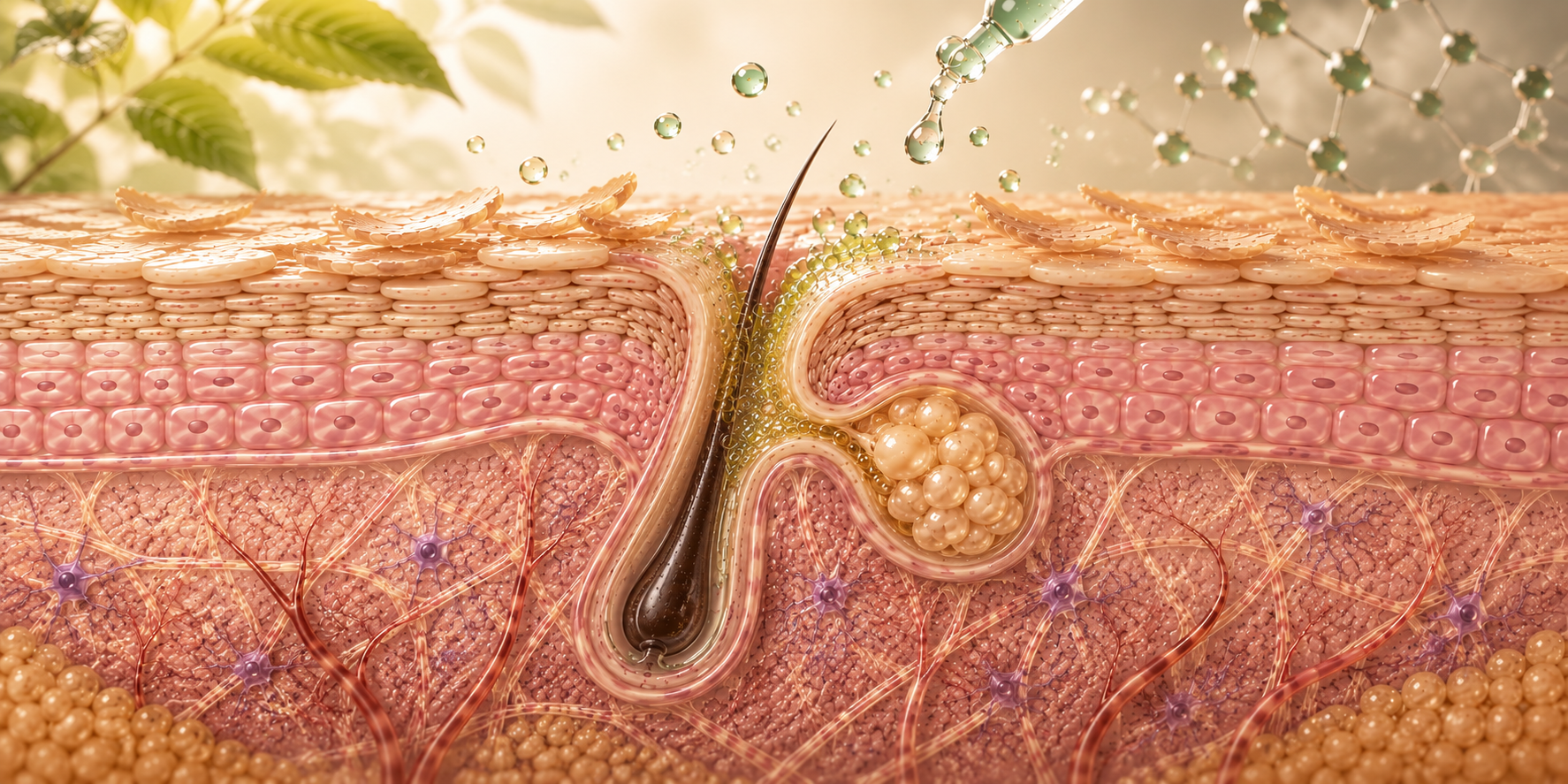
Beta hydroxy acids (BHAs) are unique because they work differently from many other exfoliating ingredients. Rather than acting only on the skin's surface, they are able to move into oil-filled pores, helping loosen the material that contributes to congestion. Used thoughtfully, BHAs can support smoother, clearer-looking skin while helping maintain a healthy skin renewal process.

Full Lesson
Understanding What BHAs Are
Beta hydroxy acids are a family of chemical exfoliants that remove dead skin cells by gently dissolving the bonds holding older surface cells together.
Unlike physical scrubs, BHAs do not rely on friction. Instead, they work through chemistry, encouraging older cells to detach naturally as part of the skin's normal renewal cycle.
The best-known and most widely studied BHA is salicylic acid. Nearly every skincare product labelled as containing a BHA uses salicylic acid because of its unique ability to work within oily skin.
Although salicylic acid was originally isolated from willow bark many years ago, the ingredient used in modern skincare is carefully manufactured to provide consistent purity, stability and performance.
One of the reasons salicylic acid has remained a skincare favourite for decades is that it behaves differently from almost every other exfoliating ingredient.
Instead of dissolving only in water, it is oil soluble.
This single characteristic changes where it can work within the skin.
Why Oil Solubility Matters
Our skin naturally produces sebum, an oily substance that helps keep the barrier healthy.
However, sebum can also combine with:
- dead skin cells
- sunscreen
- makeup
- pollution
- everyday debris
Over time this mixture may become trapped inside pores.
Because salicylic acid dissolves in oil, it can move through this oily environment more effectively than water-soluble exfoliants.
Rather than remaining only on the skin's surface, it helps exfoliate both:
- the uppermost layers of skin
- inside the lining of pores
This makes BHAs particularly useful for skin prone to congestion.
🧠 Did You Know?
Your pores don't actually "open" and "close."
They can appear larger or smaller depending on how much oil and dead skin has accumulated inside them. Keeping pores clear with appropriate skincare may help them appear less noticeable.

How BHAs Exfoliate Differently
Many people assume all exfoliating acids work in the same way.
In reality, each family of acids behaves quite differently.
Alpha hydroxy acids (AHAs), which you learned about in the previous lesson, dissolve in water and primarily work across the surface of the skin.
BHAs, on the other hand, prefer oily environments.
This means salicylic acid is able to reach areas that AHAs cannot access as effectively.
Instead of focusing only on surface roughness, BHAs help reduce the accumulation of material within pores that contributes to congestion.
This difference explains why dermatologists often recommend BHAs for oily and blemish-prone skin, while AHAs are more commonly chosen to improve dullness, uneven texture and visible signs of sun damage.
Both ingredients exfoliate.
They simply do so in different locations.
Surface vs Inside the Pore
Think of the skin as having two different areas that may benefit from exfoliation.
Surface exfoliation
Removes the older cells sitting on top of the epidermis, helping skin feel smoother and appear brighter.
Pore exfoliation
Helps loosen the combination of oil and dead skin that may collect inside follicles over time.
Many skincare routines benefit from both approaches, depending on an individual's skin type and concerns.
💡 Joanne's Insight
During years of treating clients, I've found that many people assume oily skin simply needs stronger cleansing. In reality, congestion often develops because dead skin cells and oil remain trapped together inside the pore. Gentle, consistent exfoliation is usually far more helpful than harsh scrubbing. Healthy skin responds best to patience and balance rather than aggressive treatments.
❌ Myth vs ✅ Reality
❌ Myth: BHAs dry out oily skin by removing all of its natural oils.
✅ Reality: Well-formulated BHAs don't strip the skin. They help exfoliate within pores while allowing the skin barrier to continue performing its important protective role. Choosing the right concentration and using the ingredient appropriately are key.

Beyond Exfoliation: Supporting Clearer Skin
Although BHAs are best known as exfoliating ingredients, their benefits extend beyond simply removing dead skin cells.
By helping reduce the build-up of excess oil and cellular debris within pores, salicylic acid supports an environment that is less prone to congestion. Skin may feel smoother, appear more refined, and blackheads and rough texture can become less noticeable over time when BHAs are used consistently and appropriately.
Importantly, BHAs work with the skin's natural renewal process rather than forcing rapid change. Healthy skin is continually shedding older cells and replacing them with newer ones. Salicylic acid simply helps this process occur more efficiently in areas where oil and dead skin are more likely to accumulate.
This is why BHAs are often recommended not only for people experiencing breakouts, but also for those with combination skin, enlarged-looking pores or persistent congestion around the nose, chin and forehead.
The key is consistency rather than intensity. Gentle, regular exfoliation is generally more supportive of long-term skin health than using strong exfoliants infrequently.

Who Benefits Most from BHAs?
Not every skin type needs the same approach to exfoliation. Because BHAs are oil-soluble, they tend to be most helpful for concerns that begin within the pores rather than on the skin's surface.
People who may benefit most from BHAs include those with:
- Oily skin
- Combination skin
- Congested skin
- Blackheads
- Whiteheads
- Enlarged-looking pores
- Acne-prone skin
- Occasional breakouts
Excess oil can combine with dead skin cells inside pores, creating an environment where congestion gradually develops. By exfoliating within these oil-filled spaces, salicylic acid helps support clearer pores and a smoother-looking complexion over time.
For combination skin, BHAs can be particularly useful on oilier areas such as the forehead, nose and chin, where congestion is often more noticeable.
It's also important to remember that enlarged-looking pores are often influenced by what happens inside them. While skincare cannot permanently shrink pore size, keeping pores clearer may make them appear less noticeable.
When BHAs May Not Be the Best First Choice
Although BHAs are highly effective for many people, they are not always the right place to begin.
If your skin is:
- Very dry
- Easily irritated
- Recovering from barrier damage
- Rosacea-prone
- Experiencing persistent sensitivity
your first priority should usually be restoring the skin barrier rather than increasing exfoliation.
Healthy skin performs best when its protective barrier is functioning well. Introducing strong exfoliating ingredients too early may increase discomfort and delay recovery.
Once the skin feels comfortable, hydrated and resilient again, a carefully introduced BHA may become appropriate if congestion remains a concern.
In skincare, stronger isn't always better. Building healthy skin first often leads to better long-term results than trying to treat every concern at once.

How to Use BHAs Safely
One of the biggest misconceptions about exfoliation is that using more product more often will produce faster results.
In reality, healthy skin responds best to gradual, consistent care.
If you're new to BHAs, begin by using them one to three evenings per week. This gives your skin time to adapt while allowing you to monitor how it responds.
If your skin remains comfortable after several weeks, you may choose to increase frequency if needed. Some people benefit from using BHAs every second night, while others achieve excellent results with just one or two applications each week.
There is no ideal frequency that suits everyone.
Signs You May Be Over-Exfoliating
Watch for signs that your skin needs a break, including:
- Persistent redness
- Stinging after applying skincare
- Increased dryness or tightness
- Flaking that continues beyond the first few weeks
- Skin that suddenly feels more sensitive than usual
These changes often suggest the skin barrier needs additional support rather than more exfoliation.
Reducing the frequency of active products and focusing on gentle cleansing, moisturising and barrier-supporting ingredients can usually help restore comfort.
Build Your Routine Slowly
When introducing BHAs:
- Add only one new active ingredient at a time.
- Avoid combining multiple strong exfoliating acids initially.
- Use a nourishing moisturiser after exfoliation to support the skin barrier.
- Wear a broad-spectrum sunscreen every morning, as freshly exfoliated skin can become more vulnerable to UV damage.
Healthy skincare routines are built through consistency rather than intensity.
👩⚕️ Skin Therapist Tip
If you're unsure whether your skin is tolerating a BHA well, don't judge it after one or two uses. Give your skin several weeks to adjust while paying attention to comfort rather than chasing quick results. Clearer-looking skin usually develops gradually, not overnight.
🧠 Did You Know?
Salicylic acid is one of the few exfoliating acids that naturally dissolves into oil. This unique property allows it to work inside pores rather than only across the skin's surface, which is why it has become one of the most widely studied ingredients for managing congestion and blemishes.

Why Choosing the Right Exfoliant Matters
AHAs and BHAs are sometimes presented as competing ingredients, but in reality they perform different jobs.
AHAs primarily exfoliate the skin's surface, making them well suited to concerns such as:
- Rough texture
- Dullness
- Uneven skin tone
- Surface dryness
BHAs work within the pores, making them more appropriate for:
- Congestion
- Excess oil
- Blackheads
- Whiteheads
- Breakout-prone skin
For some people, both ingredients can play a valuable role within the same routine.
For example, someone with combination skin might use an AHA occasionally to improve surface smoothness while incorporating a BHA on separate evenings to manage congestion around the T-zone.
The best ingredient isn't necessarily the strongest or the most popular.
It's the one that addresses your skin's current needs while respecting its natural barrier.
✨ Why It Matters
Understanding where an ingredient works is just as important as knowing what it does.
When you understand that AHAs primarily renew the surface while BHAs work inside pores, it becomes much easier to choose products that match your individual skin concerns. Rather than following trends or using ingredients because they're popular, you can build a routine based on how your skin actually functions—leading to healthier, more consistent results over time.
💡 Joanne's Insight
After many years of treating clients, one pattern has remained remarkably consistent.
The healthiest skin rarely belongs to the person using the strongest products.
It usually belongs to the person who follows a gentle routine consistently, protects their skin barrier and allows improvement to happen gradually.
Small, sustainable habits almost always outperform aggressive routines that leave the skin irritated. Patience may not be the most exciting skincare ingredient, but it is often one of the most effective.
❌ Myth vs ✅ Reality
❌ Myth: If BHAs make my skin clearer, using them every day will work even faster.
✅ Reality: Healthy skin benefits from balance. Over-exfoliation can disrupt the skin barrier and lead to irritation. Consistent, appropriate use generally delivers better long-term results.
BHAs During Pregnancy and Breastfeeding
If you are pregnant or breastfeeding, it's always sensible to discuss active skincare ingredients with your healthcare professional.
Unlike oral salicylates, small amounts of topical salicylic acid are absorbed into the body, and current evidence suggests that occasional use of low-concentration products applied to limited areas is unlikely to pose significant risk. However, because research during pregnancy is limited, many healthcare professionals recommend taking a cautious approach and avoiding leave-on products containing salicylic acid unless specifically advised otherwise.
If you're looking for a gentler alternative during pregnancy, ingredients such as azelaic acid, PHAs or carefully selected enzyme exfoliants may be suitable depending on your individual skin needs.
As always, maintaining a healthy skin barrier and using sunscreen daily remain among the most important parts of a pregnancy skincare routine.
Shanga Products Containing BHAs
Within the Shanga collection, BHAs appear in selected formulations where pore refinement and blemish care are the primary focus.
Current examples include:
- Clarify Tonic — combines Glycolic Acid, Lactic Acid and Salicylic Acid to provide gentle chemical exfoliation while helping refine the appearance of pores.
- Purify Rescue Gel — a targeted 2% Salicylic Acid blemish treatment formulated with Niacinamide, Panthenol, Green Tea and Willowherb to help support clearer-looking skin while maintaining skin comfort.
These products illustrate how BHAs can be incorporated into different skincare routines depending on individual skin needs and concerns.
Conclusion
BHAs are a unique family of exfoliating acids that work differently from AHAs because they are oil-soluble.
Rather than focusing only on the skin's surface, salicylic acid can travel into oil-filled pores, where it helps loosen accumulated dead skin cells and support clearer-looking skin over time.
This makes BHAs particularly valuable for people experiencing congestion, blackheads, whiteheads and oily or acne-prone skin.
Like all active ingredients, however, they deliver their best results when used thoughtfully. Healthy skin develops through consistency, appropriate product selection and respect for the skin barrier—not through aggressive exfoliation.
By understanding how BHAs work, you can make more informed skincare decisions and choose routines that support your skin's long-term health rather than simply chasing quick fixes.
Key Takeaways
- BHAs are oil-soluble exfoliating acids that work inside pores.
- Salicylic acid is the best-known and most widely used BHA in skincare.
- BHAs are especially helpful for oily, congested and acne-prone skin.
- AHAs and BHAs target different concerns and often complement one another.
- Healthy barrier function should come before introducing stronger exfoliation.
- Start slowly and increase use only if your skin remains comfortable.
- Daily sunscreen is an important part of every exfoliation routine.
- Gentle consistency usually produces better long-term results than frequent, aggressive exfoliation.
- If you are pregnant or breastfeeding, seek personalised medical advice before introducing leave-on BHA products.
Continue Your Learning
You've now explored the two best-known families of chemical exfoliants: AHAs, which primarily renew the skin's surface, and BHAs, which help clear congestion within the pores.
The next lesson introduces PHAs: The Gentle Exfoliating Acids for Sensitive Skin. You'll discover how this newer generation of exfoliating acids provides gentle surface renewal while helping to support hydration, making them particularly well suited to sensitive, easily irritated or barrier-compromised skin. lesson