Understanding Skin pH
Healthy skin is remarkably good at looking after itself. Every day it regulates moisture, defends against environmental stressors and supports billions of beneficial microorganisms that live naturally on its surface. One of the quietest (but most important) parts of this system is your skin's pH.
Although often mentioned on skincare labels, skin pH is rarely explained in a meaningful way. Understanding what it is, and why it matters, can help you make more informed choices about cleansers, treatments and everyday skincare.

Full Lesson
What Is Skin pH?
The term pH stands for potential of hydrogen. It measures how acidic or alkaline a substance is on a scale from 0 to 14.
- pH 7 is neutral.
- Below 7 is acidic.
- Above 7 is alkaline.
Human skin is naturally slightly acidic, typically sitting between pH 4.7 and 5.5.
While that may seem like a small detail, this mild acidity plays an essential role in keeping skin functioning as it should.
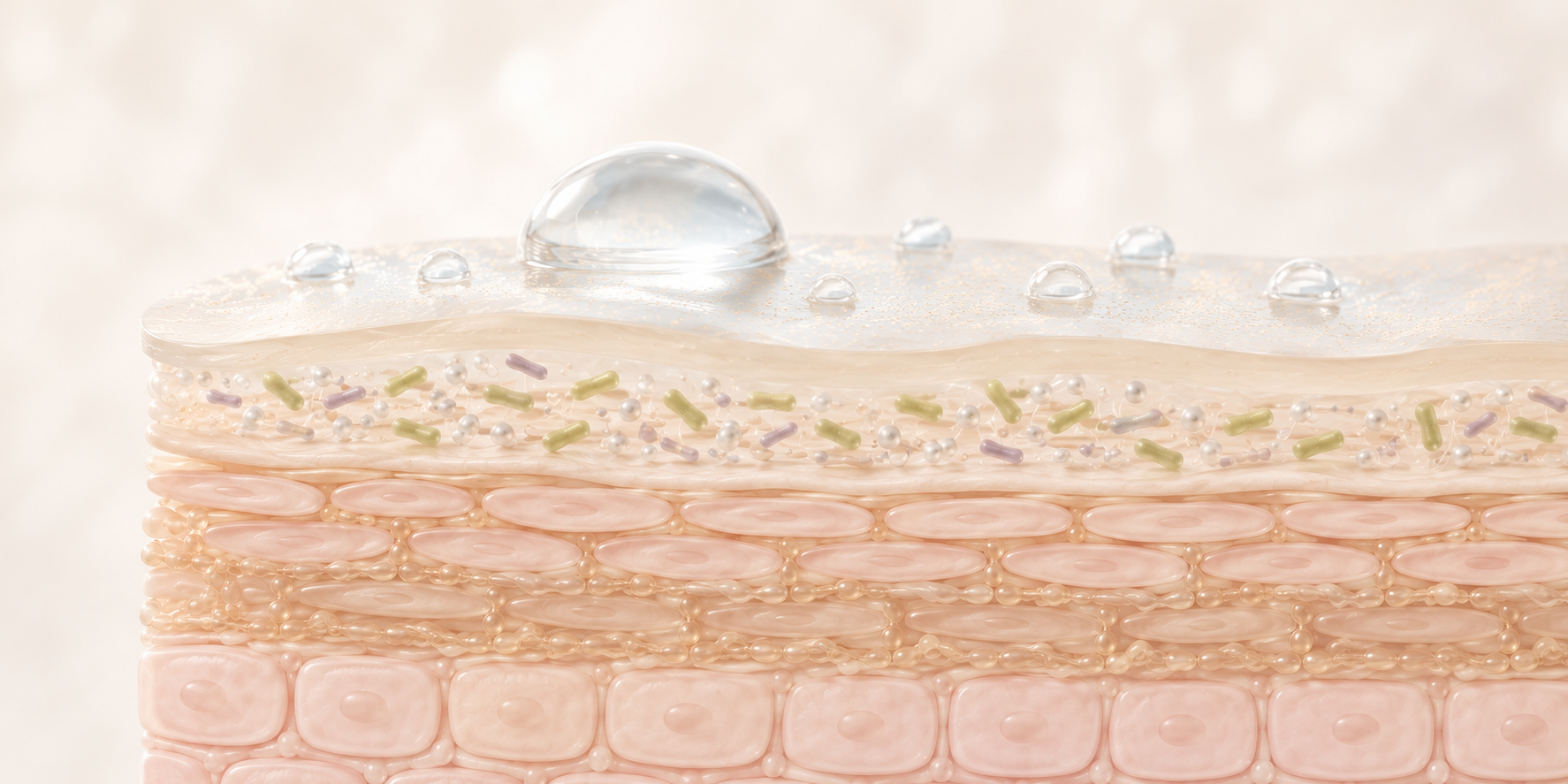
Scientists often refer to this slightly acidic surface as the acid mantle—a thin protective layer made from sweat, natural oils, skin lipids and natural moisturising factors. Together, these create an environment where healthy skin can thrive.
Rather than being something your skin needs correcting, this acidity is one of its greatest strengths.
💡 Joanne's Insight
After years of treating every skin type imaginable, one pattern has remained consistent: skin rarely becomes healthier by being stripped "squeaky clean." More often, healthy skin comes from respecting what the skin is already trying to do naturally.
Why Is Skin Slightly Acidic?
Your skin isn't acidic by accident.
Over millions of years, our skin evolved to create conditions that protect us from the outside world while supporting the complex biology happening beneath the surface.
This slightly acidic environment helps to:
- strengthen the skin barrier
- reduce water loss
- support beneficial skin bacteria
- discourage the growth of harmful microbes
- optimise the activity of enzymes involved in skin renewal.
Think of skin pH as the conditions inside a greenhouse. When temperature and humidity are balanced, plants flourish. When those conditions change dramatically, the entire ecosystem becomes less stable.
Your skin behaves in much the same way.

The Acid Mantle: Your Invisible Protective Layer
Although invisible, the acid mantle is constantly working.
It acts as the first line of defence between your body and the outside environment.
This protective layer helps maintain three important systems at once:
The Skin Barrier
The skin barrier relies on specialised lipids—including ceramides, cholesterol and fatty acids—to keep moisture inside the skin while reducing irritation from the environment.
Many of the enzymes responsible for organising these lipids work most efficiently in a slightly acidic environment.
When skin pH drifts too far from its natural range, these processes become less efficient.
The Skin Microbiome
Your skin is home to billions of microorganisms.
Despite how that sounds, many of these bacteria are beneficial and help protect the skin from harmful organisms.
A healthy pH encourages these beneficial microbes to thrive while making it more difficult for unwanted bacteria to multiply.
Natural Skin Renewal
Every day your skin sheds old cells and replaces them with new ones.
This continuous process depends on enzymes that help separate dead skin cells at the correct time.
Maintaining an appropriate pH helps keep this process balanced, supporting smoother, healthier-looking skin.
🧠 Did You Know?
Healthy skin returns to its preferred pH surprisingly quickly after washing. In most people, the skin naturally works to restore its slightly acidic environment within a relatively short period, which is one reason healthy skin is so resilient.
What Can Change Skin pH?
Your skin is designed to regulate itself, but certain factors can temporarily shift its pH.
These include:
- harsh soaps
- over-cleansing
- excessive exfoliation
- frequent hot showers
- ageing
- environmental stress
- certain skin conditions.
Fortunately, healthy skin is remarkably adaptive.
Most temporary changes are corrected naturally over time, provided the skin isn't continually exposed to unnecessary irritation.

Does Skincare Really Need to Be "pH Balanced"?
You've probably seen the phrase "pH balanced" on skincare packaging.
While this can be beneficial, it doesn't automatically mean a product is better than every alternative.
Instead, think about the product's purpose.
For example:
- Gentle cleansers are often formulated close to the skin's natural pH to minimise disruption.
- Chemical exfoliants such as AHAs and BHAs require a lower pH to work effectively.
- Some active ingredients perform best within particular pH ranges.
Rather than focusing on a single number, formulators consider how the entire product works with the skin.
This is one reason skincare formulation is far more complex than simply adjusting acidity.
❌ Myth vs ✅ Reality
Myth: Healthy skin should feel squeaky clean after washing.
Reality: That tight, squeaky feeling often means natural oils and parts of the acid mantle have been removed. Comfortable skin is usually a better sign than stripped skin.
How pH Relates to Your Skin Barrier
If you've already learned about the skin barrier, you'll know it functions like a protective wall.
Skin pH helps maintain that wall.
When pH remains within its natural range:
- skin lipids stay organised
- moisture is retained more effectively
- enzymes function efficiently
- beneficial bacteria remain balanced.
When the skin barrier becomes compromised, pH can also become more variable.
This doesn't necessarily mean pH caused the problem—it often reflects that the skin's protective systems are under additional stress.
Supporting one often helps support the other.
✨ Why It Matters
Many people assume healthy skin depends on using stronger products or more active ingredients.
In reality, healthy skin often begins with preserving the systems already working quietly beneath the surface.
Looking after your skin's natural pH supports the barrier, microbiome and renewal process—all of which influence how your skin feels and functions every day.

Should You Test Your Skin's pH?
For most people, the answer is no.
Unlike blood pH, skin pH naturally changes slightly throughout the day and across different parts of the body.
It is also influenced by sweat, skincare products and environmental conditions.
Rather than trying to measure your skin's pH at home, it's usually more helpful to observe how your skin behaves.
Signs your skin may appreciate a gentler approach include:
- persistent tightness after cleansing
- frequent dryness
- increased sensitivity
- recurring irritation
- difficulty tolerating active ingredients.
Supporting the skin barrier often does more than chasing a specific pH number.
👩⚕️ Skin Therapist Tip
Choose a cleanser that leaves your skin feeling comfortable rather than tight. If your skin consistently feels dry immediately after washing, it may be worth switching to a gentler formulation and avoiding unnecessarily hot water.
Conclusion
Skin pH may be invisible, but it influences many of the processes that keep skin healthy.
Its slightly acidic nature supports your skin barrier, encourages a balanced microbiome and helps regulate natural skin renewal. Rather than trying to manipulate your skin's pH, the goal is usually to work with it.
When skincare respects the skin's natural biology, healthy skin is often better equipped to do what it has evolved to do—protect, adapt and renew itself every day.
Key Takeaways
- Healthy skin is naturally slightly acidic, usually between pH 4.7 and 5.5.
- This acidity forms part of the skin's protective acid mantle.
- Skin pH supports the barrier, microbiome and natural renewal process.
- Harsh cleansing and over-exfoliation can temporarily disrupt skin pH.
- Healthy skin naturally works to restore its preferred pH over time.
- Gentle, well-formulated skincare helps support these natural processes.
- Healthy skin is about balance rather than constantly correcting it.
Continue Your Learning

Now that you understand how your skin maintains its ideal environment, continue with Hydration vs Moisturisation. Learn how water and oils work together to support healthy skin, recognise the signs your skin is lacking one or both, and build a routine that keeps your skin comfortable, resilient and balanced.