Understanding Skin Repair and Healing
Every day, your skin quietly repairs itself. Whether you've experienced a small scratch, spent time in the sun or simply gone about your daily life, your skin is constantly maintaining, protecting and rebuilding itself.
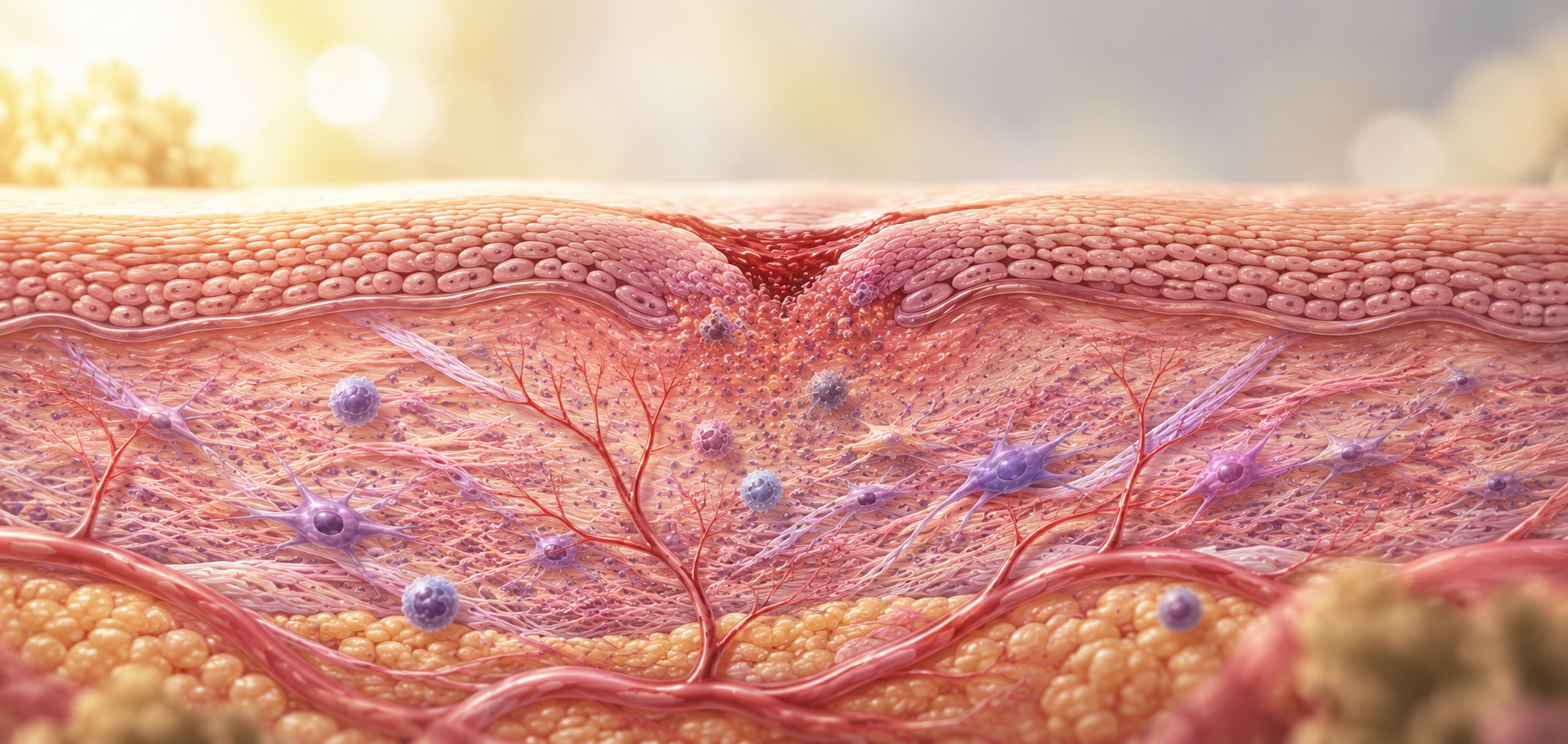
Healing is one of the body's most remarkable biological processes. It relies on an intricate sequence of events involving immune cells, blood vessels, collagen, skin cells and countless chemical signals working together. Understanding how this process works can help you appreciate why healthy skincare is less about chasing quick fixes and more about supporting your skin's natural ability to recover over time.

Skin Repair Is Happening Every Day
When most people think about healing, they picture a cut or scrape closing over.
In reality, your skin is repairing itself constantly.
Every day it responds to tiny challenges including:
- UV exposure
- Dry air
- Friction
- Pollution
- Minor inflammation
- Everyday wear and tear
- Natural cell ageing
Many of these changes are invisible, yet your skin is continuously working to maintain its protective barrier.
Healing isn't simply about fixing injuries.
It's also about preserving the strength, flexibility and function of healthy skin.
💡 Joanne's Insight
One of the biggest surprises for many clients is learning that skin is never "finished". Every single day it is renewing, adapting and repairing itself. The healthiest skin isn't skin that never experiences stress—it's skin that's well supported so it can recover efficiently.

The Four Stages of Skin Healing
Although healing appears simple from the outside, it follows a carefully organised sequence.
Each stage prepares the next.
Stage 1 — Immediate Protection
The moment skin is injured, the body moves quickly to prevent further damage.
Blood vessels briefly constrict before platelets gather to form a clot.
This clot:
- stops bleeding
- protects underlying tissue
- creates a temporary scaffold for healing
This process begins within minutes.
Stage 2 — Controlled Inflammation
Inflammation often has a negative reputation, but healthy inflammation is essential.
Specialised immune cells arrive to:
- remove bacteria
- clear damaged tissue
- prevent infection
- coordinate healing
Blood vessels widen slightly, allowing more oxygen, nutrients and immune cells to reach the area.
This is why healing skin may appear:
- slightly red
- warm
- swollen
- tender
These changes are usually temporary and represent a healthy healing response.
🧠 Did You Know?
Your skin begins organising its repair within minutes of an injury. Long before you notice visible healing, thousands of cells are already communicating through chemical signals to coordinate the rebuilding process.
Building New Skin
Once the damaged area has been cleaned, rebuilding begins.
This stage is where much of the visible recovery occurs.
Fibroblasts Become Active
Fibroblasts are specialised cells found within the dermis.
Their job is to produce many of the structural components that give skin strength.
During healing they increase production of:
- collagen
- extracellular matrix proteins
- supportive connective tissue
These materials create a framework that stabilises the healing skin.
At the same time, tiny new blood vessels grow into the area, supplying oxygen and nutrients that support recovery.

New Skin Cells Cover the Surface
While fibroblasts rebuild deeper layers, skin cells within the epidermis begin migrating across the wound.
These keratinocytes gradually cover the exposed surface before continuing normal cell turnover.
Eventually the protective skin barrier becomes functional again.
Although the surface may appear healed, deeper remodelling continues beneath the skin for weeks or even months.
❌ Myth vs ✅ Reality
Myth: Once a wound looks healed, the healing process is finished.
Reality: The surface may recover quickly, but collagen remodelling and tissue strengthening often continue for many weeks afterwards.
Remodelling: The Final Stage
Healing doesn't stop once the skin closes.
The final stage involves improving the quality and organisation of the repaired tissue.
Collagen fibres gradually become:
- stronger
- better organised
- more flexible
- more capable of supporting normal skin function
Over time, blood vessels that were needed during active healing reduce, redness fades and the repaired tissue becomes increasingly stable.
This remodelling phase may continue for several months depending on the size and depth of the injury.

What Supports Healthy Skin Repair?
Healing depends on many different biological systems working together.
No single ingredient or treatment controls the process.
Instead, healthy repair relies on a combination of factors.
A Healthy Skin Barrier
An intact barrier reduces unnecessary water loss while protecting healing skin from irritation and environmental stress.
Barrier-supportive skincare helps maintain the environment skin needs to recover effectively.
Good Nutrition
Skin requires:
- protein
- vitamin C
- zinc
- essential fatty acids
- adequate hydration
These nutrients help support collagen production and healthy cell function.
Sleep
Much of the body's maintenance and repair activity increases during sleep.
While healing occurs throughout the day, overnight recovery provides valuable time for rebuilding tissues.
Sun Protection
Ultraviolet radiation creates oxidative stress and can interfere with collagen production.
Protecting healing skin from excessive UV exposure helps support normal recovery.
Gentle Skincare
Harsh cleansing, excessive exfoliation or unnecessary irritation may place additional stress on already vulnerable skin.
During periods of recovery, simple supportive routines are often the most appropriate.
👩⚕️ Skin Therapist Tip
If your skin feels irritated, focus on the basics before adding more active ingredients. Gentle cleansing, moisturising and daily sunscreen create an environment where your skin can carry out its natural repair processes more comfortably.
Why Skin Repair Matters Beyond Wounds
Healing isn't only important after cuts.
The same biological systems help your skin respond to many everyday challenges.
These include:
- recovering after mild irritation
- rebuilding after inflammation
- maintaining the skin barrier
- supporting collagen turnover
- adapting to environmental stress
- replacing ageing cells
Healthy repair contributes to skin that feels more comfortable, resilient and balanced over time.
It is one of the reasons consistency matters more than quick solutions.
✨ Why It Matters
Every skincare routine works with your skin—not instead of it. Products cannot replace your skin's remarkable repair systems, but they can help create conditions that support hydration, barrier function and overall skin health while your biology does the rebuilding.

When Healing Doesn't Go as Planned
Most healthy skin repairs itself remarkably well.
However, healing may become slower or less efficient due to factors such as:
- increasing age
- smoking
- excessive UV exposure
- poor nutrition
- uncontrolled medical conditions
- repeated irritation
- chronic inflammation
These influences do not stop healing altogether, but they can affect how efficiently skin recovers.
Supporting overall skin health can help your skin perform this ongoing work as effectively as possible.
Conclusion
Your skin is one of the body's most capable organs.
Every day it repairs microscopic damage, renews its protective barrier and rebuilds the structures that keep it functioning well.
Although we often notice healing only after an obvious injury, these remarkable biological processes are occurring continuously throughout life.
Understanding skin repair reminds us that good skincare isn't about forcing change. It's about supporting the natural systems your skin already uses to protect, rebuild and maintain itself.
Key Takeaways
- Skin repair is an ongoing biological process, not just a response to cuts and wounds.
- Healing occurs in four overlapping stages: protection, inflammation, rebuilding and remodelling.
- Fibroblasts produce collagen that strengthens healing skin.
- New skin cells gradually restore the protective epidermis.
- Healthy inflammation is an essential part of normal healing.
- Gentle skincare, nutrition, sleep and sun protection all support healthy repair.
- The surface may heal quickly, while deeper collagen remodelling continues for weeks or months.
Continue Your Learning
Now that you understand how skin heals and rebuilds itself, the next lesson explores Free Radicals and Oxidative Stress