Watermelon Seed Oil for Skin: Benefits, Uses and Why This Lightweight Botanical Oil Matters
Watermelon seed oil may not receive the same attention as argan or rosehip oil, but it has quietly become one of modern skincare's most versatile botanical ingredients. Exceptionally lightweight yet rich in essential fatty acids and natural antioxidants, it helps nourish the skin without leaving a heavy or greasy finish. Whether your skin is dry, combination or oily, watermelon seed oil offers a beautifully balanced approach to supporting the skin barrier while maintaining softness and comfort. Understanding why this unique oil behaves differently from richer botanical oils can help you choose skincare with greater confidence.

Full Lesson
Introduction to Watermelon Seed Oil
Many people assume that all facial oils feel rich and heavy.
In reality, botanical oils vary enormously depending on the types of fatty acids they contain.
Watermelon seed oil is an excellent example.
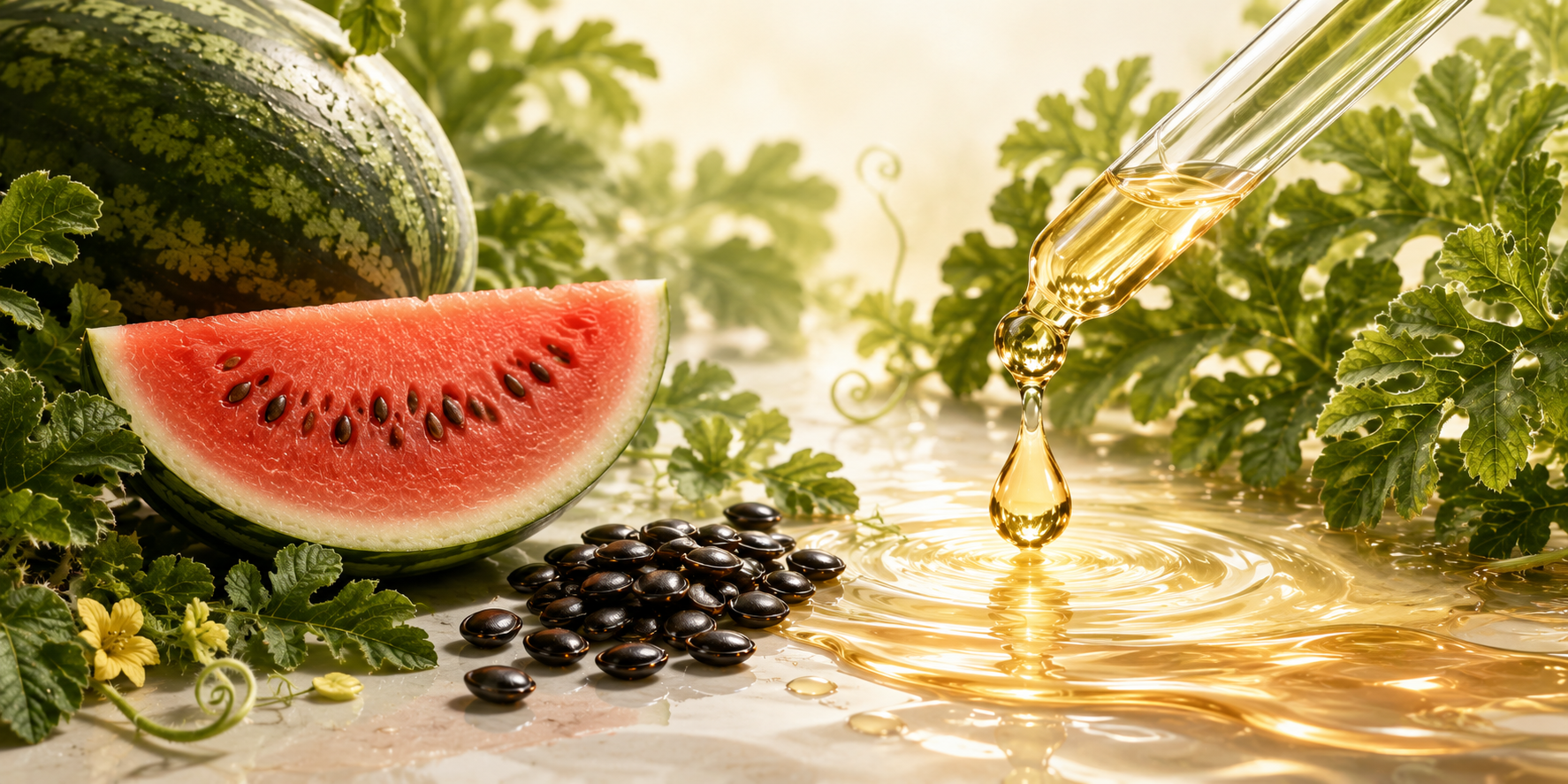
Pressed from the seeds of Citrullus lanatus, this light, silky oil contains a high proportion of linoleic acid alongside smaller amounts of oleic acid, vitamin E and naturally occurring plant sterols. Together these nutrients help support healthy skin while remaining comfortable even for people who prefer lightweight textures.
Although watermelons are famous for their juicy fruit, it is actually the seeds that provide this valuable skincare oil.
Today, watermelon seed oil is appreciated because it combines nourishment with an elegant cosmetic feel.

How Watermelon Seed Oil Supports Healthy Skin
The outermost layer of the skin is protected by a carefully organised lipid barrier.
This barrier contains a mixture of:
- Ceramides
- Cholesterol
- Fatty acids
- Natural moisturising factors
Together these components reduce water loss while helping protect the skin from the outside environment.
When this barrier becomes depleted, skin may feel tight, rough or less comfortable.
Watermelon seed oil helps replenish some of the beneficial lipids that support this protective surface.
Unlike heavier oils that create a richer finish, watermelon seed oil spreads easily and absorbs quickly, making it comfortable across many different skin types.
Rather than replacing your skin's own barrier lipids, it works alongside them, helping maintain softness and flexibility.
💡 Joanne's Insight
One of the biggest misconceptions I hear is that anyone with combination or oily skin should avoid facial oils altogether. In practice, the right oil often makes all the difference. Lightweight botanical oils such as watermelon seed oil can leave the skin feeling balanced and comfortable without the richness some people expect from facial oils.
The Science Behind Its Fatty Acids
Not all oils contain the same balance of fatty acids.
The composition determines how an oil feels on the skin and how it interacts with the skin barrier.
Watermelon seed oil is especially valued for its naturally high linoleic acid content.
Linoleic acid is an omega-6 essential fatty acid.
Our bodies cannot produce it, so it must come from our diet or topical sources.
Within skincare it helps support:
- Healthy barrier lipids
- Skin softness
- Comfortable hydration
- A light, elegant finish
Watermelon seed oil also contains:
- Oleic acid
- Vitamin E (tocopherol)
- Plant sterols
- Natural antioxidants
These components work together to support healthy skin while helping defend skin lipids from everyday environmental stress.
🧠 Did You Know?
Although the fruit contains mostly water, nearly all of watermelon's skincare oils are found inside its small black seeds.
 .
.
Antioxidants and Environmental Stress
Every day, our skin encounters environmental stress from sunlight, pollution and normal cellular metabolism.
These processes generate unstable molecules called free radicals.
When present in large numbers, free radicals may gradually affect important skin components including surface lipids and collagen.
This process is known as oxidative stress.
Watermelon seed oil naturally contains vitamin E and other antioxidant compounds that help neutralise many of these unstable molecules before they interact with healthy skin structures.
While antioxidants cannot completely prevent skin ageing, they form an important part of maintaining healthy skin over time.
This is why antioxidant-rich botanical oils are often combined with ingredients such as:
- Vitamin C
- Green tea extract
- Resveratrol
- Coenzyme Q10
Each antioxidant works slightly differently, creating broader support when used together.
❌ Myth vs ✅ Reality
Myth: Facial oils always clog pores.
Reality: The effect depends on the individual oil. Lightweight oils rich in linoleic acid, including watermelon seed oil, generally feel much lighter than richer botanical oils and are often well suited to combination and oily skin.
Which Skin Types May Benefit Most?
Because watermelon seed oil has such a light texture, it suits a wide variety of skin types.
It may be particularly appreciated by people who want nourishment without a rich finish.
Many skin therapists consider it suitable for:
- Combination skin
- Oily skin
- Normal skin
- Dehydrated skin
- Mature skin
- Skin exposed to dry climates
Its silky feel also makes it an excellent companion alongside humectants such as hyaluronic acid, helping lock hydration into the skin without feeling occlusive.
Of course, everyone's skin is different.
No single ingredient is perfect for every person, but watermelon seed oil is among the more universally comfortable botanical oils used in modern skincare.
✨ Why It Matters
Choosing the right oil is about understanding how your skin feels after application, not simply avoiding oils altogether. Lightweight botanical oils such as watermelon seed oil can provide essential fatty acids and antioxidant support while maintaining a fresh, comfortable finish that many people enjoy every day.

Why Watermelon Seed Oil Appears in Premium Skincare
Modern skincare formulations rarely rely on a single botanical oil.
Instead, formulators combine several complementary oils to create balanced textures and broader nutritional profiles.
Watermelon seed oil pairs particularly well with oils such as:
- Jojoba oil
- Argan oil
- Cranberry seed oil
- Sea buckthorn oil
- Rosehip oil
- Macadamia oil
Each contributes different fatty acids, antioxidants and vitamins.
Together they help create formulas that feel elegant while supporting the skin barrier.
Within the Shanga collection, Watermelon Seed Oil is featured in the Radiance Elixir, where it works alongside cranberry seed oil, argan oil, jojoba oil, sea buckthorn oil, rosehip oil and other nutrient-rich botanical oils to deliver lightweight nourishment and antioxidant support.
👩⚕️ Skin Therapist Tip
If you're new to facial oils, apply just two or three drops as the final step in your evening routine after your serum and moisturiser. This helps seal in hydration while allowing you to experience how your skin responds before using larger amounts.
Conclusion
Watermelon seed oil demonstrates that not all botanical oils are heavy.
Its naturally lightweight texture, high linoleic acid content and antioxidant profile make it an excellent example of how plant oils can support healthy skin without overwhelming it.
Rather than simply adding moisture, it contributes valuable lipids that help maintain the skin barrier while delivering antioxidants that support long-term skin health.
Understanding how different botanical oils behave allows you to choose products based on your skin's individual needs rather than common myths about facial oils.
Key Takeaways
- Watermelon seed oil is pressed from watermelon seeds, not the fruit.
- It is naturally rich in linoleic acid, vitamin E and plant antioxidants.
- It supports the skin barrier while providing lightweight nourishment.
- Its elegant texture suits many skin types, including combination and oily skin.
- Antioxidants help defend skin lipids against everyday environmental stress.
- Watermelon seed oil is often blended with other botanical oils to create balanced skincare formulations.
- Within the Shanga range, it is found in the Radiance Elixir.
Continue Your Learning
Watermelon seed oil is just one example of an omega-rich botanical oil. Next, we'll explore Cranberry Seed Oil, a uniquely balanced oil prized for its rare combination of omega-3, omega-6 and omega-9 fatty acids, along with powerful natural antioxidants that help support healthy, resilient skin.