Skin Layers Explained
Understand the epidermis, dermis and hypodermis—and discover how each layer supports healthy, resilient skin.
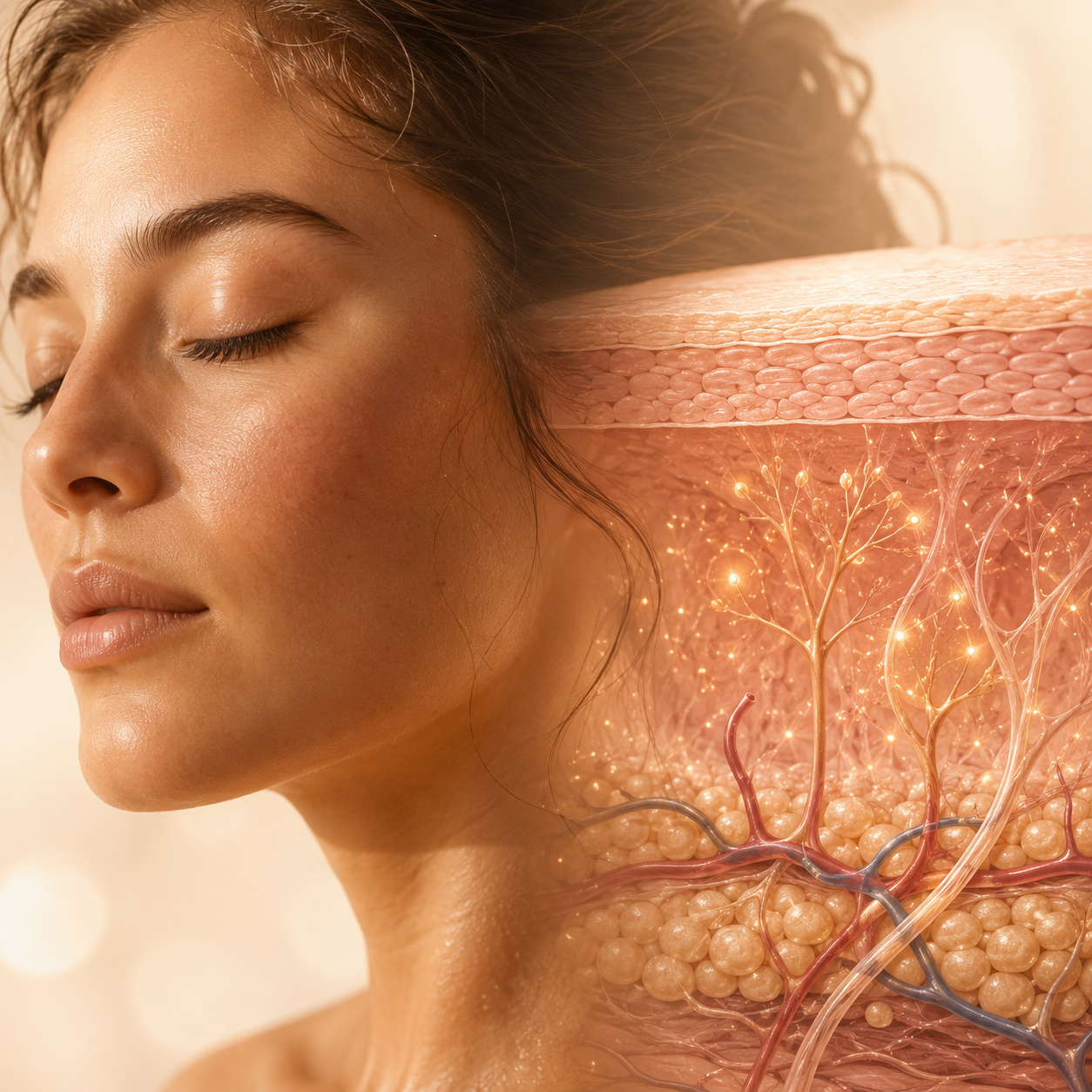
Your skin is made up of three main layers, each with its own unique role. While we only see the surface, countless processes are happening beneath it every second—protecting your body, regulating temperature, repairing damage and maintaining hydration.
Understanding these layers helps explain why different skincare ingredients work where they do, why results take time, and why healthy skin is built from the inside out.

Your Skin: More Than a Surface
Think of your skin as a beautifully designed home.
The roof protects everything beneath it.
The walls provide strength and support.
The foundations keep the entire structure stable.
Each part has a different purpose, but they all work together to keep the whole structure healthy.
Your skin works in exactly the same way.
The Epidermis
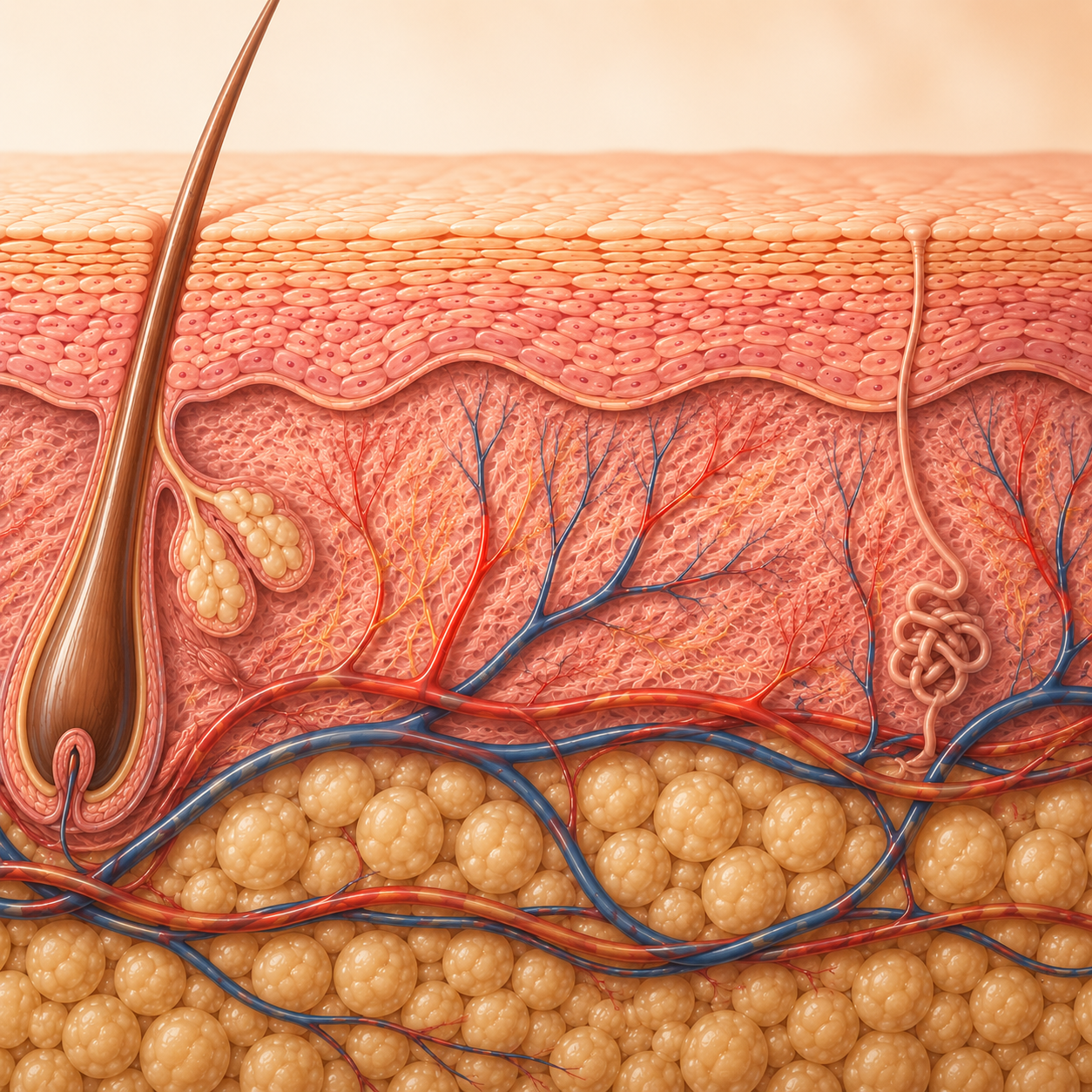
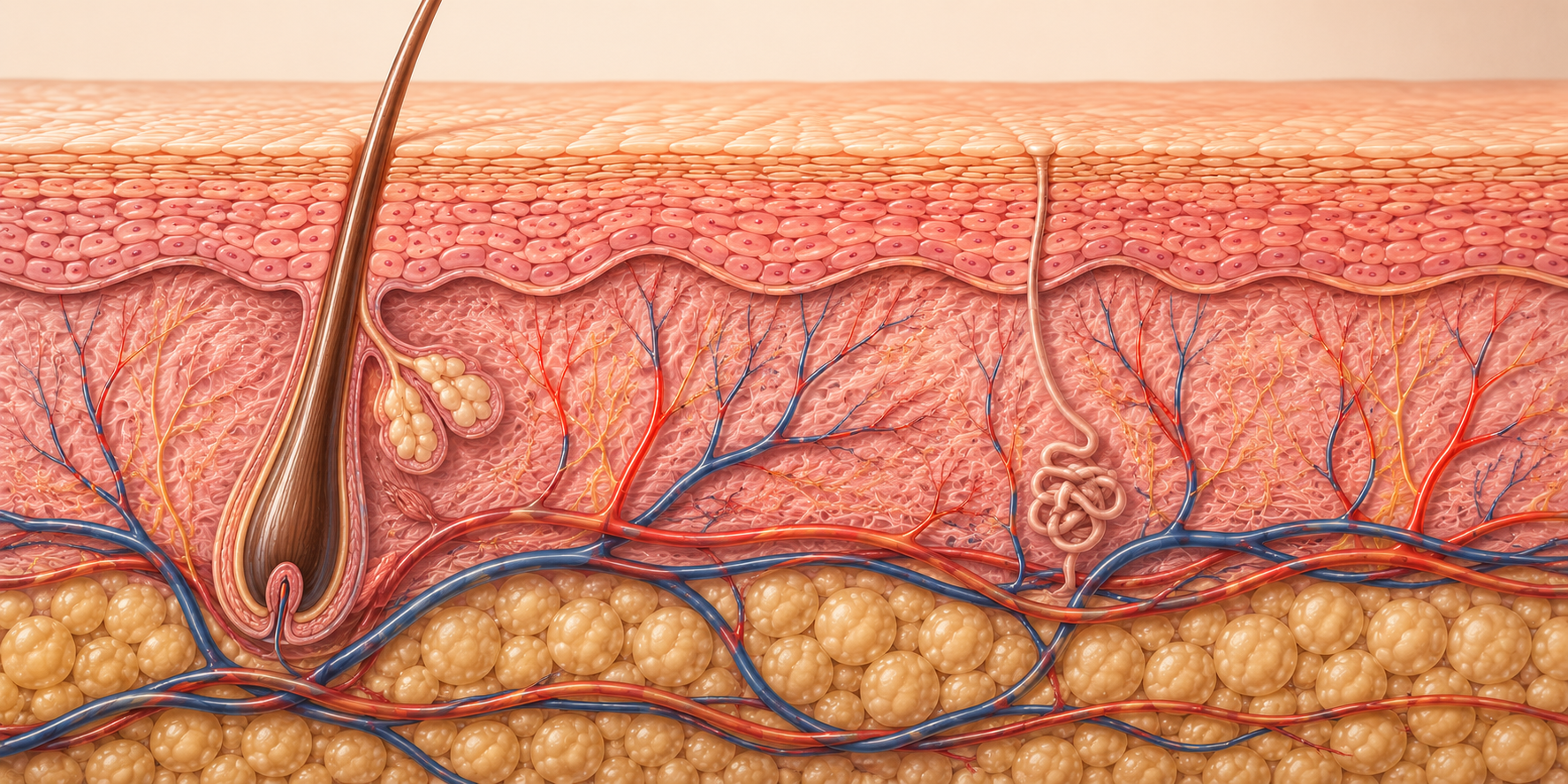
The epidermis is the outermost layer of your skin—the part you can see and touch.
Although incredibly thin (usually less than 1 millimetre), it performs one of the most important jobs in the body: acting as your protective barrier.
It helps to:
- Keep moisture inside the skin
- Protect against bacteria and pollution
- Reduce water loss
- Shield against environmental stress
- Support the skin's microbiome
The epidermis is constantly renewing itself.
New skin cells are produced deep within this layer and gradually move towards the surface. As they reach the top, older cells naturally shed away.
This complete renewal process usually takes around 28 days in younger adults, although it gradually slows as we age.
The Skin Barrier
The outermost portion of the epidermis is called the skin barrier.
You can imagine it like a brick wall.
The skin cells are the bricks.
Natural lipids—including ceramides, cholesterol and fatty acids—act as the mortar holding everything together.
When this barrier is healthy, skin feels:
- Smooth
- Comfortable
- Hydrated
- Calm
When it becomes weakened, skin may become:
- Dry
- Sensitive
- Tight
- Red
- More prone to irritation
Many modern skincare products focus on supporting and repairing this important barrier.
The Dermis
Beneath the epidermis sits the dermis.
This is the skin's support layer.
It is much thicker than the epidermis and contains many of the structures that keep skin strong, resilient and healthy.
Inside the dermis you'll find:
- Collagen fibres
- Elastin fibres
- Blood vessels
- Nerves
- Sweat glands
- Sebaceous (oil) glands
- Hair follicles
This is where much of your skin's firmness and elasticity comes from.
Specialised cells called fibroblasts continually produce collagen and elastin to help repair and maintain the skin's structure.
As we age, collagen production naturally slows, which contributes to fine lines, wrinkles and reduced firmness.
Many skincare ingredients—including vitamin C, peptides and retinoids—are designed to support collagen production over time.
The Hypodermis
The deepest layer is called the hypodermis, sometimes known as the subcutaneous layer.
This layer is made mostly of:
- Fat cells
- Connective tissue
- Larger blood vessels
Its main roles include:
- Cushioning the body
- Providing insulation
- Storing energy
- Protecting muscles and organs
- Supporting facial volume
While skincare products generally don't reach this layer directly, maintaining healthy skin above it helps preserve the appearance of firmness and youthful contours.
How the Layers Work Together
Although we describe the layers separately, they constantly communicate.
When the barrier is damaged, signals travel down into the dermis to begin repair.
When collagen production slows, changes eventually become visible on the surface.
When skin becomes dehydrated, multiple layers are affected—not just the outer one.
Healthy skin depends on every layer functioning together.
That's why effective skincare focuses on supporting the skin as a whole rather than trying to "fix" one isolated problem.
Can Skincare Reach the Dermis?
This is one of the most common questions people ask.
Most skincare works primarily within the epidermis, particularly the outer barrier.
Some active ingredients can penetrate into the upper dermis where they help stimulate biological processes, but no cream completely rebuilds deep skin structures overnight.
Instead, good skincare works by supporting your skin's natural repair systems.
This is why consistency matters far more than using stronger products.
Why This Matters
Understanding the skin's layers helps explain why healthy skin is built gradually.
Hydrating products strengthen the barrier.
Barrier-repair ingredients reduce irritation.
Antioxidants protect skin cells.
Retinoids encourage renewal.
Vitamin C supports collagen production.
Each ingredient works in a different part of the skin, contributing to healthier skin over time.
There is rarely one "miracle product" because healthy skin depends on many systems working together.
Key Takeaways
- The epidermis is your protective outer barrier.
- The dermis provides strength, collagen and elasticity.
- The hypodermis cushions and supports the skin.
- Every layer communicates with the others.
- Healthy skin depends on supporting all layers—not just treating what you can see on the surface.
💡 My Insight
A personal perspective based on years of treating skin.
One of the biggest misconceptions I see in clinic is that people think skin is simply 'dry' or 'oily'. In reality, healthy skin depends on every layer working together. Often the problem isn't the surface you can see—it's what is happening underneath that determines how your skin looks and feels.
Understanding your skin is the first step towards choosing products that genuinely support it, rather than simply chasing quick fixes.