The Skin Barrier
Your skin does far more than simply cover your body. Every day, it quietly protects you from pollution, bacteria, allergens, changing weather and moisture loss—all while helping maintain the healthy environment your skin cells need to function.
At the centre of this remarkable system is the skin barrier. Although only a tiny part of the outermost layer of skin, it plays one of the most important roles in keeping skin healthy, comfortable and resilient. Understanding how the barrier works is one of the most valuable steps you can take towards choosing skincare with confidence.

What Is the Skin Barrier?
The skin barrier is the protective outer layer of your epidermis. More specifically, it is found within the stratum corneum—the very top layer of your skin.
Despite being incredibly thin, this layer performs an extraordinary number of tasks. It helps prevent excessive water from escaping while reducing the amount of irritants, microbes and environmental pollutants entering your skin.
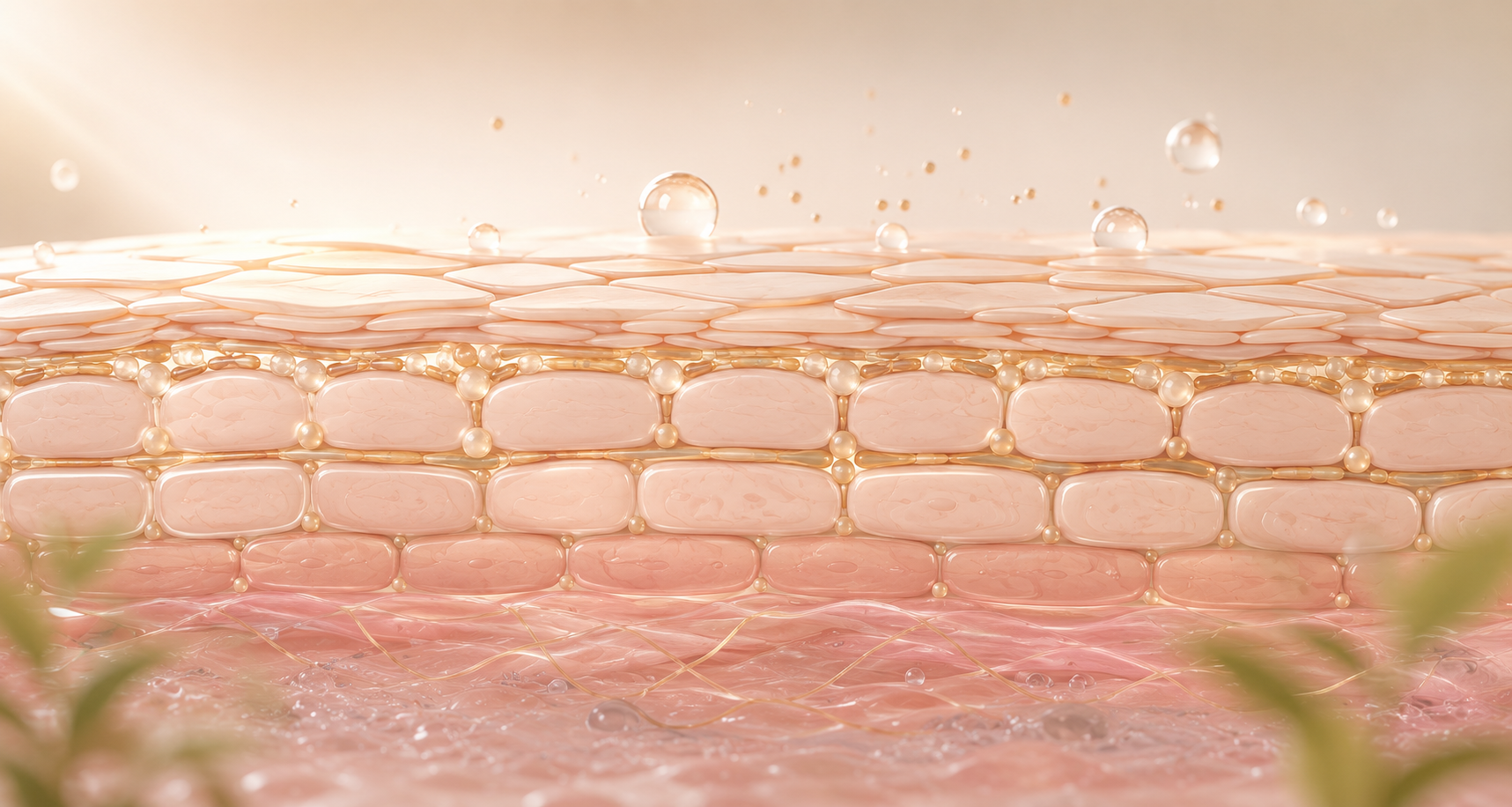
Scientists often describe the skin barrier using the "brick and mortar" analogy.
In this model:
- The skin cells (corneocytes) are the bricks.
- The lipids, including ceramides, cholesterol and fatty acids, form the mortar that holds everything together.
- When these bricks and mortar are well organised, the barrier becomes strong, flexible and efficient.
When gaps appear, the barrier becomes less effective.
 Why Does Your Skin Need a Barrier?
Without a functioning barrier, your skin would lose water rapidly and become vulnerable to the outside world.
A healthy barrier helps:
- retain hydration
- reduce water loss
- defend against bacteria and allergens
- minimise irritation
- support healthy skin function
- maintain comfort and resilience
Rather than being a solid wall, the barrier is constantly adapting. Skin cells mature, move upwards and are eventually shed, while new cells rise from below to replace them.
This continuous renewal helps keep the barrier functioning throughout your life.
💡 Joanne's Insight
One of the biggest changes I've seen in professional skin therapy over the years is a shift away from doing more to the skin and towards supporting it better. Many people arrive believing they need stronger acids, more exfoliation or additional active ingredients, when what their skin is really asking for is a healthier barrier. Often, improving comfort and resilience begins with simplifying a routine rather than adding to it.
What Is the Skin Barrier Made Of?
Although it looks simple under a microscope, the barrier is made from several carefully balanced components working together.
Skin Cells (Corneocytes)
These flattened cells are no longer living, but they remain incredibly important. They create the physical structure that protects the deeper layers of your skin.
Lipids
Lipids fill the tiny spaces between skin cells.
The three major lipids are:
- Ceramides
- Cholesterol
- Free fatty acids
Together they create a waterproof yet breathable seal that helps reduce moisture loss.
Natural Moisturising Factor (NMF)
Inside each skin cell is a collection of water-binding substances known as the Natural Moisturising Factor.
NMF includes amino acids, urea and other naturally occurring compounds that help attract and hold water inside the skin.
Without adequate NMF, skin may feel dry even when the barrier itself remains largely intact.
🧠 Did You Know?
Around 50% of the lipids in a healthy skin barrier are ceramides. These specialised fats play a central role in maintaining the barrier's strength and reducing water loss.
What Can Damage the Skin Barrier?
The skin barrier is designed to recover from everyday challenges, but repeated stress can gradually weaken its structure.
Common contributors include:
- excessive exfoliation
- harsh cleansers
- very hot water
- prolonged sun exposure
- cold, windy weather
- low humidity
- pollution
- ageing
- certain skin conditions such as eczema
Sometimes several of these factors occur together.
For example, frequent exfoliation combined with hot showers and dry winter air may place more stress on the barrier than any one factor alone.

What Happens When the Barrier Becomes Compromised?
A weakened barrier does not necessarily mean damaged skin, but it may become less efficient at performing its normal roles.
As water escapes more easily—a process called transepidermal water loss (TEWL)—the skin may begin to feel:
- tight
- dry
- rough
- more sensitive
- easily irritated
- less comfortable after cleansing
Some people also notice that skincare products which were previously well tolerated begin to sting or cause temporary discomfort.
This doesn't always mean the product itself is unsuitable. Sometimes it reflects that the barrier needs time and support to recover.
❌ Myth vs ✅ Reality
Myth: If your skin feels tight after cleansing, it means it's extra clean.
Reality: Tightness is often an early sign that your skin barrier has lost too much moisture or natural oil during cleansing. Healthy skin should feel comfortable, not stripped.
How Does the Skin Barrier Repair Itself?
One of the most remarkable features of skin is its ability to continually renew itself.
As new skin cells are produced in the deeper epidermis, they gradually move upwards over several weeks before becoming part of the barrier.
At the same time, specialised skin cells produce fresh lipids that rebuild the mortar between the bricks.
This natural repair process occurs every day.
Good skincare doesn't replace the barrier—it supports the skin's own ability to maintain it.
Supporting barrier function may include:
- cleansing gently
- moisturising consistently
- protecting skin from UV exposure
- avoiding unnecessary irritation
- introducing active ingredients gradually
Healthy skin is rarely built through extremes. It is usually the result of consistent, balanced care over time.

👩⚕️ Skin Therapist Tip
If your skin suddenly becomes sensitive, resist the urge to add more treatment products. For a week or two, simplify your routine to a gentle cleanser, moisturiser and daily sunscreen. Giving your barrier time to recover often helps restore comfort more effectively than adding additional active ingredients.
Why Healthy Skin Starts with a Healthy Barrier
Modern skincare often focuses on ingredients such as retinol, vitamin C or exfoliating acids.
These ingredients can certainly play valuable roles, but they perform best when applied to skin with a healthy barrier.
Think of the barrier as the foundation of a house.
Before decorating the walls, you first need a solid structure.
Supporting the barrier creates the conditions that allow the rest of your skincare routine to work more effectively while helping reduce unnecessary irritation.
This is why many skin professionals now consider barrier health to be one of the most important priorities in skincare.
✨ Why It Matters
Every skincare product you use interacts with your skin barrier first. Whether you're trying to hydrate dry skin, brighten uneven tone or reduce visible signs of ageing, maintaining a healthy barrier helps your skin function at its best. Looking after this protective layer isn't about doing more—it's about supporting the remarkable system your skin already has.
Conclusion
Your skin barrier is one of the most important structures in your entire body, yet it often receives very little attention.
It quietly works around the clock to protect you from the outside world while helping your skin retain the moisture it needs to remain healthy and resilient.
Rather than seeing skincare as a collection of products, it's helpful to think of it as supporting this remarkable natural system. By understanding how the barrier works, you can make more informed choices, build routines that respect your skin, and approach new ingredients with greater confidence.
Healthy skin doesn't depend on perfection. It depends on a strong foundation.
Key Takeaways
- Your skin barrier sits within the outermost layer of the epidermis.
- It helps keep moisture in while protecting against environmental stressors.
- Healthy barriers rely on skin cells, lipids and natural moisturising factors working together.
- Over-cleansing, excessive exfoliation and environmental conditions can weaken barrier function.
- A compromised barrier may lead to dryness, sensitivity and increased water loss.
- Gentle cleansing, moisturising and daily sun protection all help support barrier health.
- Most active skincare ingredients work best when the skin barrier is functioning well.
Now that you understand how your skin protects itself, the next lesson explores Skin pH—the delicate balance that helps your barrier, microbiome and natural defence systems work together to keep skin healthy. Go to the next lesson