How to Choose the Right Exfoliant for Your Skin
Understanding Physical, Enzymatic and Chemical Exfoliation.
Exfoliation is one of the most effective ways to improve skin texture, radiance and clarity, but not all exfoliants work in the same way. Some dissolve the bonds that hold dead skin cells together, while others gently digest the proteins on the skin's surface. Understanding the difference helps you choose the right approach for your skin rather than simply using the strongest product available.
At Shanga, we believe exfoliation should support healthy skin function, not disrupt it. The best exfoliant is the one that works with your skin's needs, your skin barrier and your overall routine.
Why Exfoliation Matters
Every day your skin naturally sheds millions of dead skin cells. In healthy skin this process, known as cell turnover, happens continuously. However, factors such as ageing, sun exposure, dehydration, excess oil and inflammation can slow this process.
When dead skin cells accumulate they can contribute to:
- Dull, tired-looking skin
- Rough texture
- Congested pores
- Blackheads
- Uneven skin tone
- Reduced absorption of skincare products
Gentle, regular exfoliation helps support this natural renewal process, revealing smoother, brighter and healthier-looking skin.
Three Ways to Exfoliate Your Skin
Exfoliation is simply the process of removing dead skin cells from the skin's surface to support healthy skin renewal. There are three main ways this can be achieved, and each works through a different biological mechanism.
None is inherently better than another. The right choice depends on your skin type, your skin concerns and the condition of your skin barrier.
1. Physical Exfoliation
Physical exfoliants use fine particles to gently lift away loose dead skin cells from the skin's surface.
Unlike older-style scrubs that relied on large, abrasive particles, modern formulations use smooth, rounded polishing ingredients that minimise friction while refining skin texture.
Physical exfoliation is ideal for:
- Dull skin
- Rough texture
- Occasional congestion
- Weekly skin maintenance
Shanga's Reveal Face Polish combines biodegradable jojoba esters with fruit enzymes to provide gentle polishing while maintaining skin comfort.
If your skin has numerous inflamed or tender breakouts, choose a leave-on exfoliant such as Clarify Tonic or Dual Action Peel instead of mechanical polishing until inflammation settles. Once active inflammation has improved, Reveal Face Polish can help maintain smoother skin texture.
2. Enzymatic Exfoliation
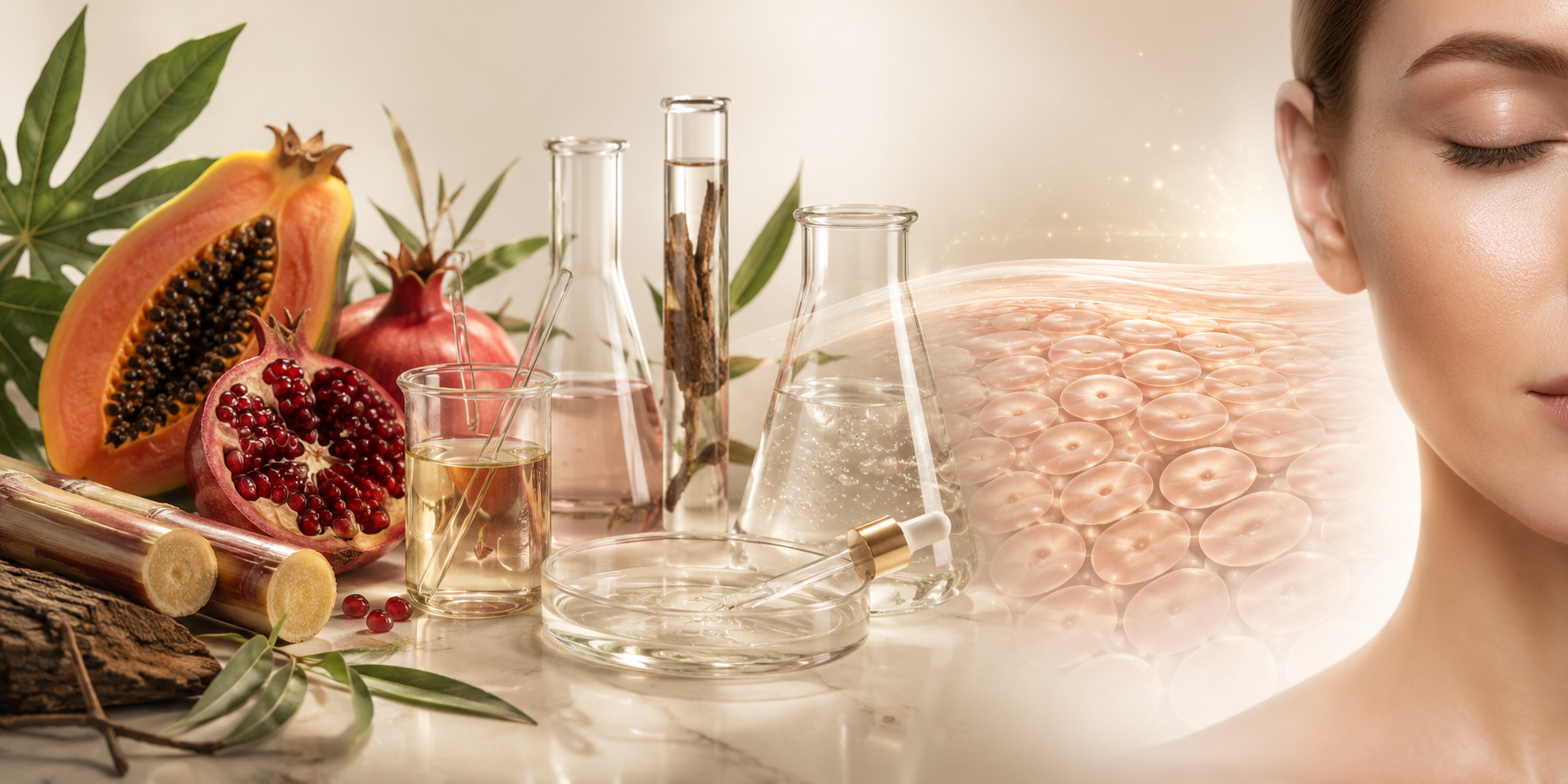
Enzymes are naturally occurring proteins derived from fruits such as papaya and pomegranate.
Rather than physically scrubbing the skin, they selectively digest the protein bonds that hold dead surface cells together, allowing them to lift away naturally.
Because enzymes work only on the outermost layer of dead skin, they provide one of the gentlest forms of exfoliation available.
Enzyme exfoliation is particularly suitable for:
- Sensitive skin
- Dry skin
- Barrier-compromised skin
- Regular skin maintenance
Shanga's Reveal Tonic and Dual Action Peel both utilise fruit enzymes to encourage gentle, healthy skin renewal.
3. Chemical Exfoliation
Chemical exfoliation uses carefully formulated acids to loosen the microscopic bonds between dead skin cells, allowing them to shed more efficiently.
Different acids work in different ways.
Some improve skin texture and brightness, while others penetrate inside pores to reduce congestion and excess oil.
Chemical exfoliation is particularly useful for:
- Uneven pigmentation
- Congestion
- Enlarged pores
- Breakouts
- Photoageing
Shanga's Clarify Tonic combines glycolic acid, lactic acid and salicylic acid, while Dual Action Peel pairs lactic acid with fruit enzymes for balanced weekly resurfacing.

Healthy Exfoliation Isn't About Removing More Skin
It can be tempting to think stronger exfoliation produces better results. In reality, healthy skin depends on balance. Removing too many surface cells or exfoliating too frequently can weaken the skin barrier, increase water loss and trigger irritation. The goal is not maximum exfoliation—it is appropriate exfoliation that supports natural skin renewal.
Enzymes vs Acids
Although acids and enzymes both remove dead skin cells, they work through completely different biological mechanisms.

Enzyme Exfoliation
Enzymes are naturally occurring proteins derived from fruits such as papaya and pomegranate. Rather than dissolving the skin itself, they selectively break down the proteins that hold dead surface cells together.
Because enzymes work only on the outermost layer of dead skin, they provide a very gentle form of exfoliation that is suitable for most skin types, including sensitive skin.
Enzyme exfoliation helps:
- Improve radiance
- Smooth rough texture
- Support healthy skin renewal
- Maintain the skin barrier
- Prepare the skin for serums and moisturisers
Acid Exfoliation
Hydroxy acids work differently.
Instead of digesting surface proteins, they loosen the chemical bonds between dead skin cells, allowing them to shed more efficiently.
Different acids perform different roles.
Alpha Hydroxy Acids (AHAs) such as glycolic and lactic acid primarily work on the skin's surface to improve texture, brighten uneven tone and soften fine lines.
Beta Hydroxy Acids (BHAs) such as salicylic acid are oil soluble, allowing them to travel into pores where they help dissolve excess sebum and reduce congestion.
Acids are particularly useful when treating:
- Pigmentation
- Acne
- Enlarged pores
- Rough texture
- Photoageing
Which Type Of Exfoliation Is Right For You?

The Shanga Approach to Exfoliation
Rather than relying on a single exfoliating product, Shanga offers different options designed to suit different skin goals and levels of sensitivity.
Reveal Face Polish
Best for
- All skin types
- Dull skin
- Weekly skin refresh
Reveal Face Polish combines biodegradable jojoba esters with papaya enzymes to gently polish away dead surface cells while supporting hydration.
It leaves skin feeling smoother, softer and more radiant without excessive abrasion.
Use: 1–2 times each week.
Reveal Tonic
Best for
- Sensitive skin
- Dry skin
- Daily skin renewal
- Calm & Repair Ritual
- Renew & Restore Ritual
Reveal Tonic uses naturally derived enzymes to encourage gentle daily exfoliation while maintaining skin comfort.
It is ideal for people who want brighter skin without the intensity of stronger acids.
Clarify Tonic
Best for
- Oily skin
- Congestion
- Blackheads
- Breakout-prone skin
- Clarify & Balance Ritual
Clarify Tonic combines glycolic acid, lactic acid and salicylic acid to exfoliate both the skin surface and within pores.
This combination helps reduce congestion, smooth texture and support clearer-looking skin while encouraging regular cell turnover.
Because it contains active acids, it is best introduced gradually.
Dual Action Peel
Best for
- Dull skin
- Uneven tone
- Ageing skin
- Brighten & Glow Ritual
- Renew & Restore Ritual
Dual Action Peel combines fruit enzymes with lactic acid, creating a balanced treatment that delivers both gentle enzymatic exfoliation and deeper chemical resurfacing.
The result is smoother texture, brighter skin and improved radiance with less irritation than stronger acid peels alone.
Use once or twice weekly.
Which Shanga Exfoliant Is Right for You?
|
Skin concern |
Recommended product |
Frequency |
Why it works |
|
Sensitive or dry skin |
Reveal Tonic |
Most evenings |
Gentle enzyme exfoliation that supports the skin barrier |
|
Dull, rough skin |
Reveal Face Polish |
1–2× weekly |
Physically and enzymatically smooths the skin surface |
|
Oily or congested skin |
Clarify Tonic |
2–4 evenings weekly |
AHAs and BHA help clear pores and reduce congestion |
|
Uneven tone or early ageing |
Dual Action Peel |
Weekly |
Combines enzymes and lactic acid for brighter, smoother skin |

How Often Do I Need to Exfoliate?
Make exfoliation part of your evening routine. If you are using a retinoid product, do not use it the same evening as you exfoliate.

Exfoliation Tips
Healthy exfoliation is about consistency rather than intensity.
- Introduce new exfoliating products gradually.
- Avoid using multiple acid exfoliants in the same routine.
- Support your skin with hydrating and barrier-repairing products.
- Always wear a broad-spectrum SPF during the day, as newly exfoliated skin is more vulnerable to UV damage.
- If your skin becomes persistently tight, irritated or flaky, reduce the frequency of exfoliation and focus on barrier repair before resuming.

Healthy Exfoliation is about Balance
Enzymes and acids are not competing technologies—they are complementary tools. Enzymes provide gentle surface renewal that suits almost every skin type, while acids offer deeper exfoliation for concerns such as congestion, pigmentation and uneven texture.
The most effective skincare routine is not the one that exfoliates the most, but the one that exfoliates appropriately. By choosing the right exfoliant for your skin and using it consistently within a balanced ritual, you can support healthy skin renewal while maintaining a strong, resilient skin barrier.
Healthy skin doesn't need constant resurfacing. It needs the right amount of renewal, at the right time, while preserving the strength of the skin barrier. When exfoliation is chosen carefully and used consistently, it becomes one of the simplest ways to support smoother texture, brighter skin and healthier skin function for years to come.
Learn more